
“Public Outcry: Six TikTok Creators Accused by Authorities of Undermining Moral Standards.”
A series of arrests involving TikTok content creators in Ethiopia has sparked a nationwide debate about freedom of expression, cultural values, and the growing influence of social media in a traditionally conservative society. The detentions, carried out by Ethiopian police earlier this week, have drawn sharp reactions online and highlighted the tension between rapid digital change and long-standing social norms.
Authorities confirmed that nine TikTok creators were taken into custody on allegations that their behavior and online content violated accepted moral standards. The arrests have not only raised questions about the limits of creative expression but also exposed generational and cultural divides within the country.
What Triggered the Arrests
According to police statements, several of the creators were detained following their appearance at the Ethiopia Creative Awards, an event celebrating online talent and digital creativity. Officers claimed that some individuals wore clothing deemed inappropriate for a public event, arguing that their attire conflicted with Ethiopia’s cultural expectations.
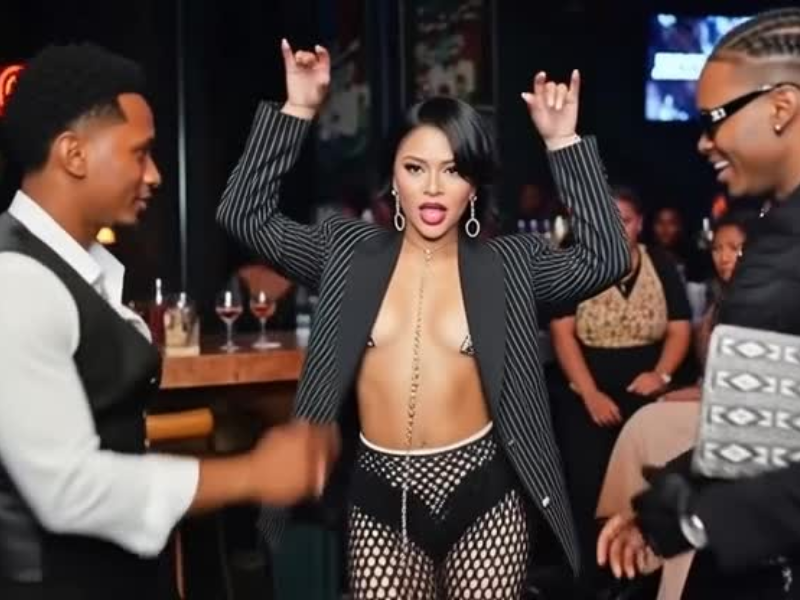
Other arrests were linked to TikTok videos and livestreams that authorities described as inconsistent with “good behavior and ethics.” In particular, police alleged that two creators engaged in conduct during a live broadcast that crossed acceptable boundaries.
While no detailed legal charges have been made public, officials said the detentions were intended to address what they see as a growing problem: the unchecked spread of online trends that may negatively influence young audiences.
Influencers at the Center of Attention
Among those detained were several well-known figures in Ethiopia’s online community, some with hundreds of thousands — and even millions — of followers. Their popularity has amplified public interest in the case, transforming it from a local law enforcement issue into a national conversation.
Supporters of the creators argue that their influence and visibility should not make them targets. Many say the arrests represent an attempt to police personal expression and stifle creativity in a digital space that thrives on diversity and experimentation.
Critics, however, contend that public figures carry greater responsibility. From this perspective, influencers are role models whose actions can shape attitudes and behavior, especially among young people.
A Country Divided Online
The response on Ethiopian social media has been intense and polarized. Hashtags supporting the detained creators have circulated widely, with users accusing authorities of overreach and calling for greater tolerance of artistic freedom.
At the same time, conservative voices have defended the police actions, insisting that Ethiopia’s cultural identity must be protected. They argue that social media platforms should not be allowed to erode values that have defined the country for generations.
This clash of opinions reflects a broader societal debate: how to balance modernization with tradition in an increasingly connected world.
Freedom of Expression vs. Cultural Norms
Ethiopia, like many societies experiencing rapid digital growth, is grappling with questions about the boundaries of expression. TikTok, in particular, has become a powerful platform for self-presentation, especially among young people eager to engage with global trends.

However, what is considered normal or acceptable online in one cultural context may be viewed very differently in another. Authorities argue that cultural sensitivity must apply in digital spaces just as it does in physical ones.
Human rights advocates counter that vague definitions of morality can be used to justify arbitrary enforcement. Without clear guidelines, they warn, creators may self-censor out of fear, limiting the diversity of voices online.
The Role of Social Media in Ethiopian Society
With millions of users nationwide, social media plays an increasingly important role in Ethiopia’s public life. Platforms like TikTok have become avenues for entertainment, education, and social commentary, offering young creators opportunities for visibility and income.
At the same time, the rapid rise of influencer culture has challenged traditional gatekeepers of morality and taste. Content is no longer filtered through established institutions but shared instantly with wide audiences.
This shift has made regulation more complex. Governments face pressure to respond to public concerns while avoiding heavy-handed measures that could alienate younger generations.
Families and Personal Impact
Beyond the public debate, the arrests have had personal consequences for those involved. Family members of some detained creators have spoken to local media, expressing shock and distress over the sudden detentions.
They describe their children as hardworking individuals who used social media as a tool for creativity and positive influence. For them, the situation is not just a legal issue but an emotional ordeal that has disrupted livelihoods and reputations.
Government Silence and Police Warnings
So far, Ethiopia’s central government has not issued a formal statement addressing the controversy. Police officials, however, have reiterated that further action may be taken against individuals who promote content deemed harmful to cultural values.
They have also warned against what they describe as the spread of “superficial” or irresponsible online trends, emphasizing their duty to protect society — particularly youth — from negative influence.
A Broader Global Question
While the case is rooted in Ethiopia’s cultural context, it echoes global debates about content moderation, influencer responsibility, and digital ethics. Around the world, governments are struggling to define where freedom of expression ends and social responsibility begins in online spaces.
What sets Ethiopia’s situation apart is the speed at which digital culture is colliding with deeply rooted traditions. The outcome of this controversy may shape how the country approaches social media regulation in the future.
What Comes Next
As legal processes continue, observers are watching closely to see whether charges are filed, released, or quietly dropped. Regardless of the outcome, the incident has already left a mark on Ethiopia’s digital landscape.
For creators, it serves as a reminder that online influence comes with risks as well as opportunities. For authorities, it highlights the challenge of enforcing norms without suppressing creativity. And for society at large, it raises a fundamental question: how can a nation embrace the digital age while remaining true to its cultural identity?
The debate is far from over — and its resolution may define the next chapter of Ethiopia’s relationship with social media.