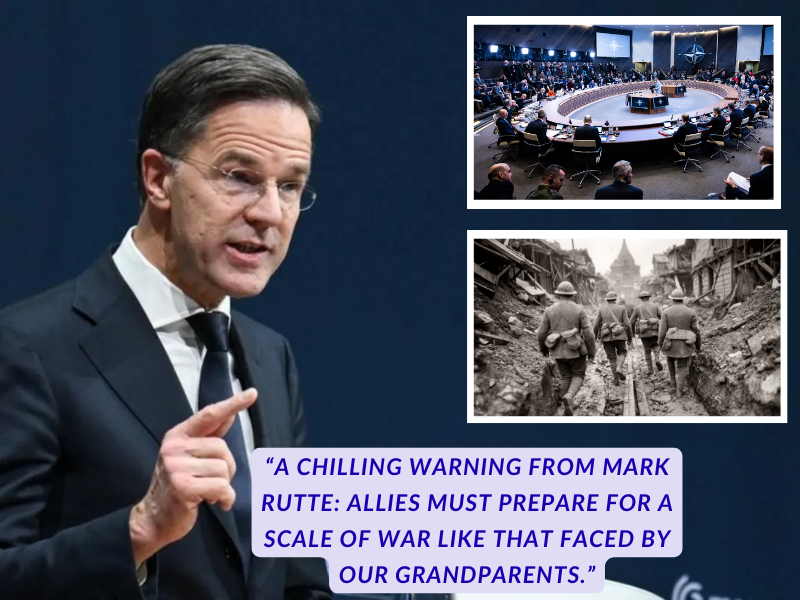
“No longer a hypothesis” — NATO warns of the risk of a Russian attack within the next five years.
NATO leaders have issued one of their most serious warnings in years, cautioning that Russia could be capable of launching an attack on a NATO member state within the next five years. The statement underscores mounting concern across Western capitals that Europe may be underestimating both the pace and scale of Moscow’s military ambitions.
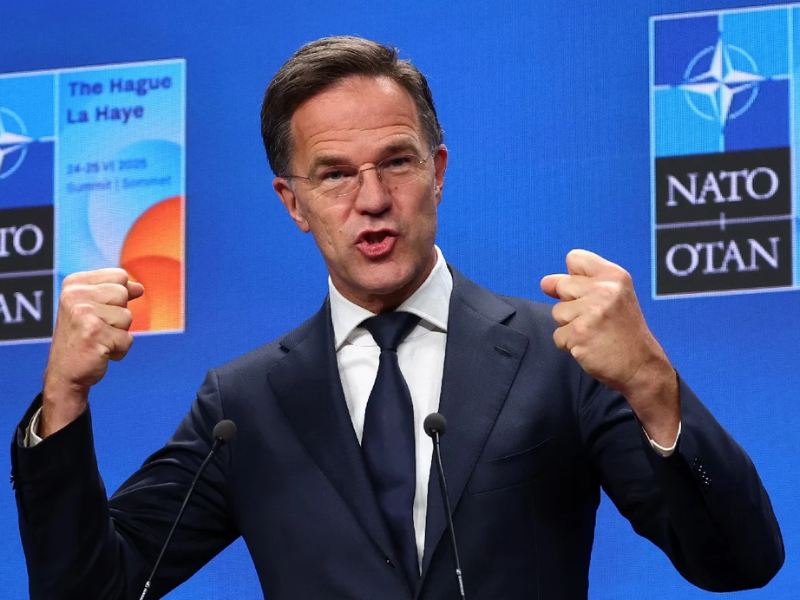
Speaking in Germany, NATO Secretary-General Mark Rutte delivered a stark message: the security environment facing Europe is deteriorating rapidly, and the alliance must prepare for a level of conflict not seen for generations. According to Rutte, Russia is no longer operating solely through conventional military means, but is increasingly targeting Western societies through covert and hybrid tactics.
A Shift in the Nature of the Threat
Rutte warned that Russia has already intensified what he described as a “covert campaign” against NATO countries. This includes cyber operations, disinformation efforts, and activities designed to destabilize political and social cohesion across Europe. While these actions often fall below the threshold of open warfare, they are seen as part of a broader strategy aimed at weakening NATO from within.
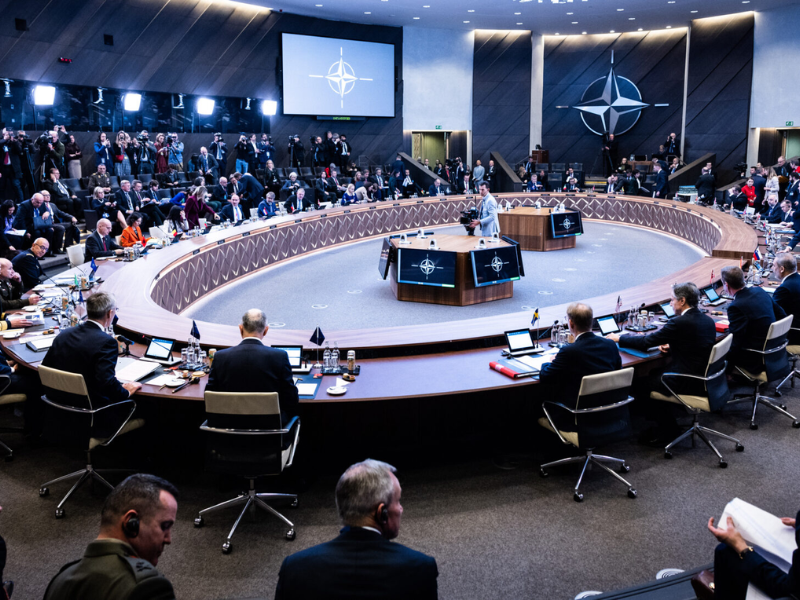
Western intelligence agencies have echoed similar assessments in recent months, suggesting that Moscow is laying the groundwork for potential future confrontation. Russian officials, however, have dismissed these warnings as exaggerated and politically motivated. Despite such denials, NATO leaders argue that history has shown the danger of taking reassurance from Moscow at face value.
Lessons from Ukraine
Rutte’s remarks come against the backdrop of Russia’s ongoing war in Ukraine, which began with a full-scale invasion in February 2022. At the time, Moscow had repeatedly insisted it had no intention of attacking its neighbor, assurances that proved meaningless once Russian forces crossed the border.
That experience now looms large in NATO’s strategic thinking. Alliance officials believe that similar rhetoric—claims of peaceful intent paired with aggressive military posturing—could precede future action elsewhere in Europe.
Earlier this month, Russian President Vladimir Putin again stated that Russia has no plans to wage war against Europe. Yet he added that Moscow would be ready “immediately” should Europe choose confrontation or initiate hostilities. To NATO leaders, such statements reinforce rather than reduce concern.
Diplomacy Under Strain
The warning also arrives as U.S. President Donald Trump seeks to broker an end to the war in Ukraine. His administration has pushed for a negotiated settlement, but progress has been slow and contentious.
Putin has accused European governments of undermining U.S. peace efforts, arguing that Ukraine’s European allies have attempted to reshape proposed agreements in ways that disadvantage Russia. NATO officials reject this narrative, maintaining that European involvement is essential to any sustainable peace.
According to Rutte, Moscow’s portrayal of European actions lacks sincerity. He argued that Russian claims of restraint are inconsistent with its military buildup and continued aggression.
Ukraine as a Pillar of European Security
A central theme of Rutte’s speech was the link between Ukraine’s fate and the broader security of Europe. He warned that a Russian victory in Ukraine would dramatically alter the strategic balance on the continent.
“If Russia succeeds,” Rutte suggested, “its forces would press directly against a much longer NATO border, significantly increasing the risk of armed confrontation.” In such a scenario, NATO would face heightened pressure across Eastern Europe, forcing the alliance into a permanent state of crisis readiness.
For this reason, NATO leaders view continued support for Ukraine not merely as solidarity, but as a strategic necessity.
Russia’s War-Focused Economy
Another source of alarm is the scale of Russia’s military production. Analysts note that Russia has effectively placed its economy on a war footing for more than three years, with factories operating at high capacity to supply the armed forces.
According to data cited by Western research institutes, Russia is producing substantial quantities of military equipment each month, including tanks, infantry fighting vehicles, drones, missiles, and artillery systems. This level of output, analysts say, far exceeds that of most European nations.
By contrast, many NATO members have struggled to expand production quickly, constrained by peacetime industrial systems and limited defense investment over the past decades.
Europe’s Industrial Gap
Defense experts warn that closing the production gap with Russia will take time. Western Europe’s manufacturing base, while technologically advanced, is not currently structured for mass wartime output.
Several countries are now reassessing long-standing assumptions about defense readiness. France and Germany, for example, have recently taken steps to revive forms of voluntary military service for young adults, signaling a broader shift in how European societies view national defense.
These measures reflect growing recognition that deterrence requires not only advanced weaponry, but also sufficient manpower and industrial capacity.
The Rise of Hybrid Warfare
Beyond traditional military threats, NATO has observed a sharp increase in so-called “grey-zone” activities. These include cyberattacks on critical infrastructure, disinformation campaigns aimed at influencing elections, and alleged drone incidents near airports and military facilities in NATO countries.
Such actions are often difficult to attribute directly, allowing plausible deniability while still creating disruption and fear. Although serious, NATO officials argue that these tactics pale in comparison to the consequences of a direct military assault on alliance territory.
An overt attack involving territorial seizure and civilian casualties would trigger a far more severe crisis, potentially drawing multiple nations into armed conflict.
NATO’s Internal Pressures
NATO currently comprises 30 European member states, alongside Canada and the United States—the alliance’s most powerful military contributor. In recent years, the alliance has faced internal debates over defense spending and burden-sharing.
Under pressure from Washington, NATO members have pledged to increase military budgets, with a renewed focus on meeting or exceeding agreed spending targets. Rutte emphasized that financial commitments must translate into real capabilities.
“NATO’s defenses can hold for now,” he cautioned, “but conflict is closer than many realize.” He expressed concern that complacency remains widespread, with too many leaders believing there is still ample time to act.
A Narrow Window for Action
Rutte’s five-year warning is intended as a call to urgency rather than panic. NATO leaders believe there is still time to strengthen deterrence, but only if governments move decisively.
This means accelerating weapons production, modernizing armed forces, improving logistics, and reinforcing NATO’s eastern flank. It also requires political leadership willing to prepare societies for uncomfortable realities after decades of relative peace.
According to Rutte, the alliance must be ready for a type of war that today’s generations have never experienced—one resembling the total conflicts endured by their grandparents and great-grandparents.
Preparing Without Provoking
One of NATO’s challenges is balancing preparedness with restraint. Alliance leaders insist their actions are defensive, aimed at preventing conflict rather than provoking it.
However, deterrence depends on credibility. NATO’s message to Moscow is that aggression would carry unacceptable costs, while its message to member states is that security cannot be taken for granted.
As Europe confronts a more volatile security landscape, Rutte’s warning has sharpened the debate over readiness, responsibility, and the price of peace.
A Defining Moment for Europe
The coming years may prove decisive for Europe’s security architecture. Whether Russia ultimately tests NATO’s resolve remains uncertain, but alliance leaders argue that uncertainty itself demands preparation.
For NATO, the lesson of recent history is clear: ignoring warning signs can be catastrophic. The five-year window identified by Rutte is not a prediction, but a challenge—to ensure that deterrence holds, and that Europe is never forced to relearn the brutal lessons of large-scale war.