
🚨 SIX EPISODES OF PURE SUSPENSE! STEPHEN GRAHAM’S CHILLING CRIME DRAMA IS THE KIND OF THRILLER THAT KEEPS VIEWERS AWAKE UNTIL 6 AM!
🚨 STEPHEN GRAHAM’S TERRIFYING PERFORMANCE IN LINE OF DUTY STILL HAUNTS VIEWERS — THE BRITISH CRIME THRILLER THAT TURNED ONE UNDERCOVER OPERATION INTO A NIGHTMARE OF BETRAYAL, CORRUPTION AND DEATH!
TV Review | Line of Duty (2012–2021) | BBC Crime Thriller | Stephen Graham as John Corbett | Season 5
There are television performances that entertain you, performances that impress you, and then there are performances that leave you staring at the screen in complete disbelief, wondering how an actor managed to make a character feel so dangerously, painfully real.
Stephen Graham’s appearance in Line of Duty belongs firmly in that final category.
For five seasons, the BBC’s acclaimed crime thriller had built its reputation on corruption, deception, nerve-shredding interrogations and the terrifying possibility that the people entrusted with upholding the law might be the very people destroying it.
But when Graham entered the story as John Corbett in its fifth season, something changed.
Suddenly, the danger felt closer. The violence became more personal. And the line separating hero from villain grew so dangerously thin that viewers could no longer be certain whom they were supposed to trust.
Corbett was not simply another criminal mastermind waiting to be exposed. He was an undercover operative who had disappeared into a world of organised crime, carrying secrets that threatened to destroy not only his enemies but everything he once believed about himself.
And Graham played him with such ferocious intensity that even his quietest moments felt like an explosion waiting to happen.
One minute, he could appear calculating, composed and completely in control. The next, a flicker in his eyes suggested a man whose entire world was beginning to collapse.
What made the performance extraordinary was not simply its aggression.
It was the terrible sense that beneath Corbett’s brutality stood a man desperately trying to justify the choices that had already consumed him.
And when the full consequences of those choices finally arrived, the result was one of the most devastating storylines in the series.
Warning: This review contains major spoilers for Season 5.

THE MOMENT STEPHEN GRAHAM ENTERED LINE OF DUTY, EVERYTHING BECAME MORE DANGEROUS
The fifth season opens with a violent attack on a convoy transporting seized drugs. The ambush leaves officers dead and immediately raises the possibility that the organised crime group responsible has access to information from inside law enforcement.
For AC-12, the specialist anti-corruption unit at the heart of the series, this is more than another investigation.
It is evidence that the network they have spent years trying to dismantle may be operating with extraordinary confidence.
At the centre of the criminal organisation is John Corbett, played by Graham.
Corbett is ruthless, suspicious and frighteningly capable of violence. Yet his behaviour also suggests something more complicated than straightforward criminal ambition.
He appears to be pursuing a private mission.
His interest in corruption goes beyond money, influence or self-preservation. He seems determined to uncover particular individuals, especially those connected to the shadowy network that has repeatedly frustrated AC-12.
And that obsession makes him unpredictable.
The revelation that Corbett is actually an undercover officer changes the entire meaning of his actions.
Suddenly, the man who appeared to be leading a criminal organisation becomes a much more troubling figure: someone whose original purpose was to expose wrongdoing but who has become dangerously entangled in the world he was supposed to infiltrate.
It is precisely this moral confusion that allows Graham to deliver such a remarkable performance.
He never asks the audience to excuse Corbett.
Instead, he forces viewers to confront the unsettling possibility that a man can believe he is pursuing justice while committing acts that make him increasingly difficult to distinguish from the criminals around him.
And that is where the real horror begins.
A MAN WITH TWO IDENTITIES — AND NEITHER ONE COULD SAVE HIM
One of the most disturbing elements of Corbett’s storyline is the question of identity.
Undercover operations require deception. Officers must invent histories, manipulate relationships and convince dangerous people that their loyalty is genuine.
But what happens when the deception lasts so long that the individual begins to lose sight of the person underneath?
Corbett embodies that nightmare.
He has a wife, Steph, played by Amy De Bhrún, and children waiting beyond the criminal world he inhabits. Yet the life he presents to the gang is defined by suspicion, intimidation and the constant possibility of betrayal.
Graham makes those competing realities feel almost physically unbearable.
His body language is extraordinary. He leans forward when challenging someone, holds eye contact a fraction too long and uses sudden changes in volume to destabilise the people around him.
There is rarely any sense of comfort in his presence.
Even when Corbett appears relaxed, the viewer suspects he is calculating an escape route, preparing a threat or searching for evidence that someone has betrayed him.
Yet there are moments when the performance reveals genuine vulnerability.
A shift in expression. A brief hesitation. The exhaustion behind an otherwise aggressive stare.
These details suggest that Corbett is not merely pretending to be dangerous.
He has become dangerous because he has spent too long believing that danger is the only way to survive.
The tragedy is that he continues to regard himself as a man fighting corruption.
He believes the system is compromised, that powerful individuals are protecting one another, and that conventional procedures will never uncover the truth.
His solution is to abandon the rules.
But the further he moves beyond those rules, the more his actions undermine the justice he claims to seek.
It is a vicious contradiction, and Graham understands every uncomfortable dimension of it.
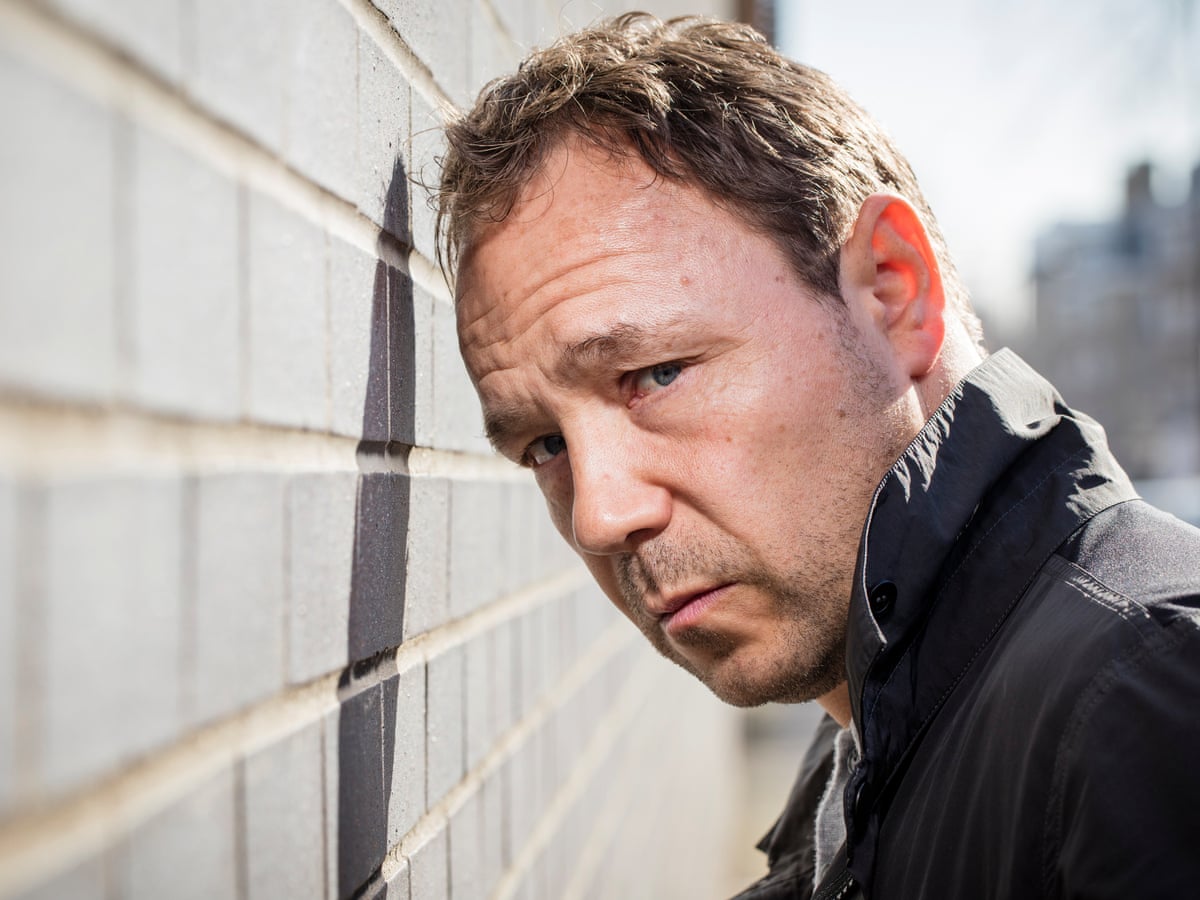
THE MOST FRIGHTENING THING ABOUT JOHN CORBETT IS THAT HE THINKS HE IS RIGHT
Many television villains know exactly what they are doing.
They pursue wealth, revenge, influence or power without pretending their motives are particularly noble.
Corbett is different.
He appears to believe that his actions serve a greater purpose.
That conviction is what makes him so terrifying.
His pursuit of the mysterious figure known as H becomes an obsession, and his determination to uncover corruption leads him into increasingly brutal territory.
At times, he seems convinced that almost any sacrifice can be justified if it brings him closer to his target.
But the audience sees the human cost.
People are threatened. Lives are destroyed. Innocent individuals become caught in a conflict whose true origins they barely understand.
Corbett’s actions cannot be dismissed as the necessary unpleasantness of an undercover assignment.
They are moral choices.
And some of those choices are horrifying.
This is where Graham’s portrayal becomes particularly impressive. He refuses to soften the character merely because the audience discovers his original identity.
The revelation that Corbett is an operative does not transform him into a conventional hero.
Instead, it makes his violence more troubling.
We are forced to consider how someone entrusted with exposing wrongdoing could become responsible for terrible acts himself.
The series offers no easy comfort.
There is no simple moment when Corbett can remove his disguise, announce his true allegiance and escape the consequences.
He has crossed too many boundaries.
And the most frightening possibility is that he knows it.
STEVE ARNOTT AND JOHN CORBETT — TWO MEN WHO WANT THE TRUTH, BUT PLAY BY DIFFERENT RULES
The encounters between Corbett and DS Steve Arnott, played by Martin Compston, provide some of the season’s most compelling psychological tension.
Both men are determined to uncover corruption.
Both believe that powerful figures have escaped accountability.
And both understand that the investigation reaches far beyond a single criminal organisation.
But their approaches are fundamentally different.
Arnott still believes, however imperfectly, in the importance of evidence, procedure and accountability.
Corbett believes those same structures have been corrupted beyond repair.
Their conflict is therefore not simply about whether one man can trust the other.
It is about whether justice can survive when those pursuing it abandon the principles that give it meaning.
Graham brings extraordinary urgency to these encounters.
Corbett does not behave like a man offering information in exchange for protection. He behaves like someone who believes he has uncovered a terrible truth and cannot understand why everybody else is moving so slowly.
His frustration is palpable.
He wants answers immediately.
He wants action.
And he is increasingly unwilling to tolerate anyone who stands between him and the people he holds responsible.
Arnott, meanwhile, must assess whether Corbett is a valuable source, a dangerous rogue operative or both.
That uncertainty gives their interactions an almost unbearable tension.
Every conversation feels capable of becoming a confrontation.
Every apparent revelation carries the possibility of manipulation.
And every moment of cooperation threatens to collapse under the weight of Corbett’s anger.
The brilliance of the writing is that neither man’s position is entirely without merit.
Corbett is right to suspect that corruption reaches into powerful institutions.
But being right about the existence of corruption does not make him right about the methods he uses to confront it.
And Arnott’s struggle to navigate that distinction becomes one of the season’s strongest dramatic threads.
THE DARK SECRET BEHIND CORBETT’S OBSESSION WITH TED HASTINGS
For much of the fifth season, Superintendent Ted Hastings, played by Adrian Dunbar, finds himself under a cloud of suspicion.
The man who has spent years demanding integrity from others suddenly faces questions about his own conduct, finances and relationships.
It is an unsettling reversal.
Hastings has long been the moral centre of AC-12, an imposing figure whose commitment to anti-corruption work appears almost unshakeable.
Yet the investigation begins to reveal behaviour that is difficult to explain.
And Corbett’s personal hostility toward Hastings adds another disturbing dimension.
His hatred is not merely professional.
As the season unfolds, the audience learns that Corbett’s mother, Anne-Marie McGillis, was an informant in Northern Ireland whose fate left a lasting wound.
Her connection to Hastings becomes central to understanding Corbett’s motives.
The revelation transforms his crusade into something deeply personal.
What initially looked like a determined attempt to identify a corrupt senior figure is also bound up with grief, childhood trauma and a belief that his mother was betrayed.
Graham plays that emotional history without turning Corbett into a sentimental victim.
His anger remains dangerous.
His conduct remains indefensible.
But the audience begins to understand why his pursuit of Hastings has become so consuming.
The character is no longer simply chasing a criminal conspiracy.
He is pursuing an explanation for the catastrophe that shaped his life.
And he appears willing to destroy himself to obtain it.
That makes his story considerably more tragic than the usual undercover thriller.
He is not simply trying to complete an assignment.
He is trying to settle a score with the past.
And the past is proving far more dangerous than he imagined.
THE BETRAYAL THAT CHANGED EVERYTHING — AND THE SCENE THAT LEFT VIEWERS STUNNED
If there is one sequence that captures the cruelty of Line of Duty, it is Corbett’s final confrontation with the criminal organisation he believed he could control.
Throughout the season, his relationship with Lisa McQueen, played by Rochenda Sandall, has been defined by distrust.
Corbett constantly tests her loyalty.
Lisa, meanwhile, is observant, calculating and increasingly aware that the man supposedly leading their organisation may have his own agenda.
Their partnership is never comfortable.
It is a relationship built on survival rather than affection.
And when Corbett’s true identity becomes a threat to the gang, the consequences are devastating.
In the fourth episode, Corbett is lured into a trap after appearing to respond to the plight of women being exploited by the organisation.
What follows is brutally sudden.
Ryan Pilkington, the young gang member played by Gregory Piper, attacks Corbett with a knife, while Lisa has helped engineer the betrayal.
There is no heroic rescue.
No last-minute escape.
No opportunity for Corbett to explain himself.
The man who has survived a succession of deadly encounters is killed before he can complete his mission.
And the shock lies partly in how little ceremony accompanies his death.
Graham has spent four episodes making Corbett feel like the emotional centre of the entire season.
Then, without warning, that centre disappears.
The decision was bold enough to divide critical opinion. Some reviewers praised the devastating unpredictability, while others felt the season lost its most compelling character too early.
The Independent+1
Both reactions are understandable.
Corbett’s death is effective because it feels cruelly inevitable in retrospect.
He has been taking increasingly reckless risks, underestimating those closest to him and allowing personal revenge to overwhelm professional judgment.
Yet the audience has become so invested in his mission that watching it end in failure feels almost unbearable.
He believed he could expose the people manipulating the criminal underworld.
Instead, he became another casualty of their operation.
WHY STEPHEN GRAHAM OUTSHINES ALMOST EVERYONE AROUND HIM
Stephen Graham has built an extraordinary career portraying complicated, often volatile men.
From his work in This Is England to his performance as Al Capone in Boardwalk Empire, he has demonstrated a remarkable ability to make even frightening characters recognisably human.
But John Corbett offers a particular challenge.
The character must be convincing as a criminal leader, an undercover operative, an obsessive investigator and a damaged family man.
Those identities cannot feel like separate performances.
They must exist simultaneously.
Graham achieves this through remarkable emotional precision.
He rarely relies on elaborate speeches to communicate Corbett’s psychological state.
Instead, he allows anger, fear and desperation to emerge through tiny physical changes.
His shoulders tighten.
His expression hardens.
His voice becomes quieter when the danger is greatest.
The effect is often more frightening than shouting.
What distinguishes Graham from many performers is his ability to suggest that a character’s emotions are constantly threatening to overwhelm his self-control.
Corbett is not simply angry.
He is struggling to contain an entire history of resentment, suspicion and grief.
And because Graham never makes that struggle feel theatrical, the character remains disturbingly believable.
Even when the plot becomes complicated, his performance provides an emotional anchor.
Viewers may lose track of a particular conspiracy, hidden identity or operational detail.
But they never lose sight of Corbett’s desperation.
That is the difference between a memorable character and a truly exceptional performance.
A BRILLIANT THRILLER WITH ONE FRUSTRATING WEAKNESS
For all its strengths, Season 5 is not flawless.
Creator Jed Mercurio has always excelled at constructing intricate plots, but the fifth season occasionally becomes so consumed with misdirection that its emotional momentum suffers.
The investigation into H grows increasingly elaborate.
Suspicions shift between characters.
Evidence is reinterpreted.
And the audience is repeatedly invited to reconsider information that appeared definitive only minutes earlier.
At its best, this creates extraordinary suspense.
At its weakest, it risks making the mystery feel more like an elaborate puzzle than a human drama.
The problem becomes particularly noticeable after Corbett’s death.
Without Graham’s volatile presence, the series turns much of its attention toward Hastings and the investigation led by Patricia Carmichael, played with icy authority by Anna Maxwell Martin.
These scenes remain entertaining, particularly when Carmichael subjects Hastings to relentless scrutiny.
But something is missing.
Corbett brought urgency, unpredictability and genuine emotional danger to the story.
Once he is gone, the machinery of the conspiracy becomes more prominent than the people trapped inside it.
The season’s final revelations are intriguing, but they cannot entirely reproduce the impact of its earlier episodes.
That is perhaps the greatest compliment one can pay Graham.
His character is so compelling that the series feels different without him.
THE FINAL VERDICT — ONE OF STEPHEN GRAHAM’S MOST UNFORGETTABLE CRIME DRAMA ROLES
What makes Line of Duty so addictive is not simply its collection of twists.
It is the show’s persistent suggestion that corruption can spread through institutions until nobody is entirely certain where loyalty ends and complicity begins.
Stephen Graham’s John Corbett represents the most frightening version of that idea.
He enters a criminal organisation intending to expose corruption.
But his determination becomes entangled with revenge, and his pursuit of justice gradually destroys the boundaries that once separated him from his enemies.
By the time his story ends, the audience is left confronting an uncomfortable truth.
Corbett may have been right about some of the dangers surrounding him.
He may even have understood aspects of the conspiracy that others were struggling to uncover.
But he was catastrophically wrong to believe he could control the consequences of his own actions.
And that contradiction is what makes his story so haunting.
Graham delivers a performance filled with fury, vulnerability and barely contained desperation. He makes Corbett frightening without making him invincible, tragic without making him innocent, and compelling without demanding forgiveness.
For viewers who love British crime dramas built around damaged characters, institutional betrayal and morally impossible decisions, Season 5 remains essential viewing.
The investigation is gripping. The supporting cast is formidable. The betrayals are relentless.
But above all, it is Stephen Graham’s performance that makes the story impossible to forget.
Because long after the conspiracies have been explained and the interrogations have ended, one image remains: a desperate man who believed he was closing in on the truth, never realising that the people standing closest to him were preparing his downfall.
And that is the cruel brilliance of Line of Duty.
Sometimes the most dangerous person in a criminal conspiracy is not the villain hiding in the shadows — but the man who believes he can destroy the entire system from within.
Final review rating
4.5/5
A ferocious, emotionally charged performance that elevates an already gripping British crime thriller into something genuinely unforgettable.
Line of Duty — Season 5 (2019)
Starring Stephen Graham, Martin Compston, Vicky McClure, Adrian Dunbar and Rochenda Sandall. Created by Jed Mercurio. Six episodes.
Images are illustrative search results from the series. Streaming availability varies by country and platform.