
When Civility Collides With Chaos: Gayle King, Jesse Watters, and the Flight That Sparked a Storm
When Civility Collides With Chaos: Gayle King, Jesse Watters, and the Flight That Sparked a Storm
A Plane Ride That Ignited the Internet ✈️
It was supposed to be a routine flight. Ordinary travelers, seat belts fastened, a cabin full of people absorbed in their own worlds. Among them sat two of the most polarizing figures on American television: Gayle King of CBS Mornings and Jesse Watters of Fox News. On paper, this should have been uneventful—two journalists sharing a row for a few hours, nothing more.
Yet, by the time the plane touched down, social media had erupted in outrage, praise, disbelief, and debate. King’s casual Instagram post showing the pair smiling together became the epicenter of a national storm, exposing the fissures of American political culture, the intensity of partisan loyalty, and the fragility of civility in modern media.
It began with one simple photo: King and Watters seated side by side, relaxed, chatting, the very picture of normal human interaction. To many, it was a harmless gesture, a testament to professionalism and decency. To others, it was unforgivable—an affront to the narrative of enmity carefully curated over decades.
:max_bytes(150000):strip_icc():focal(749x0:751x2)/gayle-king-jesse-watters-102125-e83ad276eee54255a6ee1b406d182f6c.jpg)
The Instagram Post That Shocked America 📱
King’s post was strikingly innocuous, almost mundane in tone. She captioned it:
“Two TV people from competing networks walk on to a plane and to the surprise of them both, they’re seated right next to each other for over four hours.”
She added with a grin:
“How did it go? Speaking for @jessewatters here: A good time was had by all! Hi, Jesse…saving your number!”
It was polite, warm, human. Yet within hours, it had shattered the curated perceptions of millions. For some left-leaning followers, this simple act of courtesy felt like betrayal. The internet’s reaction was instantaneous, explosive, and merciless.
The Left’s Fractured Reaction 🔥
Comments poured in like a flood, a mix of disbelief, anger, and moral outrage. “Why would you even post this?” demanded one. Another user tried to reconcile admiration and fury: “I respect and love you, Gayle. Your seat mate, however, is harming our country….”
The outrage was not just casual criticism—it carried the weight of decades of political demonization, a climate in which civility is equated with compromise, and compromise is treated as treason. Every smile between King and Watters became a flashpoint, a symbolic violation of the invisible rules governing partisan allegiance.
Yet, even in the storm of rage, pockets of reasoned support emerged. Some viewers praised the display of professionalism and humanity. “Refreshing,” “great to see,” wrote others, their comments rising above the noise. These voices, though quieter, reminded the nation that decency had not disappeared entirely.
The Broader Cultural Context 🌎
To understand why this moment became a media earthquake, one must consider the broader climate. In an era of 24-hour news, viral outrage, and social media-driven judgment, any interaction that defies the expected script of enmity can become a lightning rod. King’s seemingly minor act illuminated how deeply entrenched partisan hostility had become—not just between politicians, but within the public psyche.
In many ways, this incident mirrored a broader phenomenon: a culture that punishes civility, that thrives on conflict, that rewards outrage over understanding. King’s encounter with Watters was neither political theater nor a staged spectacle. It was ordinary human interaction, but ordinary human interaction had become extraordinary.
The Personal Courage of Gayle King 💪
It is easy to dismiss King’s action as trivial. But in the context of contemporary media, posting a photo like that was an act of quiet bravery. She knowingly risked the ire of her audience, stood her ground amid the growing chorus of condemnation, and refused to validate an angry, often irrational narrative.
“I wanted to show that journalists can be human, even when we disagree,” King said later in an interview. Her words underscored the tension between duty, personal integrity, and the pressures of public perception. In a climate of fear-driven outrage, such courage is rare—and profoundly necessary.
Jesse Watters’ Perspective 🎥
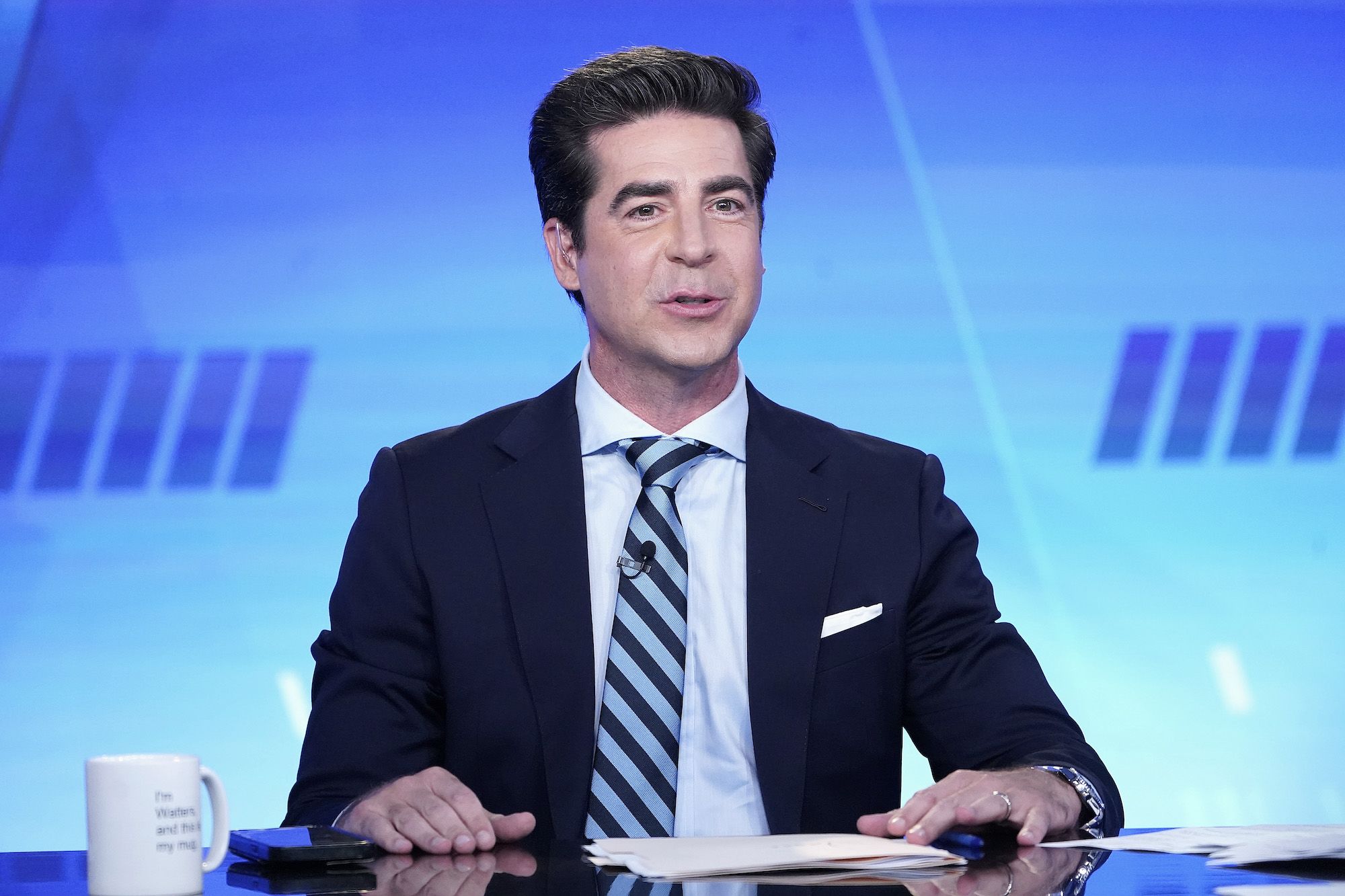
Watters, for his part, handled the situation with characteristic composure. His response was measured, humorous, yet pointedly human: he acknowledged the good time they shared and left the door open for future interactions. It was a reminder that, despite the polarization, media figures can engage across the divide without undermining their principles.
This interaction, seemingly small, became a masterclass in navigating the treacherous terrain of modern media: a world in which every smile, handshake, or casual conversation can be weaponized for political gain.
The Internet Reacts: From Outrage to Conversation 🌐
Social media’s reaction was multifaceted and chaotic. Threads exploded on X (formerly Twitter), TikTok videos circulated with dramatic commentary, and hashtags like #GayleAndJesse and #MediaMonsters trended globally. Some users dissected every detail of the flight, the timing of the Instagram post, the angles of the photo—turning a brief encounter into a national debate.
Analysts noted that the intensity of the response reflected deeper cultural dynamics: a growing intolerance for nuance, a hunger for conflict, and a fascination with the moral failings of “the other side.” King’s post was a mirror, showing Americans the absurdity of their own outrage.
The Historical Echoes 📜
Moments like these are not unprecedented. History is replete with instances where ordinary gestures of civility were treated as radical acts. From journalists who crossed enemy lines during wartime to politicians who shook hands with opponents, human decency has often sparked controversy in hyper-partisan environments.
King and Watters’ encounter fits within this lineage, reminding the public that the most mundane acts—polite conversation, shared laughter, mutual respect—can carry immense symbolic weight. In a world of extremes, the ordinary becomes extraordinary.
The Shadow of Violence ⚠️
The reaction to King’s post cannot be separated from the broader atmosphere of political tension in the United States. Recent events, including violent threats against public figures, highlight how partisan demonization has real-world consequences.
One chilling example was the assassination of conservative activist Charlie Kirk, which underscored how quickly rhetoric can escalate into violence. King’s decision to treat Watters humanely was, in contrast, a reaffirmation of the value of restraint, compassion, and ethical behavior.
Media Analysis: Civility Under Fire 📰
Media experts noted that King’s post illuminated a fundamental crisis in journalism: the tension between reporting and personal responsibility. In an environment where clicks, views, and engagement drive revenue, civility can feel like a liability. King, by refusing to conform, risked career consequences but preserved her integrity.
Dr. Lena Martinez, a media sociologist, commented: “This is a teachable moment. It shows that decency can be radical in today’s polarized media ecosystem.”
The Public’s Divided Response ⚖️
Opinion remains sharply divided. Some hail King as a hero, a voice of reason and humanity amid a storm of partisanship. Others condemn her, interpreting the encounter as complicity, betrayal, or weakness.
What is clear is that the episode forced Americans to confront uncomfortable questions: Can civility survive in a hyper-partisan society? Is it possible to engage across ideological lines without being consumed by outrage?
The Lessons for Modern Society 💡
King and Watters’ flight teaches broader lessons about empathy, courage, and moral clarity. Simple acts of human decency can disrupt narratives, challenge assumptions, and remind the public that dialogue remains possible, even in polarized environments.
It also underscores the importance of perspective: in a media landscape dominated by extremes, choosing humanity over outrage is both radical and necessary.
The Role of Social Media in Amplifying Conflict 📲
Without Instagram, this story might have remained a minor anecdote. The platform amplified it, transforming it into a national debate. Comments, shares, and algorithmic promotion created an echo chamber in which nuance was often lost. Yet even within the chaos, some users engaged thoughtfully, showing that social media can also be a space for reflection and discourse.
King’s post, therefore, serves as both a cautionary tale and a beacon: it highlights the power of social media to distort, but also its potential to connect and humanize.
The Human Element: Why Civility Matters ❤️
At its core, the story is about more than politics. It is about humanity, respect, and courage in the face of pressure. King’s choice to smile, converse, and post a photo is a reminder that decency still exists. Even when the world seems divided, the human connection can survive.
These moments matter because they demonstrate that courage is not always loud or confrontational. Sometimes, it is as simple as treating another human being with dignity.
Potential Consequences and Cultural Reflection 🌪️
What does this incident mean for journalists, media consumers, and the public at large? It suggests that every action, no matter how small, is now subject to public scrutiny and interpretation. Civility can be weaponized, kindness can be questioned, and neutrality can be misread as betrayal.
Yet, this moment also offers hope. If a simple flight can spark debate, reflection, and awareness, it reminds us that ordinary choices can ripple outward, shaping culture, discourse, and understanding in ways that politics often cannot.
Conclusion: The Flight That Became a Mirror 🪞
The encounter between Gayle King and Jesse Watters is emblematic of the times. In a society consumed by division, outrage, and polarization, simple acts of kindness and professionalism are amplified into symbols, tested under the harsh glare of public opinion.
King’s decision to treat a rival humanely, to post a photo, and to speak honestly about the experience offers a template for engagement in a fractured world. It shows that civility is not weakness, that humanity transcends ideology, and that even in the midst of chaos, it is possible to act with integrity.
As the debate continues, one fact remains: this flight was more than just a journey from one city to another. It was a journey into the heart of American society—its divisions, its passions, and its capacity for decency in the face of fury.