“The U.K. officially unveils how Queen Elizabeth’s legacy will be commemorated, as the proposed memorial designs spark widespread debate.”
The United Kingdom has taken a significant step toward preserving the legacy of Queen Elizabeth II, unveiling a shortlist of proposed designs for a national memorial dedicated to the late monarch. The announcement marks a pivotal moment in a long-term effort to commemorate a reign that spanned seven decades and shaped modern British history.
On May 7, the Queen Elizabeth Memorial Committee, in collaboration with the Cabinet Office, presented five shortlisted design concepts through a public online exhibition. This initiative reflects the government’s commitment to creating a permanent and meaningful tribute to Queen Elizabeth II, who passed away in September 2022 at the age of 96 after becoming the longest-serving sovereign in British history.
A Landmark Project Rooted in History
The national memorial is intended to serve not only as a physical structure but as a lasting symbol of continuity, service, and national identity. Queen Elizabeth II’s reign witnessed profound global change, from post-war reconstruction to the digital age, and the memorial aims to capture the enduring values she embodied throughout those transformative years.
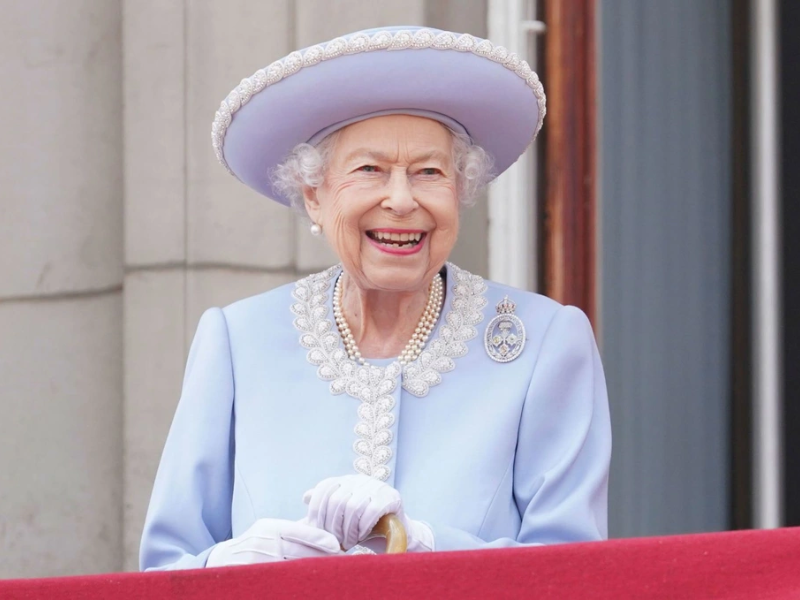
By launching the design shortlist publicly, organizers have emphasized transparency and inclusivity—an approach consistent with the Queen’s lifelong commitment to public service. The exhibition allows citizens to engage directly with the ideas being considered, reinforcing the memorial’s role as a collective national project rather than a purely ceremonial one.
Public Participation at the Core
Members of the public have been invited to review the proposed designs and submit their feedback until May 19. All responses will be carefully reviewed and forwarded to the Queen Elizabeth Memorial Committee, which is chaired by Lord Robin Janvrin, a former private secretary to Queen Elizabeth II.
Lord Janvrin has emphasized that public involvement is essential in shaping a memorial that truly reflects the Queen’s impact. With memories of her reign still fresh for many, the consultation process offers an opportunity to ensure that the final design resonates across generations and communities.
The committee is expected to select a winning proposal in early summer. The finalized design is projected to be revealed in 2026, a symbolic year that would have marked the Queen’s 100th birthday.
A Setting at the Heart of London
The memorial will be located in St. James’s Park, one of London’s most historic and culturally significant green spaces. Positioned near key royal and governmental landmarks, the park provides a setting that blends nature, history, and civic life.
All shortlisted designs emphasize accessibility and public engagement, incorporating open spaces that invite reflection rather than imposing grandeur. Organizers have stressed the importance of creating a memorial that feels welcoming and contemplative—a place where visitors can pause, remember, and connect with the Queen’s legacy in a personal way.
Design Principles and Evaluation Criteria
According to official statements, the design brief called for concepts that balance emotional resonance with sensitivity to the park’s status as a Grade I listed site. Designers were asked to envision a memorial that could function as a new national landmark while respecting the historic character of its surroundings.
In addition to artistic merit, proposals will be assessed on several practical factors. These include value for money, environmental integration, placemaking potential, and the overall experience offered to visitors. The goal is to ensure that the final memorial is not only visually compelling but also sustainable and meaningful over the long term.
Symbolism Woven into Architecture
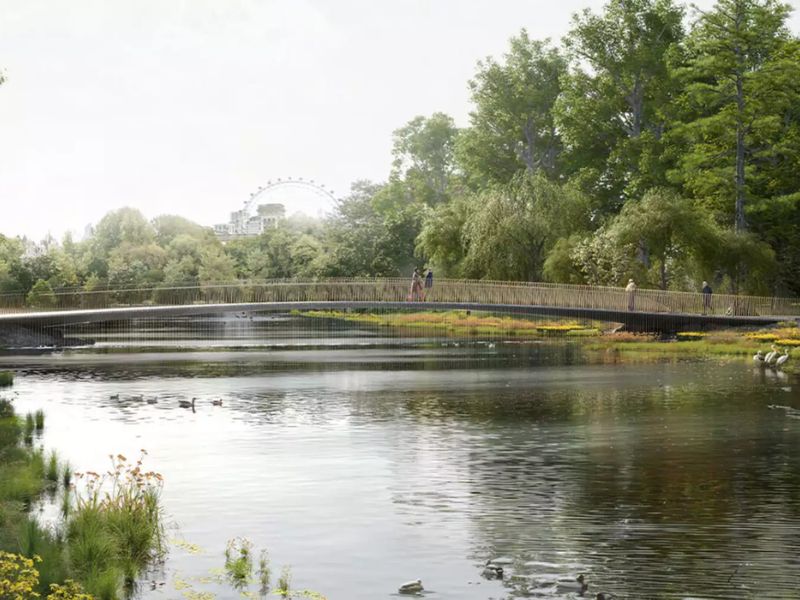
Each of the five shortlisted designs incorporates pathways, bridges, or walkways—elements that subtly reference Queen Elizabeth II’s lifelong role as a unifying figure, guiding the nation through moments of change and uncertainty.
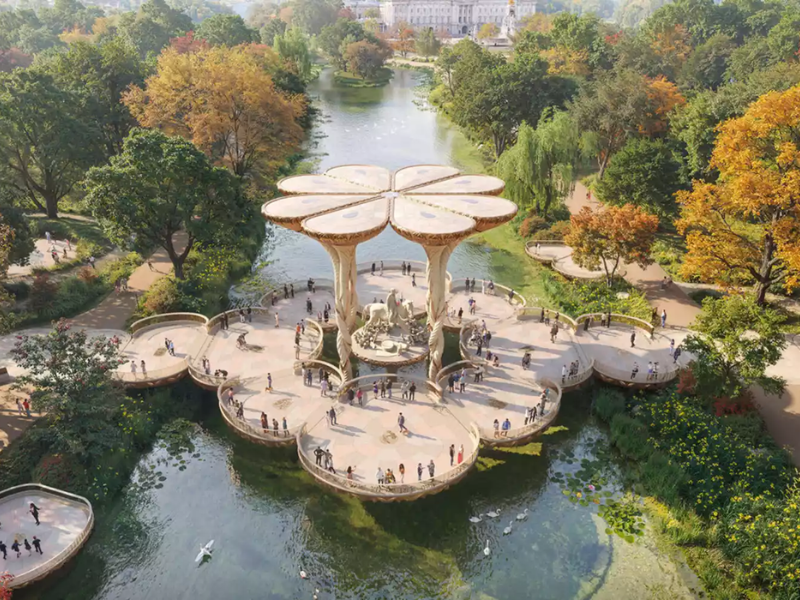
One proposal stands out for its use of a flower-inspired structure, an allusion to the Queen’s deep and longstanding connection to horticulture. As patron of the Royal Horticultural Society for 70 years, she regularly attended the Chelsea Flower Show, a tradition that symbolized her appreciation for heritage, craftsmanship, and nature. This botanical motif offers a poetic interpretation of her personal interests and public commitments.
A Figurative Presence
A key element of the memorial will be a figurative representation of Queen Elizabeth II herself. Organizers have confirmed that a separate selection process is underway to appoint a sculptor who will collaborate with the chosen design team. This phase of the project is expected to conclude later this year.
The inclusion of a figurative element reflects a desire to create a tangible connection between the public and the Queen, ensuring that her presence remains central to the memorial’s narrative rather than abstract or symbolic alone.
Royal Oversight and Continuity
According to The Court Circular, the official record of royal engagements, Prince William met with Lord Janvrin on May 1 at Windsor Castle, just days before the shortlisted designs were made public. While the meeting’s details were not disclosed, it suggests that senior members of the royal family remain closely informed about the project’s progress.
Prince William’s involvement underscores the continuity between past and future generations of the monarchy. As the heir to the throne, his awareness of the memorial process reflects both respect for his grandmother’s legacy and an understanding of its importance to the nation.
A Reflection of a Life of Service
Lord Janvrin, who joined the Royal Household in 1987 and served as the Queen’s private secretary from 1999 to 2007, has spoken about the responsibility of capturing the essence of Queen Elizabeth II’s reign.
In a statement, he noted that her extraordinary life of service touched countless individuals and earned widespread respect and admiration. Preserving the memory of her values—duty, resilience, and quiet leadership—is a central objective of the memorial project.
He also highlighted the significance of working with leading architects, artists, and designers from around the world to ensure the memorial reflects the highest standards of creativity and craftsmanship.
Beyond Commemoration
While the memorial will honor a specific individual, its broader purpose is to serve as a space for collective reflection. Organizers envision it as a place where history, memory, and public life intersect—a setting that encourages visitors to consider not only the Queen’s reign but the evolving story of the nation itself.
In this sense, the memorial is not simply about the past. It is intended to inspire future generations, offering a physical reminder of leadership rooted in service and continuity during times of change.
Looking Ahead
As the selection process moves forward, public interest in the project continues to grow. The release of the shortlisted designs has sparked discussion about how best to commemorate a monarch whose influence extended far beyond the United Kingdom.
When completed, the Queen Elizabeth II national memorial will stand as one of the most significant commemorative projects in recent British history. Its final form will reflect a careful balance between tradition and modernity, symbolism and function, remembrance and renewal.
More than a monument, it will be a shared national space—one that honors a remarkable reign while inviting reflection on the values that continue to shape the United Kingdom.