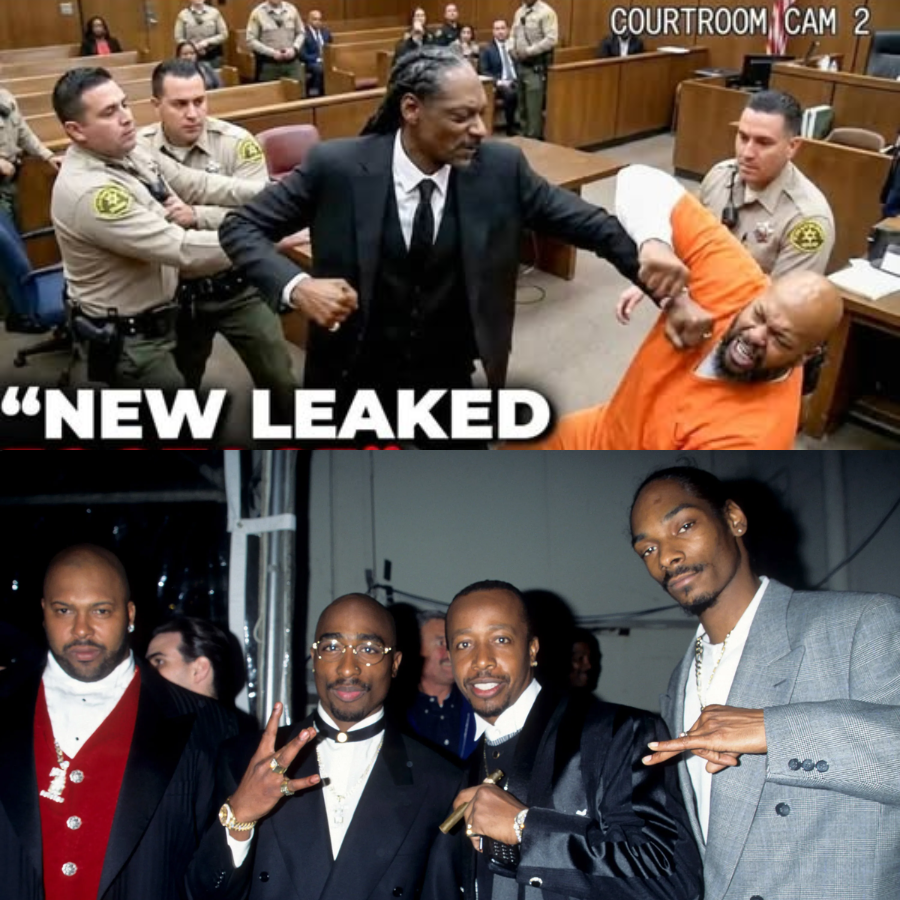
They started as brothers — day ones who shared meals, dreams, and the same grind. Then one night in Manhattan shattered everything, igniting a feud that spiraled into chaos and left hip-hop forever changed.
It has been nearly three decades since the bullets flew in Las Vegas and Los Angeles, claiming the lives of Tupac Shakur and The Notorious B.I.G. (Christopher Wallace). For years, their murders stood as the grim, unresolved bookends of the “East Coast vs. West Coast” war—a conflict that transformed hip-hop from a musical genre into a deadly battleground. But recent developments in a Las Vegas courtroom have ripped the bandage off these old wounds, offering something the world had almost given up on: answers.
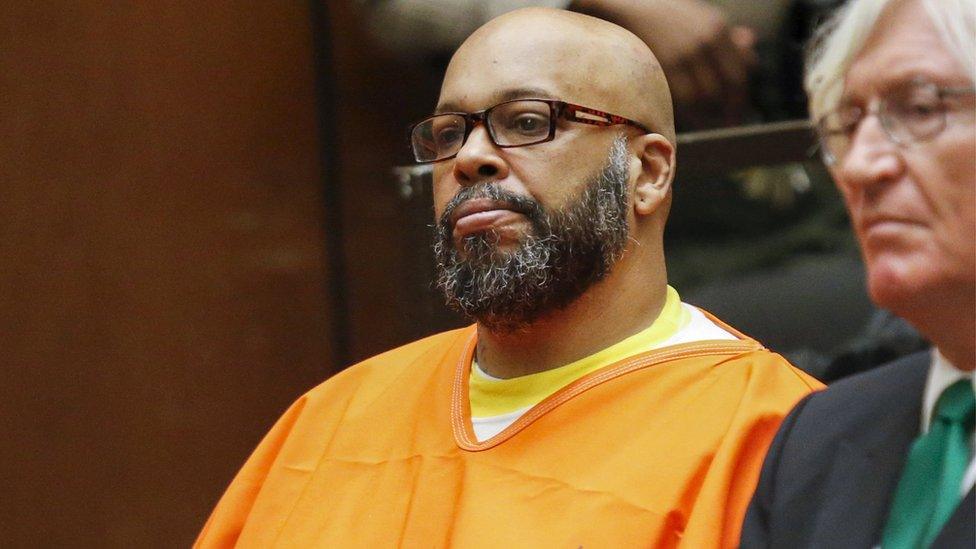
With the indictment of Duane “Keffe D” Davis in late 2023, the fog of conspiracy is finally lifting, revealing a tragic story not of mythical villains, but of fractured friendships, bruised egos, and the catastrophic consequences of “street politics.”
The Brotherhood Before the Bloodshed
To understand the magnitude of the tragedy, one must first understand what was lost. Before the diss tracks and the death threats, Tupac and Biggie were, in the parlance of the streets, “day ones.”
In 1993, they were inseparable. Tupac, already a rising star with a revolutionary spirit, took a young, hungry Biggie Smalls under his wing. They weren’t just industry acquaintances; they were genuine friends who broke bread together. Tupac would let Biggie crash at his Los Angeles home, and Biggie would treat Tupac like family in Brooklyn. They challenged each other’s pen game, performed together, and dreamed of dominating the world stage side-by-side.
“My dog,” Tupac called him in a 1995 interview, praising Biggie’s lyrical prowess. It was a golden era of mutual respect that makes their eventual fallout all the more heartbreaking.
The Night the Trust Died
The fracture occurred on November 30, 1994, at Quad Recording Studios in Times Square. Tupac, in the midst of legal troubles and needing cash, arrived to record a verse. Instead, he was ambushed in the lobby, beaten, robbed of $40,000 in jewelry, and shot five times.
Surviving by a miracle, Tupac was wheeled out on a stretcher, middle finger raised. But the physical pain paled in comparison to the emotional betrayal he felt. Seeing Biggie and Sean “Diddy” Combs in the building, Tupac became convinced they had set him up. While Biggie and his crew denied any involvement, the seed of paranoia was planted.
When Biggie released the track “Who Shot You?” shortly after, Tupac took it as a taunt. Despite Biggie’s insistence that the song was written before the shooting, the damage was done. The brotherly bond was severed, replaced by a vendetta that would consume the entire rap industry.
Enter Suge Knight and the Escalation
Fueling this fire was Marion “Suge” Knight, the imposing CEO of Death Row Records. Seeing an opportunity to secure the biggest star in the world, Suge bailed Tupac out of prison in exchange for signing to Death Row. Tupac emerged from incarceration hardened, tattooed with “Mob Piru,” and ready for war.
The release of “Hit ‘Em Up” in 1996 was the nuclear option—a diss track so personal and vicious that it obliterated any chance of reconciliation. The conflict was no longer just about music; it was about territory, pride, and gang affiliation. The Source Awards became a battleground, and the media fanned the flames, turning two talented young men into gladiators for public entertainment.
The Fatal Night in Vegas
The tragedy culminated on September 7, 1996, in Las Vegas. Following a Mike Tyson fight at the MGM Grand, Tupac, Suge, and their entourage were involved in a brawl with Orlando Anderson, a member of the Southside Compton Crips.
Hours later, as Tupac sat in the passenger seat of Suge’s BMW at a red light, a white Cadillac pulled alongside them. A hand emerged, and 14 rounds were fired. Tupac was hit four times. He fought for his life for six days before passing away at the age of 25.
Six months later, Biggie—who had expressed a desire to end the beef and move on—was gunned down in Los Angeles. He was only 24.
The “Ghost” in the Machine: Keefe D
For 27 years, the question of “Who killed Tupac?” spawned a cottage industry of theories. Was it the government? Was it Suge Knight? Did Tupac fake his death?
The truth, however, appears to be much more straightforward. In September 2023, authorities arrested Duane “Keffe D” Davis, Orlando Anderson’s uncle and a self-proclaimed shot-caller for the Southside Crips.
Ironically, the evidence against Davis largely came from his own mouth. In books, documentaries, and interviews, Davis had openly bragged about being in the white Cadillac that night, handing the gun to the shooter (allegedly his nephew, Orlando Anderson, or associate Big Dre). He likely believed his previous immunity deals or the passage of time would protect him. He was wrong.
Grand jury transcripts unsealed in 2025 painted a vivid picture of the gang retaliation that led to the shooting, dismantling the wilder conspiracy theories in favor of a grim reality: Tupac was killed over a casino fight and gang rivalries.
A Legacy of What Could Have Been
As Keefe D awaits trial—now scheduled for late 2026—the hip-hop community is left to reflect not just on the justice being served, but on the immense loss.
We lost two poets who were just beginning to find their voices. Tupac was evolving into a socio-political powerhouse; Biggie was expanding his storytelling into cinematic realms. They were young men with their whole lives ahead of them, caught in a cycle of violence that was amplified by the very culture they helped build.
The arrest of Keefe D brings a semblance of closure, but it doesn’t bring them back. It serves as a stark reminder that the “East vs. West” war wasn’t a movie—it was real life, with real consequences. As we look back, we shouldn’t just remember the beef; we should remember the friendship that started it all, and mourn the future that was stolen in the crossfire.
Rest in Power, Tupac and Biggie. The music lives on, even if the streets they walked are forever changed.