
Miller’s Crossing: A Thought-Provoking Gangster Epic by the Coen Brothers
Miller’s Crossing is not just any gangster film; it’s an intellectual, stylistic masterpiece that takes the noir genre and deconstructs it with the Coen brothers’ signature flair. Released in 1990, this film is a journey into the dark mind of humanity, filled with betrayal, tough choices, and moral ambiguity. Set during the Prohibition era, the story dives into a world of shifting loyalties, cold decisions, and philosophical reflections, where loyalty is a luxury and betrayal is currency.

A Stylish and Philosophical Gangster Story
At the heart of Miller’s Crossing is Tom Reagan (Gabriel Byrne), a sharp but emotionally detached right-hand man to the Irish mob boss, Leo (Albert Finney). Tom becomes entangled in a dangerous love triangle involving Leo, a rival Italian gangster named Johnny Caspar, and a femme fatale named Verna (Marcia Gay Harden), who is Leo’s lover and Tom’s secret mistress. When Johnny wants to kill Verna’s troubled brother, Bernie (John Turturro), Tom faces a moral dilemma in a world where ethics are a rare commodity and betrayal is part of the game.

Cinematic Excellence
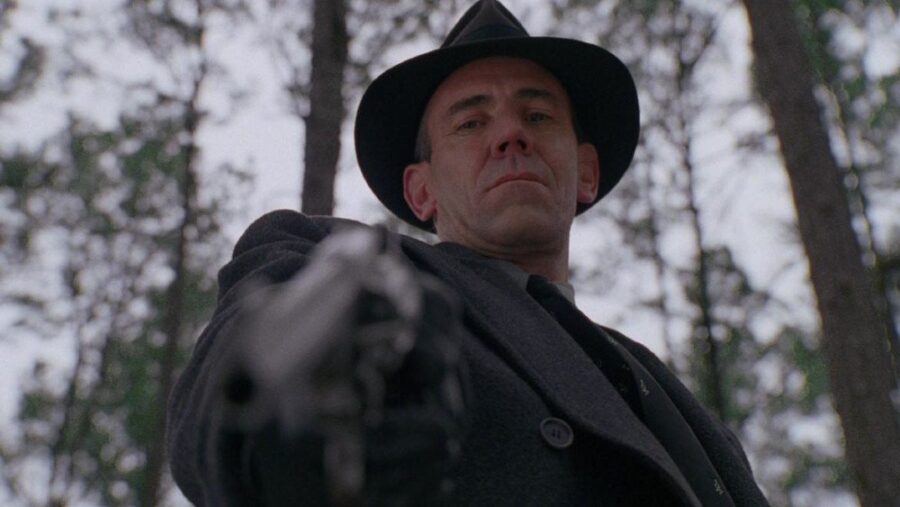
The film stands out not only for its superb storyline but also for its exceptional filmmaking. Directed by Joel and Ethan Coen, Miller’s Crossing delivers noir-style visuals, with dark lighting, long shadows, and a heavy atmosphere of mystery and danger. Cinematographer Barry Sonnenfeld creates an eerie yet elegant aesthetic, pulling the audience into a world full of crime and intrigue. The meticulously crafted suits, the fog that swirls through the streets, and the sharp precision of every shot make it impossible to look away.
Philosophical Underpinnings
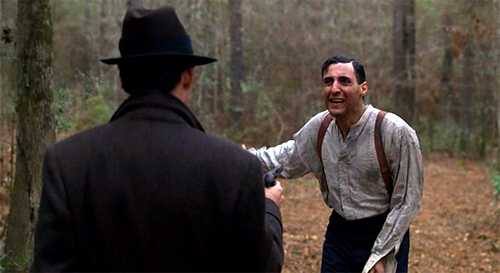
One of the most remarkable aspects of the film is how the Coens explore complex themes such as power, honor, and the human cost of cold decisions. Gabriel Byrne delivers an outstanding performance as Tom Reagan, a man tortured by his intellect and emotional indecision. The standout moment in the film, set in Miller’s Crossing, is a haunting meditation on mercy and consequence, emphasized by Bernie’s unforgettable plea, “Look in your heart!”
Carter Burwell’s melancholic score, particularly the haunting Irish ballad “Lament for Limerick,” adds emotional depth to the cool, calculated exterior of the film. The music amplifies the film’s sorrowful mood, making every decision and moment feel more profound and weighty.
Not Just a Gangster Film
Miller’s Crossing transcends the typical gangster genre; it is a philosophical puzzle wrapped in genre homage. The film examines loyalty, the price of power, and the consequences of betrayal, asking what loyalty means when everyone is playing their own angle. While it is less flashy than some of the Coen brothers’ other works, it remains one of their most mature and layered creations, offering a powerful commentary on the complexity of human relationships and choices.
In conclusion, Miller’s Crossing is a masterpiece that blends intellectual depth with stylistic elegance. It’s a film that invites reflection and discussion, exploring the morally ambiguous world of gangsters while delving deeply into the psychology of its characters. It is undoubtedly one of the Coen brothers’ finest works and a must-see for fans of cinema that challenges both the mind and the heart.