
💔 The Empty Space: How Liverpool’s Hidden Grief for Diogo Jota Is Shaping Their Season
💔 The Empty Space: How Liverpool’s Hidden Grief for Diogo Jota Is Shaping Their Season
It was supposed to be another season of triumph, another unstoppable march toward glory. But something at Liverpool feels different now — quieter, heavier, almost haunted. The songs still echo around Anfield, but beneath the noise, there’s an unmistakable ache.
Liverpool are still a team of world-class talent, led by relentless determination and tactical precision. Yet every match now seems touched by something unseen — a sadness that lingers in the spaces between the passes, a void that no new signing or tactical tweak can fill.
That absence has a name.
Diogo Jota.
⚽ A Team That Used to Laugh
A few short months ago, Liverpool were flying. Every touch from Salah, every surge from Alexander-Arnold, carried the pulse of inevitability. They were champions in waiting — winners even when not at their best.
And then came the silence.
Jota’s sudden death in early July — a car crash that stunned not just football but the world beyond it — left the squad reeling. He wasn’t just a finisher, a fighter, or a teammate. He was a presence — playful, humble, steady. The kind of person who made even the toughest training days lighter.
Players who once grinned through warm-ups now arrive with lowered eyes. The dressing room, once a riot of noise and laughter, now carries an unspoken understanding. The hook where Jota’s jersey used to hang remains untouched.
As one anonymous staff member told a local reporter, “It’s strange — we keep hearing him. In jokes, in songs. And then you realize he’s not there.”
😔 The Invisible Weight
Football fans live on data. Goals, assists, xG, heat maps. But what cannot be quantified — grief — may be the most decisive factor shaping Liverpool’s season.
Analysts can talk about tactical imbalances and transitional gaps, about how Florian Wirtz hasn’t quite clicked into the system or how Salah’s pressing intensity has dipped. Yet the truth may be simpler and more human.
As one insider put it:
“They go to work every day and their mate isn’t there. That changes everything.”
Every defeat now carries a ghost. Every training session begins with that empty space in the dressing room — a visual reminder that the team’s rhythm, once seamless, now beats unevenly.
🕯️ The Night the Music Stopped
When Anfield sang Jota’s chant for the first time after his death, the air changed. Thousands joined in — not in celebration, but in mourning. It was less a song and more a vigil.
Even the most hardened fans — those who never cry, who see football as war — admitted something broke that night.
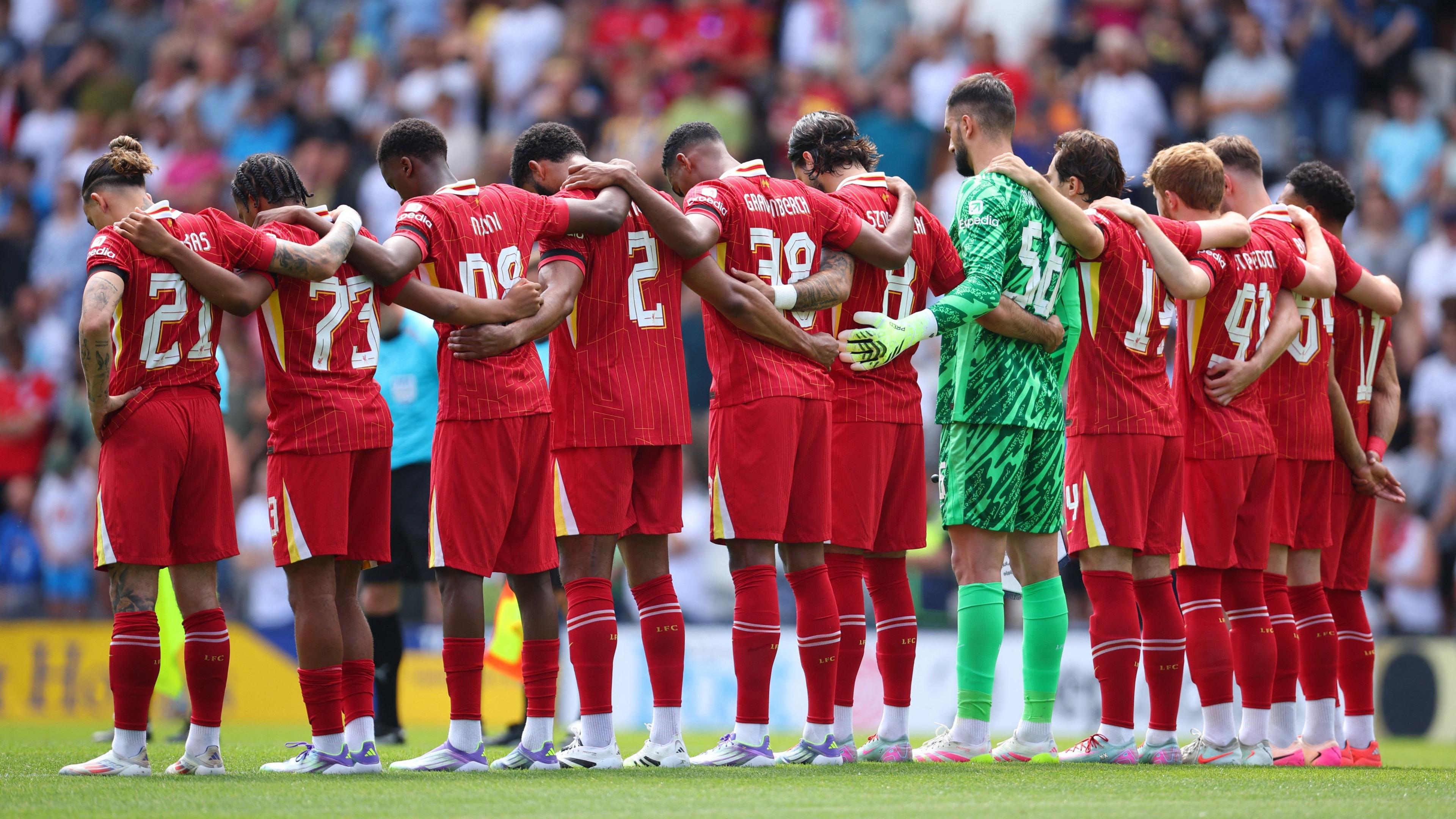
On the 20th minute of every game, the Kop still rises in tribute. Players look up. Some bite their lips. Others close their eyes. For a second, football stops.
Mohamed Salah, usually a fortress of composure, was seen wiping his face mid-match against Chelsea. Cameras caught it; fans debated it. But to those who know, it wasn’t frustration. It was memory.
🧠 The Psychology of Loss in Sport
It’s easy to underestimate how grief ripples through elite sport. Athletes are trained to compartmentalize — to turn emotion into energy. But some pain resists conversion.
Chelsea’s Enzo Maresca recently reflected on a similar trauma — the death of his teammate Antonio Puerta in 2007. “It’s not easy for the players, not easy for the club, not easy for the manager,” Maresca said. “When you go to training and see that empty place every day — you have to be very strong.”
Liverpool’s strength has always been collective. They run for each other. They celebrate together. But grief isolates. Each player grieves in a different rhythm — and sometimes, that dissonance seeps into their football.
It explains why certain passes look uncertain, why pressing triggers misfire, why the spark feels dimmed even when the tactics remain sound.
🔥 The Fall After the Rise
Just weeks before their collapse, Liverpool looked unstoppable. They’d survived City’s charge, shrugged off Arsenal’s resurgence, and looked poised for another title.
Now, three straight losses later, the questions have begun. Pundits call it a “mini-crisis.” Others say the magic’s gone.
But perhaps the real crisis isn’t tactical at all — it’s emotional.
“It’s not that they’re bad now,” one commentator noted. “It’s that they’re tired in a way that sleep doesn’t fix.”
When they line up for matches, they still look like Liverpool. But under the floodlights, you can sense it — the hesitation, the fraction of a second slower touch, the collective breath before every corner.
It’s not fear. It’s absence.
🧩 Florian Wirtz and the Search for Balance
Wirtz, Liverpool’s dazzling new signing, finds himself at the heart of this storm. He was brought in to rejuvenate the midfield — the creative spark after Henderson’s departure. But joining a grieving squad is like stepping onto a cracked mirror: everything looks normal, but nothing reflects quite right.
He’s talented, sharp, imaginative. Yet he often looks like he’s playing through fog. He misreads runs, overplays simple balls, glances toward the bench for reassurance that never comes.
Those who’ve watched him in Germany describe him as “a connector.” But connections require stability. And right now, Liverpool is a team learning to breathe again.
🩸 Salah, Silent and Human
Mohamed Salah has been Liverpool’s relentless machine — goals, assists, leadership. But now, his silence feels heavier than usual. His trademark smile appears less often.
Critics have begun circling, dissecting his every missed chance. But close friends suggest that the Egyptian forward is still processing — that Jota’s absence has shaken him more than people realize.
“He’s not just lost a teammate,” one teammate confided. “He’s lost his daily joy. They shared routines — gym sessions, recovery meals, even playlists. It’s those little things that stay with you.”
For Salah, it’s not form. It’s grief in disguise.
🧱 Klopp’s Legacy, Slot’s Burden
Jurgen Klopp’s shadow still stretches long across Anfield. His era was defined by emotion — by unity. Arne Slot inherited that foundation, but also its fragility.
Slot is methodical, cerebral, less demonstrative. He’s tried to lead with steadiness, not sentiment. But he knows — no amount of tactical structure can replace the hole left by Jota’s smile.
Behind closed doors, he’s said to have told his players:
“You don’t move on from someone like that. You move with him.”
It’s a line that’s since been written on the whiteboard inside Liverpool’s dressing room.
🪞 The Mirror of the Fans
Liverpool’s supporters are unlike any others — they don’t just watch; they participate. And they, too, are grieving.
Scarves raised higher. Chants louder. Yet behind every verse of “You’ll Never Walk Alone” lies a quiet pain.
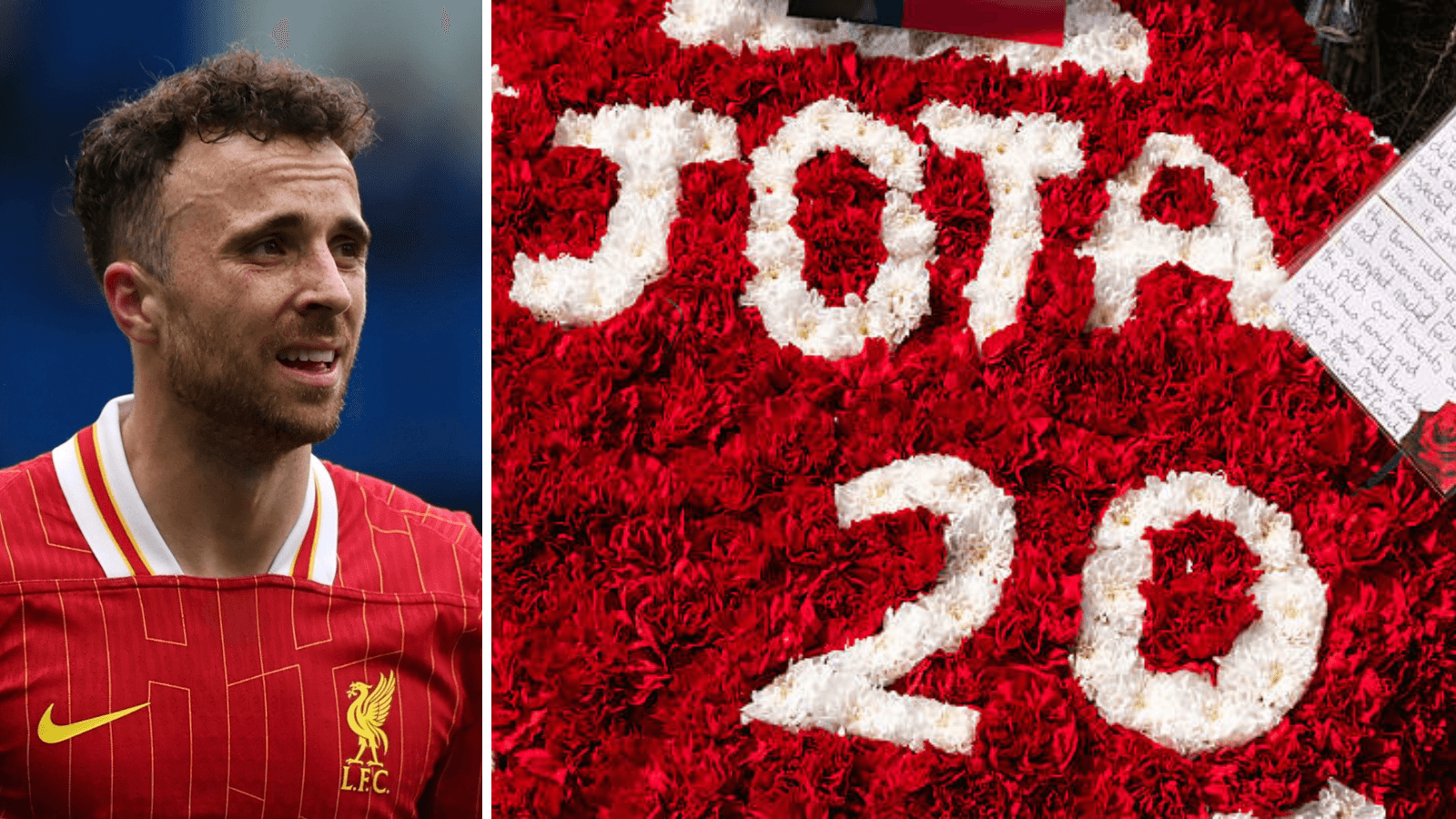
The city itself feels it. Murals of Jota have appeared overnight. At Melwood, fans leave flowers at the gates. On social media, tributes pour in daily — stories of autographs, encounters, kindnesses.
In their own way, the fans are helping carry what the players can’t say aloud.
🧨 The Critics and the Coldness
As Liverpool’s form dipped, so did patience. Pundits like Jamie Carragher have questioned the squad’s mentality, the lack of energy, the poor transitions.
But few have dared to connect the dots between grief and performance.
Because in the ruthless machinery of football media, sadness doesn’t sell — scandal does. To talk about emotion is to appear soft. To admit pain is to admit weakness.
And yet, the truth remains: Liverpool’s biggest struggle right now isn’t tactical. It’s human.
🕰️ Time, the Only Healer
It’s been just over three months since Jota’s death — barely enough time for acceptance to begin, let alone healing.
Psychologists working with sports teams often describe the “shadow phase” — the period when initial mourning fades but the emotional aftershocks remain. Liverpool are still deep within it.
Victories will come, but they will feel different. Defeats will hurt longer. Every training session, every photo, every chant — all of it loops back to the one truth: their friend is gone.
🌧️ Beyond Analysis
Football analysis is obsessed with clarity — cause and effect, metrics and meaning. But this story defies that logic.
We can measure goals per 90, but not grief per heartbeat. We can study passing networks, but not the networks of friendship that hold a team together.
And that’s what this season really is — a human one. A reminder that beneath the sponsorships, the tactics, the stats, are men trying to keep playing a game while their world feels a little emptier.
🕊️ The Song Lives On
On the 20th minute, every match, the chant begins again. “Oh, Diogo Jota…”
It drifts through Anfield like incense, bittersweet and eternal. Players glance toward the Kop — some smile faintly, others stare into the stands.
And for those few seconds, football stops being football. It becomes memory. Love. Absence.
Liverpool keep playing, because that’s what Jota would have wanted. But deep down, everyone — from the stands to the dugout — knows:
They’re still playing with him, not just for him.
❤️ “You’ll Never Walk Alone” — Reimagined
The anthem takes on a different meaning now. Once a song of triumph, it’s become a promise.
Through the storm, through the night, through the grief — they walk together.
And though the Premier League table might one day forget this stretch of the season, the story will live in Liverpool’s bones forever.
Diogo Jota gave them goals. But more than that, he gave them joy.
And that — more than any title — is what they’re still trying to win back.