
🎾 Novak Djokovic: The Unbreakable Code – Inside the Chaos, Genius, and Dark Fire of Tennis’s Eternal King
🎾 Novak Djokovic: The Unbreakable Code – Inside the Chaos, Genius, and Dark Fire of Tennis’s Eternal King
🌌 The Last Titan Standing
In an era where empires crumble faster than memories, Novak Djokovic remains—a living paradox carved from steel and silence. While Federer’s artistry has faded into nostalgia and Nadal’s grit has begun to bow under the weight of years, Djokovic endures, unbroken and unrepentant. He is not merely surviving; he is rewriting what survival means in sport. Every step on the court feels like defiance against entropy, every breath a manifesto: I am not done yet. To watch him now, in 2025, is to witness time itself negotiate with willpower.
He moves like a ghost of every battle he’s ever fought, and every scar has turned into scripture. His rivals come younger, louder, fresher—but Novak still reads the court like scripture, predicting futures before they happen. The crowd no longer just watches him play; they watch him persist. And there is something sacred in that persistence, something almost mythological in the way he refuses to age quietly.
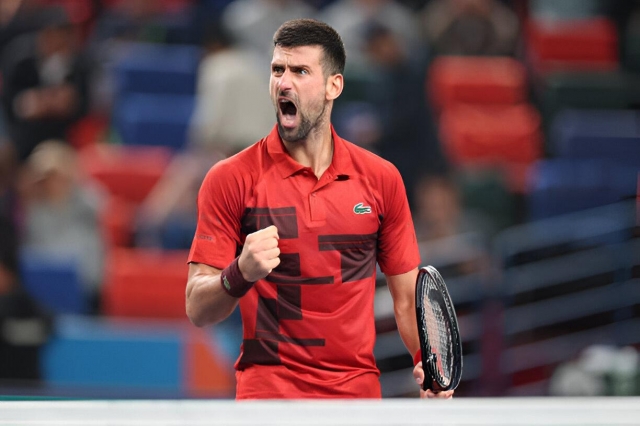
🔥 The Origins of a Warrior
Djokovic’s journey was never gilded—it was forged. Born amid the ruins of a war-torn Belgrade, his story began not on manicured lawns but on cracked concrete, in air sirens and sleepless nights. While the Western world played in peace, Novak played under falling skies. His earliest victories were not trophies but meals secured, hours survived. That hunger seeped into his DNA; it became his code.
Where Federer’s beauty seemed effortless and Nadal’s grit almost holy, Novak’s ascent was different—it was rebellion in motion. Every shot was a statement against circumstance, every win an act of defiance. He was not born for applause; he was built for endurance. And as he rose through the ranks, the polite world of tennis didn’t quite know what to make of this relentless, unpolished genius from Serbia who smiled after breaking you.
⚡ The Genius of Controlled Chaos
No player in modern history has weaponized chaos as efficiently as Novak Djokovic. His style, once criticized for lacking flair, has evolved into a symphony of precision within madness. He thrives in disorder, finding stillness where others panic. In five-hour marathons and tiebreak epics, his heartbeat barely flickers. To him, chaos is not an enemy—it’s an element to master.
Every match becomes a psychological autopsy. He studies opponents not just by strokes but by spirit—the tremor in a wrist, the hesitation before a serve, the micro-expression that betrays doubt. To play Novak is to face a mirror that reflects your own fragility back at you. And when he celebrates, it’s not arrogance; it’s relief—a man who’s wrestled with his own demons and won, yet again.
💔 The Burden of Greatness
Djokovic’s greatness has always been misunderstood. To some, he’s a villain—the man who shattered fairytales woven around Federer’s grace and Nadal’s virtue. To others, he’s the purest embodiment of human will, unpolished but authentic. Greatness, for Novak, has never been a gift. It’s a weight. Every record he breaks, every milestone he surpasses, seems to come wrapped in skepticism rather than celebration.
He is both adored and alienated, the eternal outsider in a club he built himself. Yet maybe that’s the price of truth. Djokovic doesn’t crave love; he craves justice. And sometimes, justice in sport means outlasting adoration.
🩸 The Rivalries That Defined a Generation
There was a time when tennis had gods. Federer, Nadal, and Djokovic—three celestial bodies orbiting the same sun, each defying logic in their own way. Yet amid the divinity, Novak was always the storm. His rivalry with Nadal was not just about matches; it was about mortality—how far flesh could go before breaking. His duels with Federer at Wimbledon became Shakespearean epics: beauty versus calculation, serenity versus hunger.
But while the others embodied grace, Novak represented gravity. He pulled the sport back to earth—real, raw, relentless. And through that, he didn’t just complete the Holy Trinity of tennis; he transcended it.
🔥 The Alcaraz Dilemma
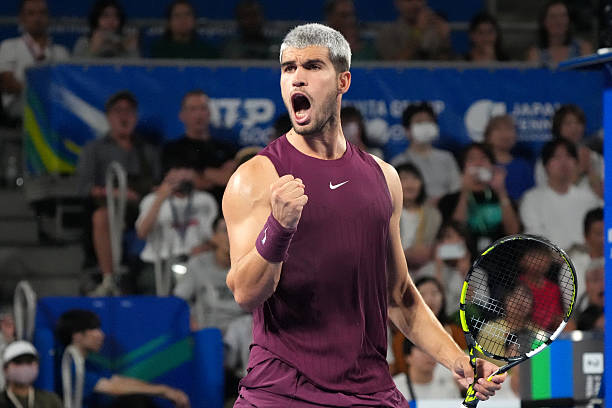
Enter Carlos Alcaraz—the future that refuses to wait. Youth, charisma, and untamed brilliance. To many, he is the heir; to Novak, he is a reflection. Their encounters are generational collisions, where time folds and destiny trembles. Sources close to Djokovic say he studies Alcaraz’s every movement, analyzing patterns deep into the night. But what truly haunts him isn’t Alcaraz’s forehand—it’s the realization that he once was Alcaraz: fearless, relentless, inevitable.
When they stand across the net, it’s more than a match—it’s philosophy meeting prophecy. One fights to conquer; the other fights to remain. And perhaps that is the cruelest beauty of sport: even kings must face their younger shadows.
🕯️ The Quiet War with Nadal
The cameras catch smiles, but history hears silence. Beneath the respect and camaraderie lies an unspoken tension between two legends bound by rivalry and pride. Insiders whisper that their friendship, though real, is cautious. Every compliment is double-edged; every embrace carries echoes of past wars. Nadal once said, “True humility is accepting your limits.” Novak, ever the philosopher-warrior, replied through deeds, not words: “What limits?”
They are twin flames of the same fire, yet forever apart—one defined by sacrifice, the other by survival. And in that delicate dance of destiny, neither can truly rest until both are gone.
💀 The Media’s Favorite Villain
No athlete has been dissected more ruthlessly than Novak Djokovic. The same intensity that fuels his greatness is often portrayed as arrogance. A glare becomes menace; a celebration becomes provocation. Yet, behind closed doors, those who know him speak of warmth, introspection, and almost obsessive kindness. He donates quietly, visits hospitals in secret, and funds refugee programs across Eastern Europe. But the world doesn’t want saints—it wants stories.
And so, Novak lets the villain myth live. Because deep down, he understands: every hero needs a shadow. His is simply larger than most.
🏛️ The Machine and the Monk
To understand Djokovic is to accept contradiction. He is a perfectionist obsessed with control—his diet, his sleep, his breathing. Yet, he also speaks of spirituality, of energy, of the universe’s vibrations. He can meditate before a storm and erupt like lightning within it. His discipline borders on ritual, his preparation almost sacred. While others train for victory, Novak trains for balance. His greatest secret weapon isn’t his backhand—it’s his mind, a fortress built on years of inner dialogue.
This harmony between machine and monk, logic and faith, has made him timeless. His game is not just athletic—it’s existential.
🔥 The Fall and the Resurrection
Every legend needs a fall. For Novak, it came not through defeat, but through exile. His deportation from Australia in 2022 was supposed to be the end—his empire shattered, his image scarred. Yet what followed was not collapse, but resurrection. He returned with the fury of a man unchained, conquering Grand Slams as if to prove that humiliation can be the purest form of fuel.
That episode didn’t break him—it revealed him. From ashes, he built a new mythology: not of perfection, but of persistence. Djokovic doesn’t just rise; he reincarnates.
👑 The Shadow of Greatness
Greatness, by nature, isolates. Novak stands atop the mountain, surrounded not by peers but by ghosts. He knows he will never be loved as Federer was, nor revered like Nadal. But perhaps love was never the goal. What Novak seeks is truth—the unfiltered recognition that greatness isn’t always beautiful. It’s lonely. It’s heavy. It’s the art of enduring when applause has faded.
He’s not here to charm the crowd; he’s here to outlast the world. In that defiance lies a strange purity—cold, yes, but undeniably human.
🎭 Inside Team Djokovic
Behind the stoicism lies a volcano. His camp—led by Goran Ivanisevic—is a blend of discipline and chaos. Reports describe heated arguments, shattered racquets, and philosophical debates mid-practice. But that’s the paradox: within their friction lies Novak’s fuel. They clash, they rebuild, they transcend. Genius, after all, is not born of calm—it’s born of conflict.
Team Djokovic doesn’t just prepare for tournaments; they prepare for transformation. Every match is a microcosm of evolution. And Novak, the eternal student, remains restless in pursuit of the unreachable.
🌠 The Philosophy of Survival
To watch Djokovic meditate before a match is to see serenity carved into flesh. He believes in energy, gratitude, and something beyond victory. “Every loss carries a vibration,” he once said—a line that sounds absurd until you realize it’s how he rewires failure. His strength lies not in denial but in translation—turning pain into purpose, defeat into design.
His tennis is poetry written in sweat, philosophy disguised as sport. And through that lens, Novak is not chasing immortality; he’s conversing with it.
⚔️ The Legacy Battle: GOAT or Ghost?
By numbers, Djokovic stands alone—more Grand Slams, more weeks at No. 1, more everything. Yet the debate continues, not because his greatness lacks proof, but because it lacks sentiment. Federer made people dream, Nadal made them believe, but Novak makes them think. And thinking isn’t as romantic as feeling. His legacy may never be universally loved—but it will be eternally undeniable.
When the noise fades, history will remember him not for how he made us cheer, but for how he made the impossible seem routine.
🔥 The Eternal Return
Now, in Shanghai 2025, Novak Djokovic walks into the twilight of his reign. The crowd is younger; the game, faster. But the fire remains—a steady, unyielding blaze beneath the surface. He no longer plays to prove; he plays to exist. Every serve, every return, is a dialogue with destiny. His career has transcended competition—it has become literature, written in sweat, scars, and symphonies of silence.
And when he finally leaves, the court will not fall silent. It will echo. Because Novak Djokovic was never just a player.
He was the reminder that time may age the body—but never the will.
He was, and will forever be, the fire that refused to die.