
🎭 The Fall and Flicker: Inside Jimmy Kimmel’s Ratings Crisis After a Controversial Suspension
🎭 The Fall and Flicker: Inside Jimmy Kimmel’s Ratings Crisis After a Controversial Suspension
🌙 A Late-Night Legend in Trouble
For nearly two decades, Jimmy Kimmel Live! had been a staple of American late-night television — part comedy, part confession, and all personality. But in September 2025, that familiar grin vanished from ABC’s airwaves overnight. What began as an offhand remark spiraled into one of the most abrupt suspensions in modern network history, and a scandal that still ripples across Hollywood.
The spark came after comments Kimmel made about conservative influencer Charlie Kirk’s death — remarks that many viewers found insensitive, and which prompted an immediate backlash online. Within 24 hours, ABC affiliates in major markets pulled his show from the lineup, citing “community sensitivity.” For a man long known for skating on the edge of political humor, this time, the edge gave way.
🔥 The Joke That Went Too Far
Kimmel’s humor has always walked a fine line — sometimes self-deprecating, sometimes biting, always polarizing. Yet according to insiders at ABC, his remarks about Kirk’s passing were described as “ill-timed and deeply tone-deaf.” Nexstar Media Group and Sinclair Broadcasting, both major operators of ABC affiliates, took an unprecedented step: they preempted Jimmy Kimmel Live indefinitely.
Andrew Alford, Nexstar’s broadcasting chief, issued a firm statement: “Mr. Kimmel’s comments were offensive and insensitive at a critical time in our national discourse.” For a network that thrives on advertisers’ trust, it wasn’t just about one remark — it was about public image, and damage control.
Rumors circulated that Disney executives were caught off guard, scrambling behind closed doors to prevent an all-out sponsor exodus.
💬 A Corporate Balancing Act
Disney’s internal communications leaked to Variety suggested deep division within ABC. Some producers defended Kimmel’s right to satire; others argued the network couldn’t afford another scandal after a turbulent political season.
“Everyone was nervous,” said one senior production manager who spoke on condition of anonymity. “They didn’t want another ‘cancel culture’ war on their hands, but they also couldn’t ignore how fast the outrage was spreading.”
The choice to suspend production for nearly a week was strategic — a cooling-off period, designed to calm viewers while the network assessed its next move.
📺 When the Lights Went Dark
On September 17, 2025, Jimmy Kimmel Live! went off the air. Reruns filled its slot on ABC, while rival shows like The Tonight Show Starring Jimmy Fallon and The Late Show with Stephen Colbert saw a curious bump in viewership. For late-night audiences, the absence was felt instantly — and for critics, it raised a bigger question: had late-night television finally reached its cultural breaking point?
Social media turned Kimmel’s name into a trending topic for five days straight. Hashtags like #KimmelSuspended and #JusticeForKirk flooded timelines, while industry analysts tracked the fallout in real time.
🗣️ The Apology Heard Around the Industry
On September 22, Disney announced Kimmel’s return. The company released a statement describing “thoughtful conversations” between Kimmel and executives — a polite euphemism for what insiders later called “intense negotiation.”
The comeback episode drew a stunning 6.26 million viewers, according to Nielsen — the highest in years. In his opening monologue, Kimmel tried to defuse tension with humor, joking about being “the only host ever suspended for doing his job too well.” But midway through, his tone changed.
“I said things I shouldn’t have said,” he admitted, voice steady but subdued. “And in a moment that called for empathy, I chose sarcasm. For that, I’m sorry.”
The audience applauded, but many sensed unease beneath the laughter.
📉 From Triumph to Tumble
Two days later, the numbers collapsed. Viewership fell by 64%, dropping from 6.5 million to just 2.3 million. The key demographic — adults aged 25 to 54 — plunged by an even steeper 73%.
The industry called it “the sharpest ratings descent for any late-night show in over a decade.”
According to Fox News’ media desk, advertisers began quietly reevaluating their commitments. “They weren’t sure if he was a risk or a redemption story,” said one anonymous ad buyer. “After all, controversy sells — until it doesn’t.”
🕰️ The Weight of the Past
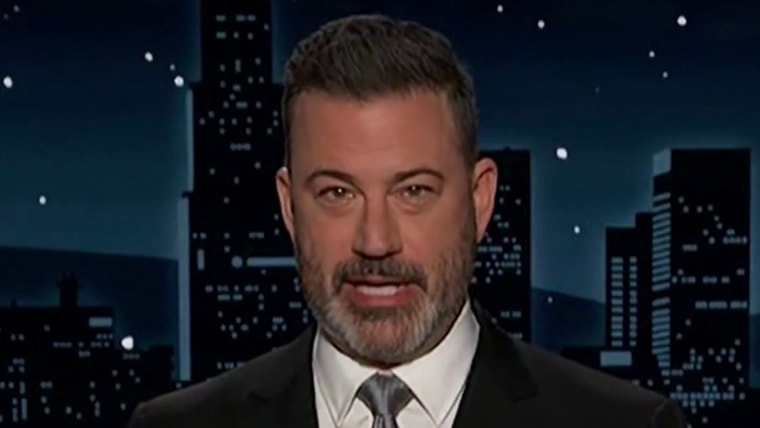
Kimmel’s troubles didn’t start in 2025. Over the past decade, his viewership had steadily declined — from an average of 2.4 million in 2015 to 1.6 million in 2025. Industry observers point to a broader shift: younger audiences have abandoned traditional television for YouTube and streaming, leaving late-night shows chasing ghosts of their former influence.
But for Kimmel, the decline carried a personal sting. Once hailed as the “conscience comedian,” he now faced accusations of arrogance, political bias, and performative apology.
🧩 A Divided Audience
Part of Kimmel’s enduring challenge has been his polarized fan base. Once the “everyman host,” his increasing political commentary alienated many viewers who once tuned in purely for comedy.
Public reaction to his suspension mirrored the national divide: half of America condemned him; the other half defended him. Political commentators from both sides seized the moment — some calling for accountability, others accusing ABC of censorship.
As one cultural critic wrote, “Late-night isn’t dying because of jokes — it’s dying because the laughter now comes with an agenda.”
💡 Behind Closed Doors: Disney’s Dilemma
According to a source close to Disney’s communications department, the decision to reinstate Kimmel wasn’t unanimous. “Some executives felt it was too soon,” the source revealed. “They worried about alienating affiliates in conservative markets.”
Others argued that pulling the show indefinitely would set a dangerous precedent for free speech in entertainment. In the end, pragmatism won: Kimmel returned, but the network remained cautious.
Rumors even suggest that internal memos instructed ABC affiliates to “closely monitor local viewer responses” and prepare contingency plans in case backlash reignited.
🎬 The Performance of Redemption
When Kimmel finally addressed his suspension on-air, the monologue was rehearsed, yet emotional. He balanced contrition with defiance, a tightrope act only a seasoned performer could walk.
Critics called it “Hollywood repentance at its finest” — perfectly calibrated for optics, not substance. Yet even detractors admitted the delivery was flawless.
“He knows the rhythm of redemption,” said one entertainment columnist. “He’s been here before. The real question is — will audiences still buy it?”
🔍 Ratings, Reality, and Relevance
As weeks passed, the initial ratings spike vanished. Jimmy Kimmel Live! stabilized at around 1.45 million viewers, barely above pre-scandal levels. By mid-October, competing programs regained their dominance.
Insiders at ABC quietly began discussing “format refresh” options — shorter monologues, fewer political segments, and more viral-friendly content for streaming platforms.
“Jimmy doesn’t want to admit it, but the game has changed,” one senior writer confessed. “You can’t rely on controversy to keep people watching. Not anymore.”
📡 Media Ethics and the Power of Backlash
The Kimmel controversy reignited debate over media accountability. Should comedians be punished for jokes? Should networks bow to pressure from sponsors and affiliates?
Academic panels and media watchdogs dissected the issue. Some argued that public outrage had replaced editorial standards. Others claimed this was a necessary cultural correction — a reminder that influence comes with responsibility.
For Kimmel, the storm became both a cautionary tale and a mirror of America’s fractured media landscape.
📖 Public Forgiveness Is a Moving Target
Public relations experts say timing is everything. Kimmel’s apology may have been heartfelt, but it came at a moment when audiences were weary of celebrity mea culpas.
“People no longer believe apologies — they expect transformation,” said Madison Lowell, a crisis management consultant in Los Angeles. “Kimmel gave them words, but not change.”
Social media metrics support that view: engagement with Kimmel’s official accounts dropped 28% in the month following his return.
⚖️ The State of Late Night
Beyond Kimmel himself, the episode highlighted a broader crisis: the erosion of late-night TV’s cultural authority. Once seen as America’s collective campfire, the format now struggles to compete in an era of algorithm-driven outrage.
Industry veterans quietly wonder if Kimmel’s stumble might mark the end of the traditional talk show era — or its painful rebirth.
As one veteran producer remarked, “Late-night used to comfort America. Now it just reflects its fractures.”
🌆 The Afterglow of Controversy
Weeks after his suspension, Jimmy Kimmel remains a figure caught between eras — the last of the old-guard hosts trying to stay relevant in a post-network world. His show survives, his humor endures, but the audience no longer laughs the same way.
Whether his ratings rebound or fade, his suspension will be remembered as a turning point — not just for him, but for television itself.
Because in 2025, one offhand comment wasn’t just a scandal. It was a signal — that even the kings of late night must now answer to the court of public opinion.
✍️ Epilogue: The Lesson Behind the Laughter
A year from now, industry analysts may remember this as the moment the late-night formula cracked for good. For Kimmel, it’s a story of irony — the comedian who once mocked politics became undone by it.
Yet, beneath the controversy lies a deeper truth: comedy has always walked the edge of discomfort. The question is whether audiences, networks, and the culture itself can still stomach that edge.
Until then, Jimmy Kimmel stands where all comedians eventually find themselves — between the joke and the judgment, between laughter and silence.