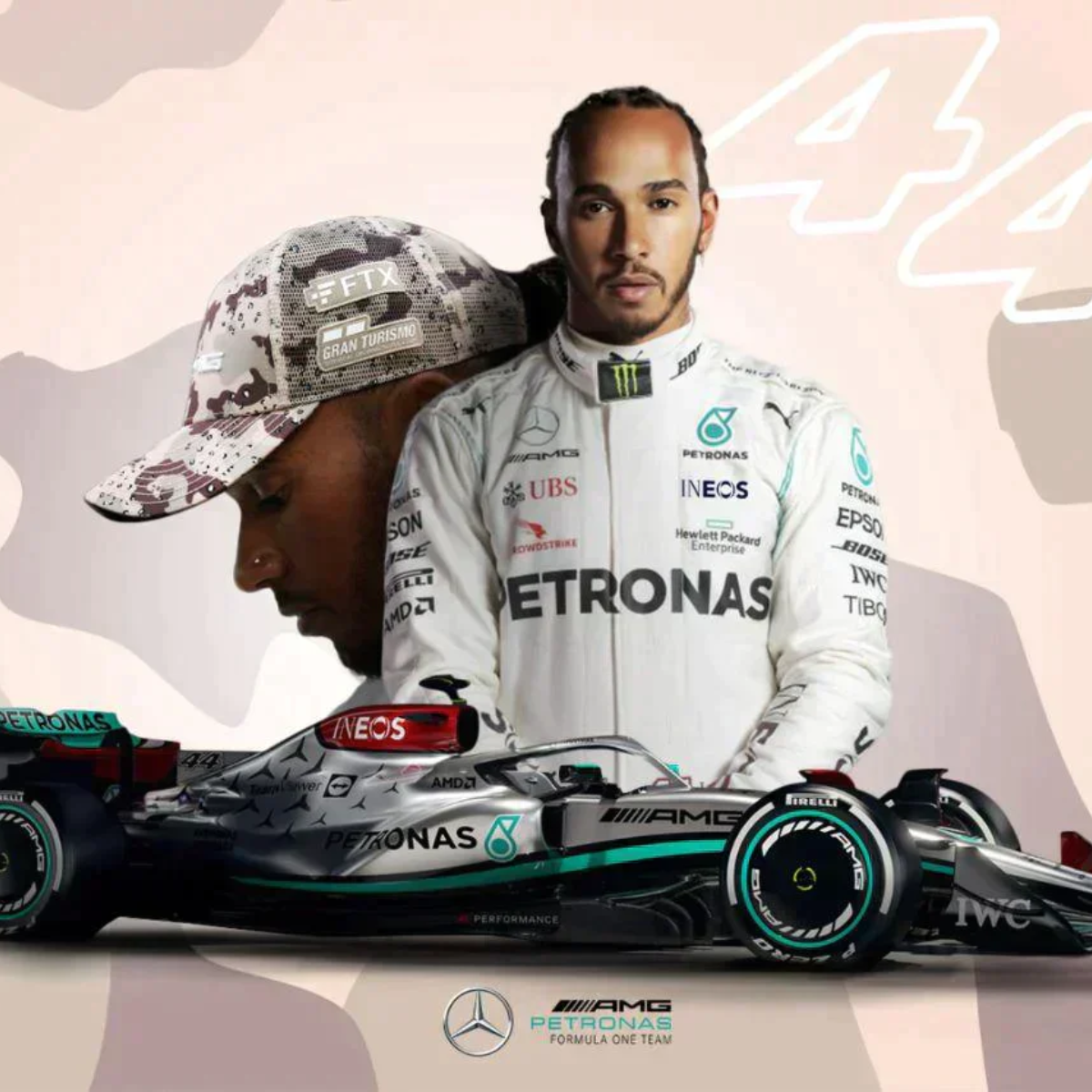
“WE FEEL SLOWER THAN GP2!” Lewis Hamilton delivers a brutal verdict on the car — calling it “ridiculously complex” and admitting it feels like you need a university degree just to understand it. Read more
Lewis Hamilton has dropped a bombshell on Formula 1’s glittering new era — admitting the radical 2026 cars feel slower than GP2 machinery, are “ridiculously complex,” and require something akin to a university degree just to wrap your head around them.
The seven-time world champion, now in scarlet at Ferrari after his blockbuster switch from Mercedes, didn’t mince words after his first taste of the SF-26 during pre-season testing in Bahrain on February 11, 2026. Speaking to a packed media pen following four hours of running on day one, the 41-year-old Brit delivered a brutally honest verdict that has sent shockwaves through the paddock, fan forums, and social media alike.
“Yeah, I think we’re slower than GP2 right now, right? It does feel like that,” Hamilton said, dropping the bombshell comparison to the feeder series (now known as Formula 2) he dominated back in 2006 on his way to F1 stardom. “The car is shorter, it’s lighter, it’s easier to catch. It’s quite fun, it’s like rallying a lot.”
But the praise stopped there. Hamilton quickly pivoted to the downsides — the cars’ sluggish feel compared to recent ground-effect monsters, and above all, the mind-bending complexity of the new power units and energy management systems that dominate the 2026 regulations.
“It’s ridiculously complex,” he continued. “I was sat in a meeting the other day and they were taking us through it and it’s like you need a degree to fully understand it all. None of the fans are going to understand it, I don’t think. It’s so complex.”
The comments — raw, unfiltered, and straight from the cockpit — have ignited fierce debate. Is Hamilton sounding the alarm on a rules package that’s gone too far? Or is this just early-season grumbling from a driver still adapting to a new team, new car, and new engineer after splitting with long-time race engineer Riccardo Adami?
The 2026 overhaul was billed as F1’s boldest reset in decades: lighter, shorter cars with active aerodynamics, a near 50/50 split between internal combustion and electric power, sustainable fuels, and smarter energy deployment to make racing closer and more sustainable. Liberty Media and the FIA promised spectacle — overtakes, battles, and cars that fans could follow without a physics textbook.
But Hamilton’s verdict paints a different picture. He highlighted “600 metres lift and coast on a qualifying lap” at tracks like Barcelona — hardly the flat-out drama fans crave. “That’s not what racing is about,” he added pointedly. The energy management, with its adaptive software, regenerative braking, and driver inputs versus car-side decisions, has become the elephant in the room.
Insiders say Hamilton’s frustration stems from the sheer volume of variables drivers must juggle mid-lap: monitoring battery states, deciding when to harvest or deploy, balancing thermal limits, and adapting to software that can override or assist in real time. “It’s pretty straightforward in terms of managing it right now,” Hamilton conceded, “but in race trim? We’ll see.”
The “slower than GP2” line has drawn particular fire — and some mockery. GP2/F2 cars are purpose-built feeders, often 3-4 seconds off F1 pace on similar tracks. Hamilton, a 2006 GP2 champion, knows better than most how far ahead F1 should be. Yet early sim data and shakedown runs suggested the new regs could shave lap times significantly due to reduced downforce and power shifts. Hamilton’s on-track feel contradicts that optimism.
Ferrari fans — already buzzing over the Hamilton move — are split. Some see his honesty as refreshing leadership from a driver who knows what winning looks like. Others worry it’s a sign the Scuderia’s new challenger isn’t where it needs to be. Teammate Charles Leclerc, who ran in the afternoon session, was more measured but acknowledged the learning curve: “It’s different. We need time.”
Pundits have weighed in fast. Sky Sports F1’s Martin Brundle called it “a wake-up call” for the sport’s direction. “Lewis is saying what many are thinking privately — the complexity might alienate fans and drivers alike.” Former world champion Jackie Stewart echoed concerns about over-engineering: “Racing should be instinctive, not a PhD thesis.”
Red Bull, Mercedes, McLaren, and others have stayed mostly diplomatic in early comments, but the paddock knows Hamilton’s words carry weight. As the most successful driver in history, his critique could influence fan perception and even push for tweaks before the season opener in Australia.
Hamilton’s move to Ferrari was always high-risk, high-reward. After years of dominance at Mercedes, he sought a fresh challenge — and legacy-defining eighth title — with the iconic red team. But 2026 is uncharted territory: new cars, new power units (Ferrari’s in-house), new dynamics. His split with Adami — replaced provisionally by Carlos Santi (ex-Raikkonen engineer) — adds another layer of adjustment.
Yet Hamilton remains upbeat in parts. “It’s a more fun car to drive overall,” he repeated, praising the rally-like handling from reduced downforce and lighter weight. “Easier to catch” means closer racing — potentially epic battles if the energy systems deliver.
But the complexity alarm is real. F1 has long battled accusations of being too technical — DRS, ERS, halo, ground effect — but 2026 pushes it further. Fans already joke about needing scorecards for modes like “overtake boost” or adaptive aero. Hamilton’s “university degree” quip has become instant meme fodder: T-shirts, edits, and viral posts flooding X and TikTok.
As testing continues in Bahrain — with more laps, more data, more tweaks — Hamilton’s words hang heavy. Will the cars speed up as teams unlock potential? Will energy management simplify in race conditions? Or is this the start of a season defined by frustration rather than fireworks?
One thing’s certain: Lewis Hamilton isn’t afraid to call it as he sees it. In a sport built on speed and precision, his blunt honesty might be the fastest thing on track right now.
The 2026 season is just beginning — and already, the king has spoken.