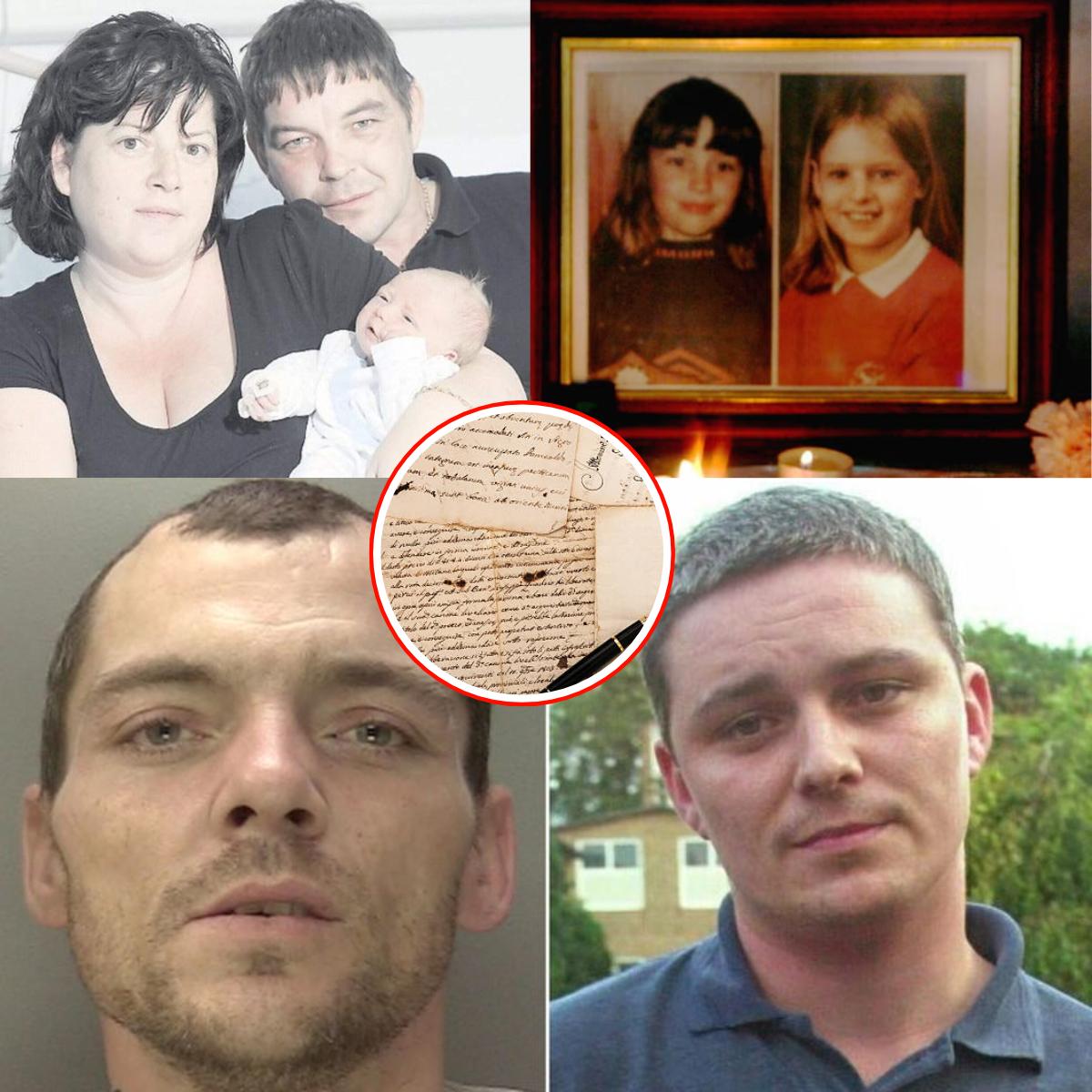
The man behind one of Britain’s most haunting crimes, Ian Huntley, reportedly wrote a chilling letter from behind bars just days before the violent attack that ended his life.
It was the final, self-pitying whimper from one of Britain’s most reviled child killers. Just eight days before he was battered to death in a savage prison ambush, Ian Huntley sat in his cell at HMP Frankland and scrawled a paranoid letter to a female pen pal he had never met.
“Sorry for not writing sooner but I’ve had a lot to deal with lately,” the Soham monster began. “I hate writing letters at the best of times.”
He thanked her for a birthday card sent on January 31. Then came the chilling warning that would prove prophetic:
“I’ve had to do some thinking. For your safety I’ve decided to discard everything you’ve sent and not proceed with having you cleared for calls and visits. You’re a lovely person and I don’t want you placed in harm’s way due to your affiliation with me.”
“Believe me when I say I have given this a great deal of thought and firmly believe it to be for the best. I hope all is well your end. Best wishes Ian.”
The letter, dated February 18, 2026, drips with self-pity and paranoia. The 52-year-old double child killer — serving a minimum 40-year sentence for the 2002 murders of ten-year-olds Holly Wells and Jessica Chapman — clearly sensed the walls closing in. He had been attacked twice before in prison. He knew his days were numbered.
Eight days later, on February 26, his instincts proved horrifyingly accurate.
In the waste management workshop at the maximum-security Category A jail in County Durham — nicknamed “Monster Mansion” — Huntley was ambushed by fellow inmate Anthony Russell, a 43-year-old triple murderer serving a whole-life tariff for a horrific 2020 killing spree.
According to multiple prison sources, Russell grabbed a 3ft spiked metal pole from the recycling crates and rained down blow after blow on the unsuspecting Huntley as he bent to tie string to a crate. Up to 15 savage strikes to the head. Catastrophic skull injuries. Huntley collapsed in a pool of his own blood, not breathing.
Fellow prisoners reportedly cheered as Russell was dragged away in handcuffs, screaming triumphantly: “I’ve done it! I’ve done it! I’ve killed him! I’ve killed him!”
Huntley was rushed to Newcastle’s Royal Victoria Infirmary. Doctors induced a coma. He underwent emergency surgery. A second operation followed to repair his shattered jaw. Scans showed devastating brain damage. His survival chances were put at just five per cent.
For nine agonising days he clung to life “like a cockroach”, as one source put it. Then, on Friday, his mother Lynda Richards, 71, who had travelled 175 miles from Lincolnshire to his bedside, made the decision. Life support was switched off at noon. Huntley slipped away at around 8.45am on Saturday, March 7.
The man who lured two innocent schoolgirls into his house, murdered them, dumped their bodies in a ditch and lied to the world for 13 days was finally gone — beaten to death by another monster in the very system that had kept him locked away for 23 years.
For the families of Holly and Jessica, the news brought a complex wave of emotions. Kevin Wells, Holly’s father, told the BBC the family had been informed but declined to comment further. “Those crimes were unspeakably evil,” one senior figure close to the investigation said, “and I cannot begin to imagine how painful the years since have been for their parents. Our thoughts remain with Holly and Jessica’s families.”
Huntley’s own daughter, Samantha Bryan — who has never met her father — was brutally blunt. She wants his ashes “flushed down the toilet”. His mother, who stood vigil as machines kept him alive, had previously admitted: “Part of me hopes he dies.”
The letter to the pen pal — the last words the Soham monster would ever write — has now emerged as the haunting full stop on a life defined by evil.
The woman, who had only been corresponding with Huntley since October 2025, had hoped to visit him. He shut that door firmly, citing her safety. Prison sources believe his paranoia was well-founded. He had been moved to the segregated Wing A — home to vulnerable high-risk inmates including sex offenders and former police officers — precisely because he was a constant target.
This was the third serious attack on him. In 2005, at Wakefield Prison, Mark Hobson threw boiling water over him. Twice his throat was slashed — once requiring 21 stitches. He attempted suicide twice: once before his trial in 2003 and again in 2006.
In leaked 2018 recordings, Huntley had claimed remorse, sobbing: “I am genuinely, genuinely sorry… it breaks my heart when it is reported I have no remorse.” But many who followed the case believed it was all an act from a man who once “swaggered” around prison and even wore a Manchester United shirt — the same team the girls supported in their final photograph — as a grotesque taunt.
Now, that twisted life has ended in the most brutal full-circle justice imaginable.
To understand the seismic impact of his death, we must go back to that sweltering August bank holiday weekend in 2002 — the summer that broke Britain’s heart.
Soham, a quiet Cambridgeshire market town, was preparing for its annual carnival. Holly Wells and Jessica Chapman — best friends since nursery, both ten, both pupils at St Andrew’s Primary — had spent the afternoon at a family barbecue at Holly’s house in College Close.
Wearing matching red Manchester United shirts with “Beckham 7” on the back, the girls slipped out around 6.30pm to buy sweets from the nearby sports centre. They were never seen alive again.
Ian Huntley, the 28-year-old school caretaker at St Andrew’s, lived just yards away at 5 College Close with his girlfriend Maxine Carr, a teaching assistant at the same school. The couple had argued that day. Huntley, already a fantasist with a string of failed relationships and allegations of sexual misconduct behind him, saw his opportunity.
He lured the girls inside on the pretence of showing them his pet dog. What happened next remains the stuff of nightmares.
Huntley later claimed at trial that Holly drowned accidentally in the bath after a nosebleed and that Jessica suffocated while he tried to silence her screams. In a secret 2018 confession to a friend, he admitted deliberately killing Jessica to stop her raising the alarm but still insisted Holly’s death was accidental. The truth died with him.
He bundled the bodies into his car, drove 12 miles to a remote ditch near Lakenheath, dumped them in shallow water, cut off their clothes and set them alight in a pathetic attempt to destroy evidence. The flames failed to consume everything. Forensic teams later recovered a lock of Holly’s butter-coloured hair — now kept by her parents in a porcelain box.
For 13 days the nation watched in horror as thousands of volunteers, police and even military helicopters searched fenland ditches, rivers and woods. Huntley himself appeared on TV, blandly telling journalists he had probably been the last person to see the girls alive and offering hollow sympathy.
His lies unravelled when it emerged he had given a reporter gruesome details about how the girls might have reacted to a stranger — knowledge he should never have possessed. Maxine Carr provided him with a false alibi, claiming she was with him all evening. She was later convicted of perverting the course of justice and served 21 months.
The girls’ bodies were finally found on August 17. Huntley was arrested. The trial at the Old Bailey in 2003 was one of the most harrowing in British legal history. He was convicted of both murders and given two life sentences with a minimum term of 40 years. The judge, Mr Justice Moses, told him: “You murdered them both. You are the one person who knows how you murdered them, you are the one person who knows why.”
For the families, the pain has never eased. Kevin and Nicola Wells turned their grief into campaigning for better child protection. The Chapmans, too, have lived with the unimaginable. Every anniversary, every new development rips open the wounds.
Huntley’s prison years were a catalogue of misery and failed comebacks. Transferred from Wakefield to Frankland in 2010, he was kept in protective isolation. He complained bitterly about his conditions. He wrote to newspapers and even tried to sell his story. In 2018 recordings he claimed he had accepted he would die behind bars: “I know I am never getting out. I have accepted that from day one.”
Yet he continued to torment the families from afar — wearing that Manchester United shirt, boasting to inmates, and allegedly goading staff with details of the crime.
Anthony Russell, the man who finally ended Huntley’s life, is no hero. A heroin addict from Coventry, he was given a whole-life order in 2022 for the brutal murders of Julie Williams, her son David, and pregnant Nicole McGregor during a seven-day rampage in October 2020. He raped, strangled and robbed his way across the Midlands. He is now charged with Huntley’s murder and will appear at Newcastle Crown Court.
Prison sources say the attack was swift and merciless. Huntley was working alongside other segregated inmates when Russell struck. The metal pole — part of the recycling machinery — was swung with such force that fragments lodged in the wounds. One source described Huntley’s head injuries as “split in two”.
The Ministry of Justice issued a brief statement: “The murders of Holly Wells and Jessica Chapman remain one of the most shocking and devastating cases in our nation’s history, and our thoughts are with their families.”
An inquest will open shortly. Huntley’s body has been released to his family for a private cremation — likely near his Grimsby roots — funded in part by the taxpayer, as is standard for prisoners. His mother has spoken of the horror of seeing him “unrecognisable” in hospital.
For many, Huntley’s death brings a grim sense of closure. “He’s not worth the breath of the people of Soham,” one local told the BBC. Others simply said: “Good riddance.”
Yet the families of Holly and Jessica have always insisted the focus should remain on their daughters — two bright, happy, loyal little girls whose lives were stolen in the most callous way imaginable.
In the quiet streets of Soham, tributes still appear at the memorial. The church bells that tolled in 2002 still ring. The horror of that August weekend is etched into the town’s soul.
Ian Huntley’s final letter — paranoid, self-pitying, signed with a casual “Best wishes Ian” — reveals a man who knew his time was up. He discarded his pen pal’s letters “for her safety”. He sensed the danger.
In the end, the monster who destroyed two families met an end as violent as the crimes that defined him. Bludgeoned in a prison workshop by a man serving whole life for triple murder. Life support withdrawn. Gone.
The Soham murders remain one of the most shocking chapters in modern British criminal history. The girls’ faces — smiling in their red football shirts — are still on missing posters in some people’s memories. Their names are still spoken with love and pain.
Huntley took their lives. He took their futures. For 23 years he breathed the same air as the rest of us, albeit behind bars. Now, at last, he is no more.
The letter he wrote eight days before his death will stand as his pathetic epitaph — a final, desperate attempt to control the narrative even as the walls caved in.
“For your safety, I’m discarding everything you’ve sent.”
In the end, it was Huntley himself who was discarded — beaten, broken and switched off like the machine that had kept his evil heart beating far longer than his victims ever had the chance to live.
The families of Holly and Jessica deserve peace. The people of Soham deserve to remember their daughters without the shadow of the monster who took them.
Ian Huntley is dead. And for once, the nation can say without hesitation: good riddance.