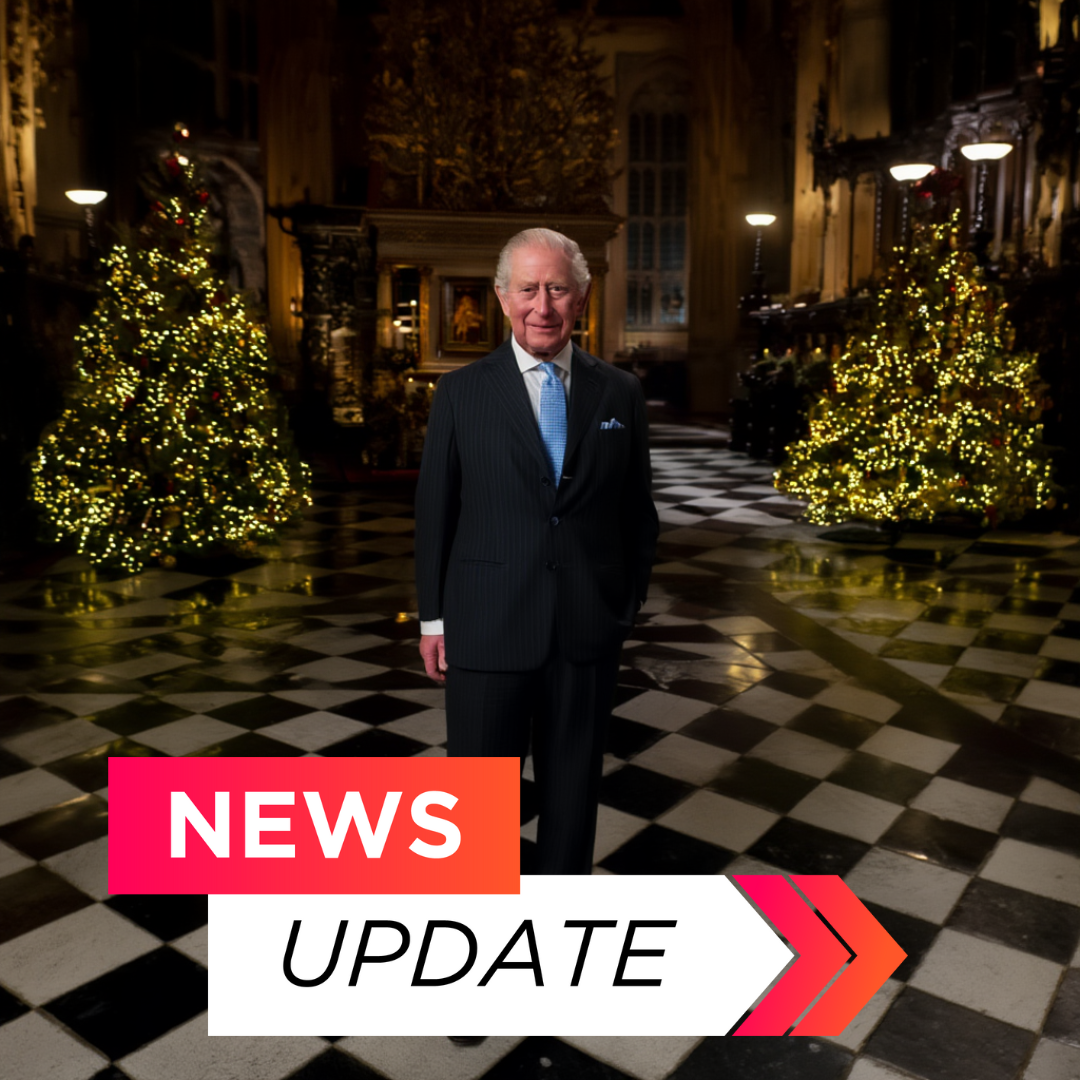
King Charles’ Christmas Message Breaks Royal Tradition
King Charles Breaks Tradition With Christmas Speech After a Year of Scandal, Illness and Royal Strain
King Charles III delivered his Christmas Day message this year from a place steeped in centuries of royal history — and the choice was anything but accidental.
Breaking with a tradition long defined by Queen Elizabeth II, who typically recorded her annual address seated behind a desk at Buckingham Palace surrounded by family photographs, the King instead spoke from the Lady Chapel of Westminster Abbey. It marked the first time a Christmas broadcast has ever been filmed inside the Abbey — the sacred setting of coronations, royal weddings, and state funerals.
The location alone sent a powerful message. But it was the timing, the tone, and the context surrounding the speech that made it one of the most closely watched royal moments in years.
A Year That Tested the Crown
Charles’s Christmas address arrived at the end of what palace insiders quietly describe as one of the most turbulent years the modern monarchy has faced.
In November, the King made the explosive decision to formally strip his younger brother, Prince Andrew, of his remaining titles and honors. The move followed continued fallout from Andrew’s association with convicted sex offender Jeffrey Epstein — a scandal that has refused to fade despite years of attempts to contain it.
Beyond removing titles, Charles has reportedly taken steps to evict Andrew from Royal Lodge, the sprawling Windsor estate long occupied by the disgraced duke. Andrew and his ex-wife, Sarah Ferguson, were notably absent from the royal family’s traditional Christmas Day walk this year — a conspicuous omission that did not go unnoticed by observers.
Instead, Princesses Beatrice and Eugenie joined the procession to St. Mary Magdalene Church without their parents, a visual reminder of how decisively Andrew has been sidelined.
Illness Behind Palace Walls
Behind the scenes, the King himself has been facing deeply personal challenges.
Earlier this year, Buckingham Palace confirmed that Charles is undergoing treatment for an undisclosed form of cancer. While the Palace has remained tight-lipped about the specifics, the King revealed just two weeks ago that he had received “good news” from his doctors and expects to scale back treatment in the new year.
The health concerns have cast a long shadow over royal engagements, raising quiet questions about stamina, succession planning, and the emotional toll of leading the monarchy during such a fragile period.
Charles is not the only senior royal confronting illness. Catherine, Princess of Wales, has been on her own cancer journey, stepping back from public duties for much of the year as she undergoes treatment. Her appearance at the Sandringham Christmas morning service was therefore seen as both reassuring and symbolic — a sign of resilience in the face of adversity.
A Family Still Divided
Absent once again from royal Christmas celebrations were Prince Harry and Meghan, Duchess of Sussex, who spent the holidays in Montecito with their children, Archie and Lilibet.
The King reportedly saw his younger son briefly in September — their first meeting in 19 months — but the relationship remains delicate. Sources describe the encounter as cordial but cautious, with years of tension, public criticism, and legal disputes still unresolved.
For many viewers, the unspoken presence of Harry loomed over the broadcast. As Charles spoke about unity, reconciliation, and respect, royal watchers could not help but interpret his words through the lens of a family fractured across continents.
Why Westminster Abbey Matters
Westminster Abbey is not merely a backdrop — it is a statement.
By choosing the Abbey, Charles anchored his message in the deepest traditions of the monarchy and the nation. It was here that he was crowned in May 2023. It is here that kings and queens are laid to rest. It is where Britain marks moments of profound continuity and collective memory.
Royal historians suggest the decision was deliberate: a way for the King to frame his message above personal drama and scandal, positioning the Crown as enduring, moral, and rooted in shared values rather than individual personalities.
The visual contrast with Queen Elizabeth’s intimate, family-centered broadcasts was stark. Gone were the framed photographs and domestic warmth. In their place stood soaring stone arches, stained glass, and the weight of history.
A Speech Heavy With Meaning
The themes of the King’s address reflected the year’s upheaval.
Charles spoke repeatedly of “honor,” “integrity,” and the importance of “cherishing the values of compassion and reconciliation.” He invoked the courage and sacrifice of those who fought in World War II, drawing parallels between past divisions and the fractures facing society today.
“As we hear of division, both at home and abroad,” the King said, “these are values of which we must never lose sight.”
In moments of uncertainty, he emphasized, hope is found through “resilience in the face of adversity,” “peace through forgiveness,” and “showing respect to one another.”
To many listeners, the words felt carefully chosen — less a festive greeting and more a moral compass offered during a time of national and familial strain.
The Walk to Church Speaks Volumes
The broadcast aired shortly after the royal family completed their traditional Christmas morning walk to St. Mary Magdalene Church in Sandringham.
This year’s procession subtly reflected the monarchy’s shifting dynamics. Alongside the King and Queen were senior working royals and extended family members — including Princesses Beatrice and Eugenie — but notably excluded were Prince Andrew and Sarah Ferguson.
The visual message was clear: certain chapters of royal life have been firmly closed.
A Chronicle of a Difficult Reign
Buckingham Palace has long described the Christmas broadcast as more than a speech. According to palace tradition, it serves as a “chronicle of global, national and personal events” that shape both the monarch and the public.
This year’s installment may stand as one of the most revealing yet — not because of what was explicitly said, but because of what hovered just beneath the surface.
A King facing cancer.
A brother cast aside.
A son living oceans away.
A monarchy redefining itself under pressure.
And yet, standing beneath the vaulted ceiling of Westminster Abbey, Charles projected calm, continuity, and conviction.
A New Tone for a New Era
For royal watchers, the message was unmistakable: King Charles is determined to rule on his own terms.
Where Queen Elizabeth emphasized constancy and family, Charles appears focused on values, accountability, and moral responsibility — even when that means making painful decisions.
His Christmas speech was not just a reflection on faith or festivity. It was a quiet declaration of leadership during crisis, framed by stone, history, and the enduring weight of the Crown.
As Britain looks toward a new year filled with uncertainty, one thing is clear: the monarchy under King Charles is changing — and this Christmas message marked a defining moment in that transformation.