Behind Palace Walls, a High-Stakes Battle Quietly Escalates
A Royal Homecoming Hanging by a Thread: Meghan Markle’s UK Return All But Tied to Prince Harry’s Security Fight
For nearly four years, the question of whether Meghan Markle will set foot on British soil has hovered over the royal narrative like a stubborn ghost — whispered in tabloids, debated on talk shows and dissected by royal-watchers worldwide.
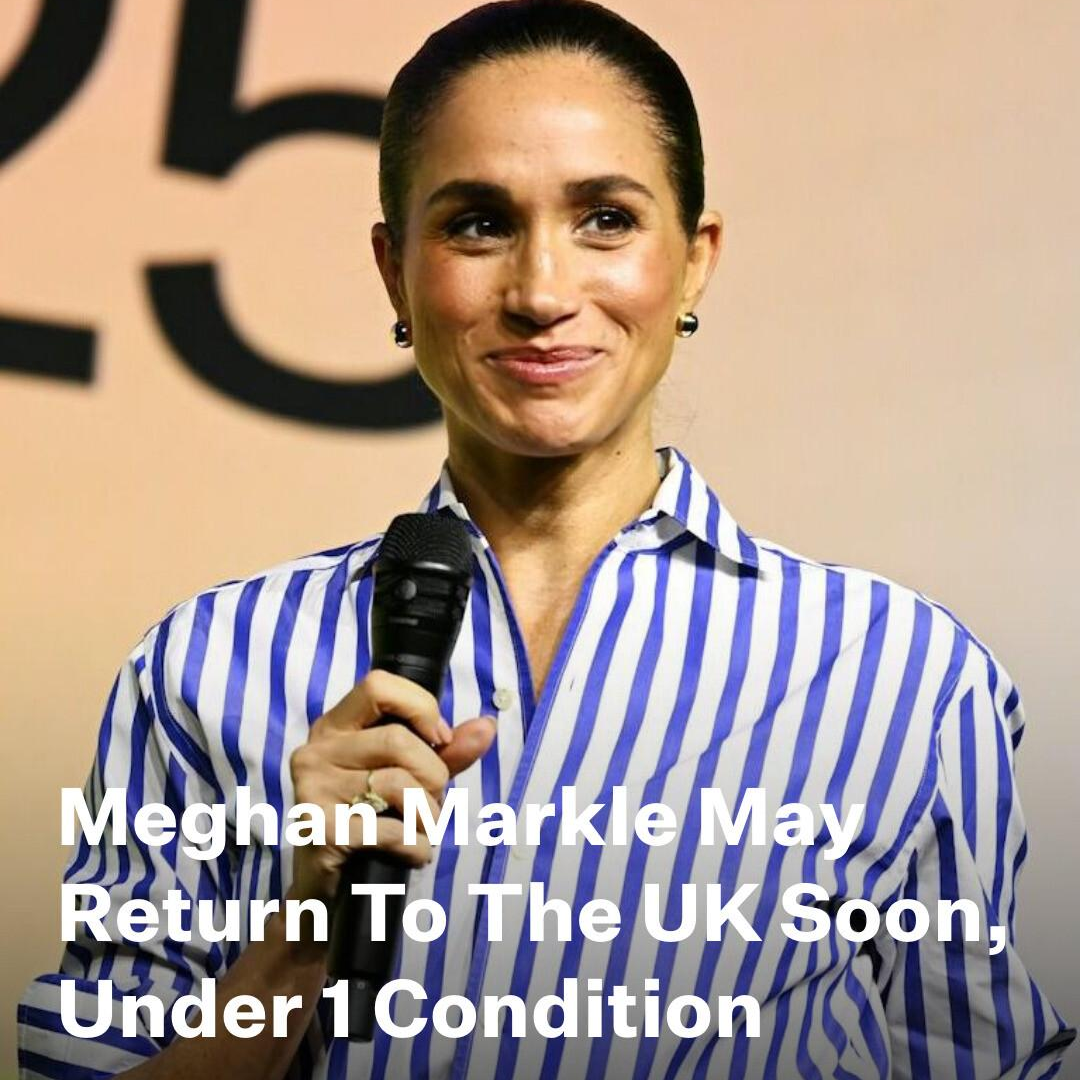
Now, that question may finally be edging toward an answer — but only if one crucial condition is met: Prince Harry’s long-running battle to regain full security protection in the UK is resolved.
This isn’t a simple travel plan. It’s a battle over public safety, royal privilege, legality, and above all, perception — and its outcome could determine whether Meghan’s next chapter literally begins at Heathrow or stalls far before it ever reaches British soil.
The Return That Never Came
Since stepping back from senior royal duties in 2020, Meghan Markle has not returned to the UK with her husband and children. Their last joint visits were in 2022 — first for Queen Elizabeth II’s Platinum Jubilee, then to attend her funeral in September of the same year.
What followed were repeated headlines about estrangement, royal rifts and a family divided by public statements and private grievances.
But at the core of many of these narratives — and the only clear obstacle to Meghan’s return — lies a very particular issue: security.
Why Security Is the Make-or-Break Factor
After Harry and Meghan stepped down as working royals, the arrangement that once granted them taxpayer-funded armed protection in the UK was changed. Harry’s full security cover was downgraded, and protections were subjected to review on a case-by-case basis by the UK government’s security committee.
Harry has repeatedly said that he will not bring Meghan and their children to the UK unless he is confident they can be protected — and that means armed police protection. According to recent reporting, that battle is once again in play, as the government reviews whether his security should be reinstated to match the risks he believes he faces.
If the review goes in his favour, royal commentators suggest there’s a real chance Meghan will set foot in the United Kingdom for the first time in years — and possibly very soon.
A Return Carefully Calculated
Sources say Meghan has not spontaneously avoided Britain — her absence has been strategic and tied directly to concerns over security arrangements.
While snippets of conversations between the Sussex camp and their advisors have not been made public, royal authors and commentators have suggested that Meghan’s decision not to visit is less about distance and more about who, what and how — especially when children are involved.
One well-connected royal biographer even suggested that without security reinstatement, Meghan would have “no choice” but to keep her family safely in the United States — particularly as public opinion in Britain continues to shift.
Public Opinion Clips Both Ways
Across British media and social platforms, reactions to Meghan’s potential return reflect deep divisions:
-
Some believe security has been used as an excuse for years, shielding Meghan from what they expect would be an unwelcoming or even hostile environment.
-
Others argue that if security is granted, there’s nothing left to prevent the visit — and that Meghan will need to face the public scrutiny that comes with a high-profile homecoming.
-
Online commentators on platforms like Reddit have gone so far as to insist that Harry’s public actions contradict the narrative of personal danger, suggesting his relatively relaxed behaviour during UK visits undermines the security argument.
The Invictus Games and a Countdown to Decision
One event now central to speculation is the “one-year-to-go” celebration for the 2027 Invictus Games in Birmingham, scheduled for this summer. Harry is expected to attend, and reports say he wants Meghan there too.
This would mark a major public appearance for the couple and might set the stage for a broader return later this year — but only if the security question is resolved in the Sussexes’ favour.
British commentators see this thrusting the narrative into sharper public focus, where security arrangements are not merely a behind-the-scenes negotiation but a national conversation about public money and royal entitlement.
Beyond Safety: Political and Public Backdrop
The issue of taxpayer-funded protection for former working royals has been deeply controversial in Britain. Many voters question whether such cover is justified for someone no longer serving in an official capacity — a sentiment that has only hardened over time.
There’s also the political context: while the security review unfolds, Harry is due back in the UK later this month to give evidence in a High Court case against Associated Newspapers Limited — part of his ongoing legal battles with parts of the British press.
That adds another layer of complexity. A high-profile legal fight, a public security review, and a possible joint appearance with Meghan would make for a rare British summer spectacle — depending entirely on how the government rules on police protection.
Could This Change the Sussex Story?
If security protection is reinstated, royal sources believe the Sussexes would be much more comfortable staging an official return — not just a brief visit, but a platform moment that could reshape the couple’s relationship with the UK public and press.
However, if the review goes the other way, skeptics argue that Meghan’s absence will continue to be framed in terms of safety concerns, even as critics claim other motives — including criticisms about her past statements regarding the British media and public.
A Homecoming Still in Question
For now, the possibility of Meghan Markle’s return to Britain looms larger than it has in years — overshadowed, but undeniably linked, to Prince Harry’s ongoing fight for secure protection on home soil.
And while no final decision has been made, the implications extend far beyond a single trip: how a modern royal balances personal safety, public perception and legacy in an institution centuries old — remains one of the most watched stories on both sides of the Atlantic.