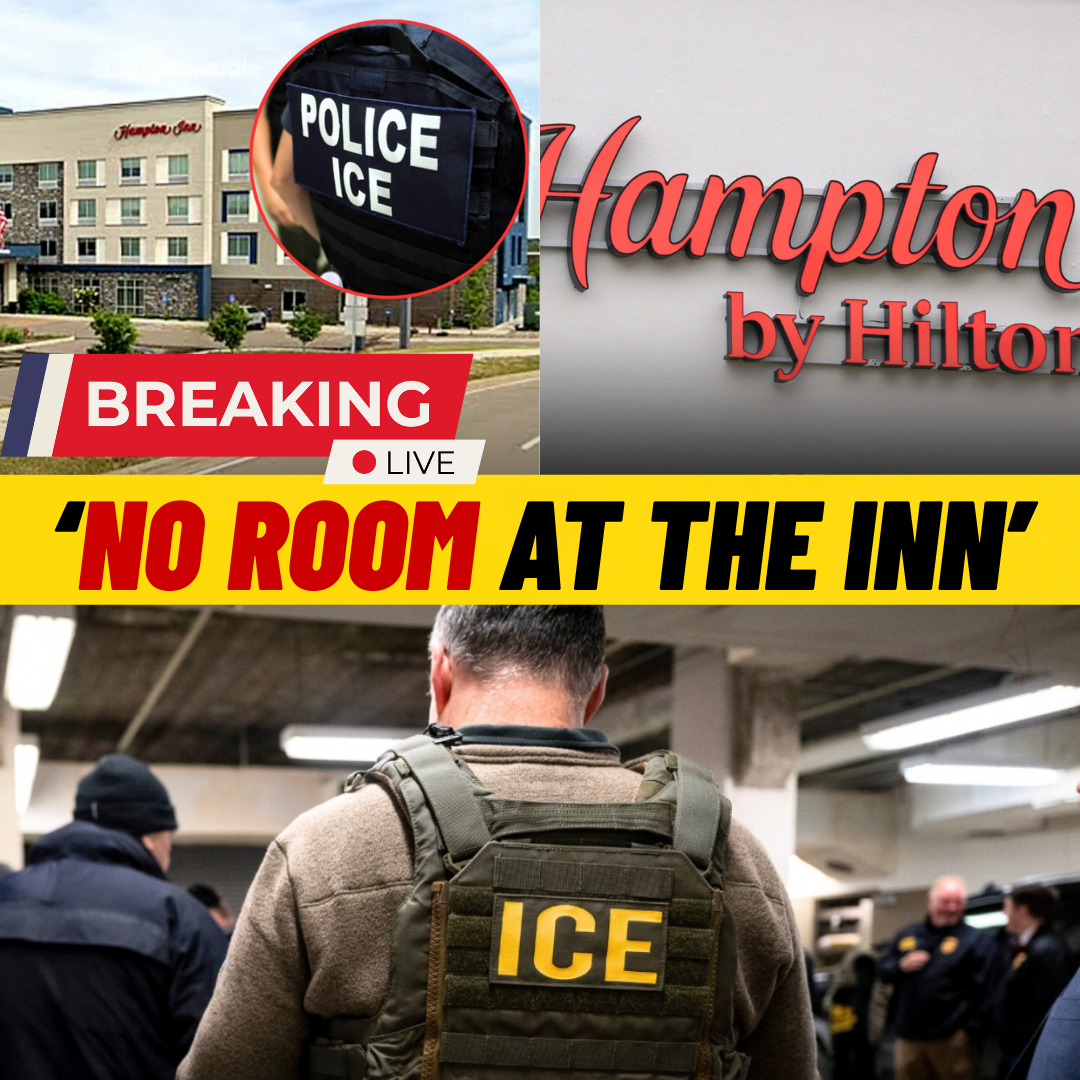
Hilton Scrambles After Law Enforcement Turned Away at U.S. Hotel
‘NO ROOM AT THE INN’: Hilton Hotels Under Fire After Allegations It Refused Service to DHS/ICE Agents at Minnesota Property
In a controversy that has erupted into one of the biggest hospitality-industry flashpoints of the year, Hilton Hotels finds itself at the centre of a furious dispute after the U.S. Department of Homeland Security (DHS) accused a Minneapolis-area hotel of turning away federal immigration law enforcement officers.
The dispute – involving a Hilton-branded Hampton Inn in Lakeville, Minnesota – has sparked criticism from both federal officials and national commentators, thrusting one of the world’s most recognisable hotel brands into an escalating political and public relations firestorm.
Hilton has since sought to distance itself from the incident, stressing that the property in question is independently owned and operated by a franchisee and that the actions described do not reflect the values or policies of the broader Hilton group. But the accusations have reverberated far beyond a lone hotel lobby, raising questions about guest discrimination, corporate oversight, and the role of global brands in politically charged disputes.
DHS Goes Public: ‘No Room at the Inn!’
The controversy began earlier this week when the Department of Homeland Security took to social media platform X to make a startling public accusation against Hilton Hotels.
In a post punctuated with outrage and a play on words—“No Room at the Inn!”—the agency claimed that law enforcement officers from U.S. Immigration and Customs Enforcement (ICE) and other DHS divisions were denied accommodation at a Hilton franchise simply because of their profession.
Screenshots shared by DHS appeared to show email responses from hotel staff indicating that bookings made with official government email addresses or tied to immigration enforcement would be cancelled. One such message allegedly stated that the hotel would not allow “ICE or immigration agents” to stay at the property — and that such reservations would be terminated.
The department’s post labelled the alleged actions “unacceptable” and a coordinated refusal to serve federal law-enforcement personnel. The DHS message sparked immediate public attention — and intense political debate.
How the Cancellation Emails Allegedly Read
According to screenshots posted by DHS, law enforcement personnel received messages that allegedly said:
“We have noticed an influx of GOV reservations made today that have been for DHS, and we are not allowing any ICE or immigration agents to stay at our property. If you are with DHS or immigration, let us know as we will have to cancel your reservation.”
A follow-up email in the alleged conversation went further, claiming:
“After further investigation online, we have found information about immigration work connected with your name and we will be cancelling your upcoming reservation.”
The tone and wording of these messages — if accurate — suggested more than a simple administrative error; DHS officials interpreted them as evidence of targeted refusal of service.
Hilton’s Response: ‘Independent Ownership’ and Apology
Within hours of the DHS post going public, Hilton Hotels issued statements aimed at calming the backlash and clarifying its position.
The hotel chain said the Lakeville Hampton Inn is independently owned and operated by Everpeak Hospitality, and that the actions allegedly taken by staff at that property “do not reflect Hilton values.”
In its statement, Hilton reiterated a commitment to inclusivity, saying:
“Hilton hotels serve as welcoming places for all… this hotel is independently owned and operated and the actions referenced are not reflective of Hilton values.”
Both Hilton and the franchise owner, Everpeak, apologised for the incident and emphasised that it violated their own policies. Efforts were said to be underway to re-accommodate affected guests, and the property has been instructed to review its procedures.
Why This Escalated So Quickly
The episode has struck a chord at a time when federal immigration enforcement activities are under heightened scrutiny — particularly in cities like Minneapolis, which have been focal points of immigration policy debates and DHS operations.
At the time of the cancellations, DHS officers were reportedly in the region as part of a broader federal initiative involving investigations of alleged fraud within federally funded programs and the enforcement of deportation orders. The scale of the deployment, involving large numbers of Immigration and Customs Enforcement agents and Homeland Security Investigations personnel, appears to have drawn added attention to the hotel’s decision.
Given the politically charged nature of immigration policy in the United States, the controversy swiftly escalated beyond a local customer service issue into a national flashpoint — with political commentators and social media users weighing in almost immediately.
Public Reaction: Outrage, Support, and Boycott Calls
Once the story broke online, reactions were swift and deeply divided.
Critics — particularly conservative commentators — accused Hilton of engaging in discrimination and effectively attacking federal law-enforcement personnel. Some social media users responded with calls for boycotts of the hotel chain, and prominent voices framed the incident as emblematic of what they see as political bias within major corporate brands.
One DHS post on social media even questioned Hilton by name, tagging the company and directly asking why its Minneapolis franchise had allegedly rejected federal employees’ reservations.
Amid the outrage, some users urged contract cancellations and legal review, suggesting that refusing accommodation to government officials — if proven — could hamper critical enforcement operations and potentially violate anti-discrimination norms.
On the other hand, other commenters, including some hospitality industry observers, cautioned against conflating a single franchise incident with broader corporate policy — noting that many Hilton properties are franchises, not corporate-owned hotels, and that individual franchise management decisions do not always reflect brandwide strategy.
The Franchise Factor: Why Hilton Is Scrambling
One of the complicating factors in the story is the structure of Hilton’s business model. Like many global hotel chains, Hilton operates primarily on a franchise basis — meaning local owners operate individual hotels under the Hilton brand while agreeing to standards and policies set by the corporate headquarters.
Hilton noted in its response that the Lakeville Hampton Inn is just such a franchised property — a separate business entity from Hilton Worldwide Holdings. Corporate officials urged the public to consider this distinction when evaluating responsibility for the alleged actions.
However, critics argue that branding still carries weight: guests see the Hilton name first, and any controversy can reflect on the wider company whether or not it owns the physical property.
This dynamic has put Hilton in a difficult position — forced to both uphold its corporate commitments to inclusivity and enforce standards across its franchise network, while responding swiftly to a public controversy that threatens reputational damage far beyond Minnesota.
Broader Implications for Corporate Policy and Government Relations
Beyond the immediate fallout, the dispute raises broader questions about how large hotel chains balance corporate identity with franchise autonomy, especially in politically sensitive contexts.
Hospitality industry analysts suggest that major brands increasingly face pressure to ensure uniform enforcement of nondiscrimination policies across all properties, regardless of who owns or operates them. A failure to do so, they argue, can easily lead to damaging public backlash in an age where social media amplifies every misstep.
There are also broader questions about how national brands interact with government agencies. Hotels routinely host government workers — from defense personnel to local law enforcement to federal investigators — and most large chains hold federal lodging contracts and agreements precisely to facilitate such stays.
In this context, any perception that a brand is unwilling to accommodate government agents — particularly those engaged in official duties — can raise legal, reputational, and operational concerns for corporate leadership.
Is an Investigation Underway?
Hilton said it is investigating the matter with the individual hotel, signalling that disciplinary action or policy reaffirmation could be imminent.
At the same time, DHS officials have continued to press their case publicly, calling the alleged refusal “unacceptable” and questioning the broader implications of such conduct on federal enforcement operations.
While no formal civil rights lawsuit has yet been announced in connection with the cancellations, the prominence of the DHS accusation and the framing of the incident as discriminatory have raised the possibility of legal scrutiny if further evidence emerges.
The Political Backdrop: Immigration Enforcement in Minnesota
The setting of this controversy — Minneapolis and the surrounding area — adds another dimension to the story.
The Twin Cities region has been a focal point of national immigration policy debates in recent years, with law enforcement and political activists often at odds over approaches to enforcement, sanctuary policies, and community safety. DHS’s operation in Minnesota this winter was reportedly tied to fraud allegations involving federally funded programs, drawing significant federal resources and personnel to the state. Against this backdrop, an accusation that a major brand refused service to immigration agents touches on broader cultural divides and political fault lines — making a relatively mundane hotel booking issue far more combustible.
What Comes Next
At the time of writing, Hilton continues to stand by its statement that it does not condone discrimination and that the actions at the Lakeville property were inconsistent with company policy.
Yet the story is far from over. With DHS publicly shaming the hotel chain and social media amplifying the controversy, Hilton now faces a choice between swift corrective action and potentially deeper reputational harm.
For the Minneapolis Hampton Inn, the immediate priority will be to mend relations with federal guests and clarify its policies. For Hilton corporate leadership, the larger challenge is ensuring that one alleged incident does not balloon into a nationwide boycott threat, legal battle, or long-term dent in consumer confidence.
In a world where every email can be captured, shared and dissected online, the stakes have never been higher for every hotel check-in — and every cancelled reservation.