
🔥 “It’s so raw and fierce, I couldn’t look away.” This new BBC drama everyone’s talking about isn’t just TV — it’s a full-on rebellion.
Riot Women: Sally Wainwright’s Ferocious New BBC Drama Breaks Boundaries
From the very first frame, Sally Wainwright asserts herself as one of television’s most daring storytellers with her latest creation, Riot Women. Known globally for Happy Valley, Last Tango in Halifax, and Gentleman Jack, Wainwright returns to the BBC with a drama that doesn’t just fill a void—it shatters it. Dark, defiant, and unflinchingly human, Riot Women tells the story of five women who, in midlife, choose to transform silence into sound, trauma into expression, and quiet suffering into a punk-fueled rebellion.
Joanna Scanlan leads the ensemble as Beth, a woman teetering on the edge, whose private anguish ignites a chain reaction of liberation that affects not only her life but those around her. Set in the fog-laden valleys of Hebden Bridge, West Yorkshire, the series merges Wainwright’s signature slow-burn intensity with the chaotic pulse of punk rebellion, crafting a narrative that is both deeply emotional and unapologetically raw.
The Premise: Punk Rebellion Meets Midlife Reality
Riot Women follows five women past the age of 50, all grappling with the pressures and betrayals that society, family, and time have imposed upon them. The series opens with Beth in a gut-wrenching moment of vulnerability, standing by a canal in Hebden Bridge while contending with the mental decline of her mother. From the outset, Wainwright immerses viewers in the brutal realities of midlife: invisible labor, ungrateful children, indifferent bosses, and the quiet erasure of women as they age. Yet out of this darkness emerges defiance.
Beth, a teacher hollowed by decades of emotional and professional strain, is the first spark. Tamsin Greig portrays Holly, a retiring police officer whose clipped words mask suppressed rage; Lorraine Ashbourne plays Jess, a pub landlady whose warmth conceals endless sacrifices; Amelia Bullmore embodies Nisha, a meticulous midwife facing moral compromises; and Rosalie Craig portrays Kitty, a rebellious shoplifter with a voice that slices through silence like shattered glass. Together, they form a punk band to enter a local talent contest, transforming frustration and pain into music that becomes a manifesto.
The songs, penned by indie-punk duo ARXX, are not mere pastiche—they are instruments of catharsis. The track “Seeing Red,” for example, channels the raw frustrations of menopause, societal dismissal, and the patriarchy’s indifference into a blistering anthem. From Kitty’s visceral wails to Beth’s tentative chords, the band’s music is both narrative and emotional engine, carrying viewers through moments of anguish, rebellion, and unexpected joy.
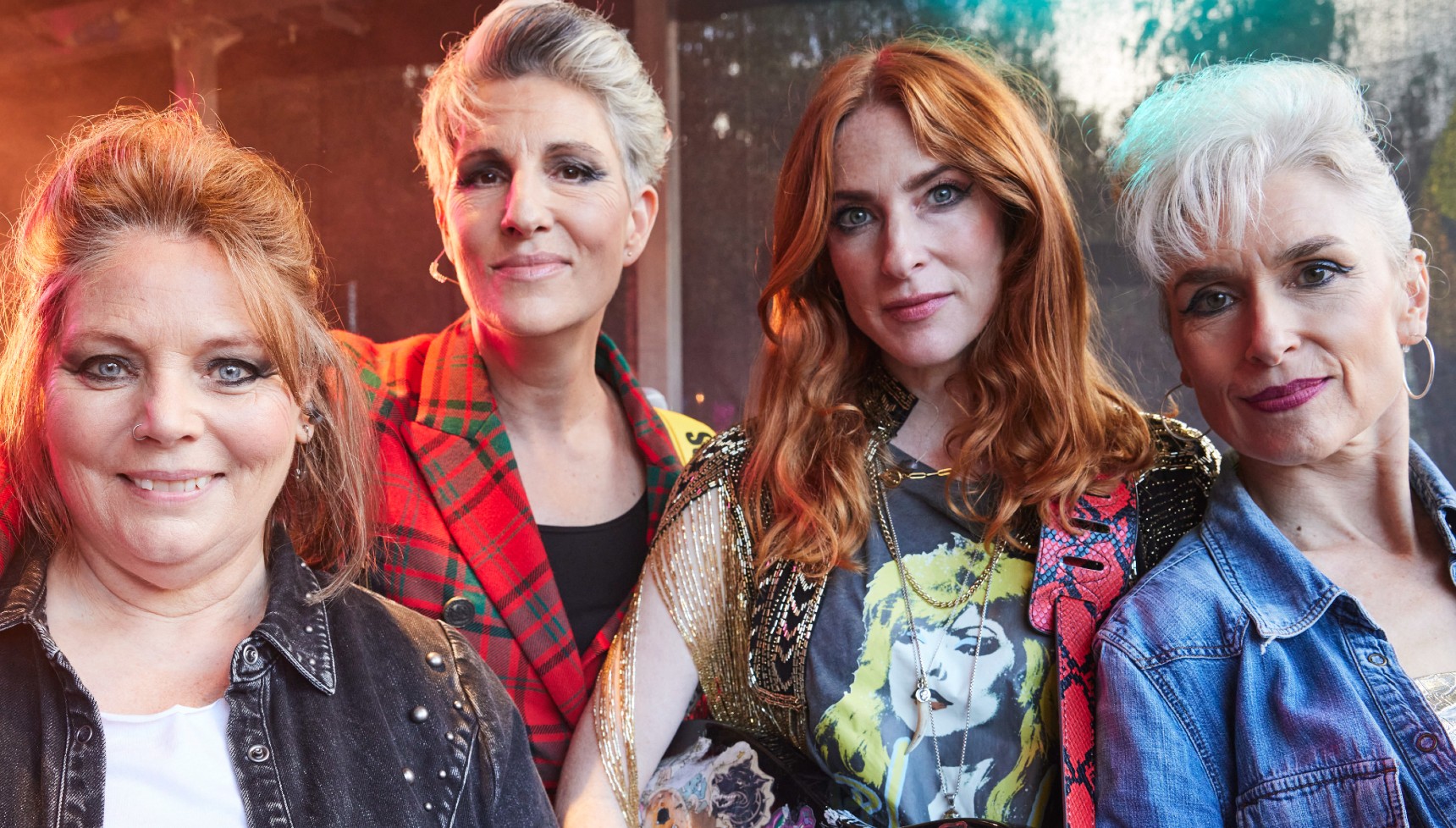
Performances That Command Attention
Joanna Scanlan’s performance as Beth is nothing short of transformative. Coming off the quiet devastation of The Lark Ascending, Scanlan embodies the physicality of her character’s unraveling: shoulders hunched like a question mark, hands trembling as she grades papers she no longer believes in, eyes hollow yet fiercely searching. One line—“Do you think women of a certain age become invisible?”—lands like a gut punch, echoing the series’ central theme. Wainwright’s writing ensures that invisibility is not merely observed but exploded, turning Beth’s despair into a spark that ignites the entire narrative.
Tamsin Greig’s Holly brings both comedic and emotional depth, channeling the frustration of a lifetime into a late-career rebellion. Ashbourne’s Jess is the emotional glue, grounding the chaotic energy of the group with maternal intuition and pragmatism. Bullmore’s Nisha adds precision and moral tension, reflecting the ethical ambiguities that permeate midlife. Craig’s Kitty is the wildcard, blending raw talent with reckless abandon, her performances screaming both vulnerability and rage.
Aesthetic and Setting: Hebden Bridge as a Character
The series’ visual style enhances the narrative’s emotional and thematic weight. Hebden Bridge, Wainwright’s spiritual and literal home, provides a landscape both beautiful and forbidding. Fog-drenched valleys and cobblestone streets mirror the characters’ internal struggles, serving as more than just a backdrop. Cinematography captures the grit and intimacy of rehearsal spaces, the claustrophobia of personal confrontation, and the liberating openness of performance stages, creating an immersive viewing experience.
Critical Reception and Cultural Impact
Critics have hailed Riot Women as a high point in Wainwright’s career. Lucy Mangan of The Guardian describes it as “one of her best,” a plot-rich drama “seasoned with humor” that acts as a form of televised HRT. Radio Times praises the ensemble’s rage as a “corner-of-the-world takeover,” while Metro notes the show’s balance of comedy and devastation, highlighting Scanlan’s commitment to representing overlooked demographics such as South Asian lesbians and women navigating menopause.
The series is being celebrated not only for its artistry but for its cultural resonance. Social media is alive with clips, quotes, and fan analysis. Hashtags like #RiotWomen have trended as fans dissect key scenes, particularly Beth’s canal sequence, a moment of raw vulnerability that has sparked discussions about mental health, female rage, and resilience. BritBox International has teased the show’s North American release, signaling a global appetite for Wainwright’s unique vision.

Narrative Depth: Beyond the Music
While the music is a driving force, the series’ narrative richness lies in its intertwining of personal and societal conflicts. Beth confronts an estranged son and buried traumas, Nisha navigates ethical dilemmas within an understaffed NHS, and Holly must reconcile her identity as a police officer with her desire for self-expression. The series deftly explores themes of ageism, misogyny, and systemic neglect, offering a story that resonates far beyond the confines of a “menopause drama.”
The talent contest serves as both plot device and metaphor. The women’s journey from private pain to public performance underscores Wainwright’s thesis: empowerment is not quiet, tidy, or comfortable—it is discordant, noisy, and unapologetic. The climax, featuring the band’s contest performance, is a triumph of defiance and artistic expression, literalizing the fight for visibility in a society that too often renders older women invisible.
Writing, Direction, and Production
Sally Wainwright’s involvement extends beyond writing; she directs and executive-produces, ensuring that the series bears her distinctive stamp. The integration of original music into the script reflects meticulous attention to both narrative and auditory storytelling. Rehearsals were filmed to capture authenticity, with the cast often performing until hoarse, emphasizing the physicality and urgency of their performances.
Wainwright’s creative collaborators, including Drama Republic’s Roanna Benn and BBC’s Tanya Qureshi, contribute to the series’ dynamic production. Their efforts ensure that each episode combines intense character work with cinematic spectacle, maintaining momentum while allowing moments of quiet reflection and interpersonal intimacy.
Themes of Female Empowerment and Midlife Visibility
At its core, Riot Women is a celebration of female agency at midlife. In a television landscape that often relegates women over 50 to peripheral roles, Wainwright flips the script. Each character confronts societal invisibility, transforming frustration into collective action. The band becomes a literal and metaphorical stage for empowerment, turning midlife struggles into artistic and social rebellion.
Mental health, menopause, workplace inequality, and family dynamics are explored with nuance. The series does not shy away from difficult topics: Beth’s near-suicidal thoughts, Holly’s marital gaslighting, Jess’s maternal burdens, Nisha’s whistleblowing, and Kitty’s self-destructive tendencies all contribute to a narrative that is emotionally complex and narratively daring. The women’s music serves as both an outlet and a weapon, translating personal turmoil into a shared, cathartic performance.
Audience Reception
Viewers have embraced the series with fervor. Clips of “Seeing Red” have gone viral, with fans praising the soundtrack as a representation of perimenopausal rage and female defiance. Online discussions dissect each character arc, debate ethical choices, and celebrate the performers’ commitment to authenticity. Many report bingeing all six episodes in a single sitting, drawn into the series’ relentless energy and emotional intensity.
Critically and popularly, Riot Women has been acknowledged as a landmark in Wainwright’s career. Its fusion of humor, grief, rebellion, and music marks a creative evolution for the writer-director, blending elements of Happy Valley’s grit with the chaotic joy of punk rebellion. The show resonates with a diverse audience, particularly women over 50, who rarely see themselves represented with such complexity, power, and defiance on screen.
Conclusion: A Television Event Not to Be Missed
Riot Women is more than a series—it is a statement. It challenges perceptions of age, gender, and visibility, delivering a narrative that is both intensely personal and broadly resonant. Through the lens of punk rebellion, Wainwright examines the intersections of trauma, rage, empowerment, and artistic expression, creating a drama that is as cathartic as it is entertaining.
For fans of Happy Valley, the series offers familiar emotional intensity and moral complexity. For newcomers, it presents a fearless exploration of female experience, community, and resilience. The performances, writing, music, and cinematography coalesce into a viewing experience that is immersive, exhilarating, and emotionally impactful.
Stream Riot Women on BBC iPlayer to experience a drama that is bold, bruised, and brilliant. It is a story of rage, redemption, and the unbreakable power of women refusing to be silenced. This is Sally Wainwright at her boundary-pushing best—a punk manifesto for midlife, a triumph of storytelling, and a television event that refuses to be ignored