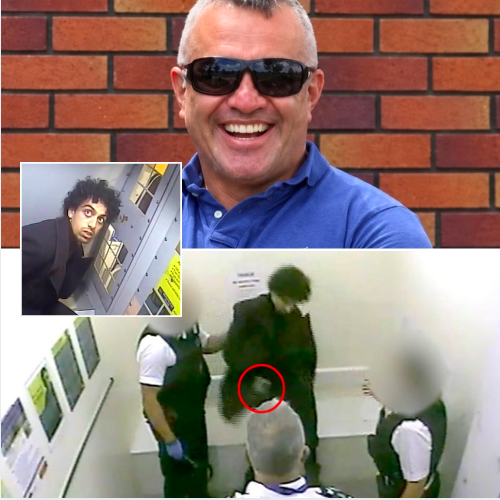
🚨 SHOCKING LONDON POLICE MURDER: 26-Year-Old Man Shot 54-Year-Old Sergeant Matt Ratana Inside a Police Station After Smuggling a Hidden Gun Past Officers — Now Sentenced to Die Behind Bars
26-Year-Old Man Shot 54-Year-Old Sergeant Matt Ratana Inside a Police Station After Smuggling a Hidden Gun Past Officers — Now Sentenced to Die Behind Bars.A316
A horrifying murder inside a London police custody centre has left the United Kingdom mourning a respected 54-year-old police sergeant whose life was taken while carrying out his duties, after a detained man managed to conceal a loaded gun, evade an earlier police search, and open fire at close range inside a building where officers believed strict security procedures would protect them.

Sergeant Matt Ratana, a New Zealand-born Metropolitan Police officer with decades of experience, was fatally shot on September 25, 2020, at the Windmill Road custody centre in Croydon, south London, in an attack that devastated his family, shocked his colleagues, and exposed serious weaknesses in police detention procedures.
The man responsible, Louis De Zoysa, was 23 years old when the shooting occurred and 26 when he was sentenced at Northampton Crown Court on July 27, 2023, following a murder conviction that resulted in one of the most severe punishments available under English law.
But behind the courtroom proceedings and the shocking security failures was the heartbreaking loss of a police officer remembered not simply for the uniform he wore, but for his kindness, warmth, humor, and dedication to protecting other people throughout his working life.
The events leading to Sergeant Ratana’s death began shortly after 1:30 a.m., when officers stopped De Zoysa on London Road in Norbury, Croydon, during an encounter that would ultimately develop into one of the Metropolitan Police’s most devastating tragedies.
Officers arrested De Zoysa on suspicion of possessing drugs with intent to supply and possessing ammunition, before searching him and preparing to transport him to the nearby police custody facility.
During the search, officers checked his clothing, pockets, waistband, and shoes, but failed to discover a firearm concealed beneath his coat, allowing a dangerous weapon to remain in his possession despite the precautions taken.
Investigators later established that the gun had been carried in a concealed holster, and although De Zoysa was handcuffed behind his back, he remained capable of reaching the weapon during the period between his arrest and arrival at the custody centre.
The failure to locate the firearm would prove catastrophic, because the officers transporting him had no reason to believe that the detained man was carrying a weapon capable of taking a life within seconds.
When De Zoysa arrived at the Windmill Road custody centre, he was taken into a holding area while officers prepared to complete the routine procedures required before placing him in detention.
Sergeant Ratana was serving as the custody sergeant that morning, carrying out responsibilities that involved supervising detainees, maintaining safety, and ensuring that those brought into the police station were processed appropriately.
Nothing about his ordinary responsibilities could have prepared him for the sudden violence that was about to unfold, particularly inside a controlled police facility where detainees had already undergone an initial search.
As officers prepared to conduct a further search using a handheld metal detector, De Zoysa moved his restrained hands toward his side and produced the concealed firearm without warning.
At approximately 2:13 a.m., he pointed the weapon toward Sergeant Ratana and fired at close range, striking the officer in the chest before firing again and hitting his upper leg.

The attack happened with terrifying speed, giving the experienced sergeant little opportunity to defend himself as his colleagues rushed to restrain the armed detainee and prevent further violence.
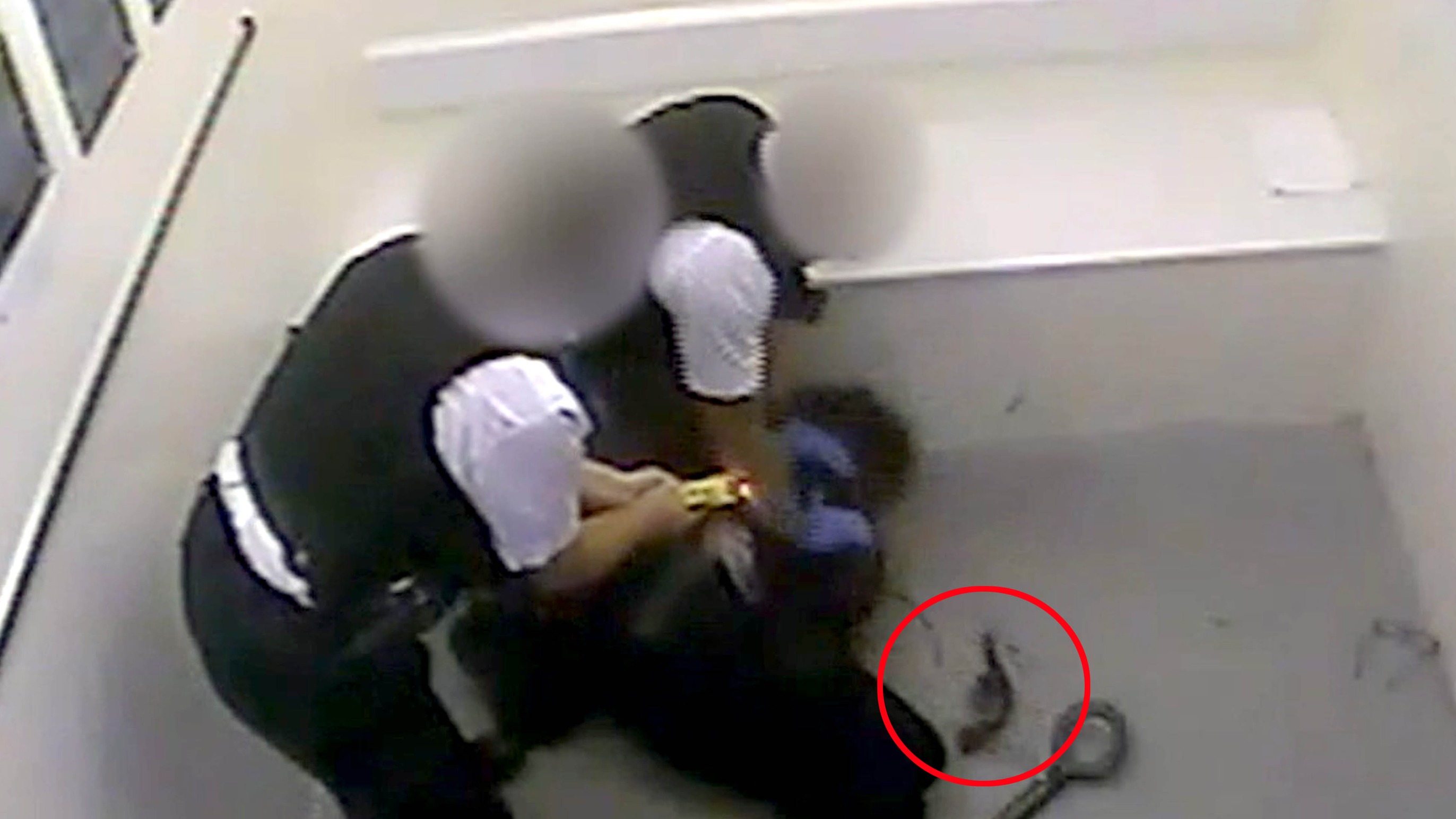
During the struggle, the firearm discharged additional shots, including one that struck De Zoysa in the neck and caused injuries that would later leave him with severe disabilities.
Emergency assistance was provided, but Sergeant Ratana’s injuries were fatal, bringing an abrupt and devastating end to a life dedicated to public service and leaving his loved ones facing a loss they could scarcely comprehend.
For his colleagues, the killing was particularly traumatic because it occurred inside their own workplace, transforming a location associated with law enforcement and public protection into the scene of a police officer’s death.
The tragedy also underscored the unpredictable dangers facing officers during routine duties, demonstrating that even an apparently controlled custody environment can become deadly when a concealed weapon escapes detection.
In the aftermath, investigators began examining how De Zoysa had managed to enter the facility while carrying a firearm, despite having been arrested, searched, handcuffed, and transported by police officers.
The investigation revealed that the initial search had failed to identify the weapon, while footage from body-worn cameras and CCTV provided crucial evidence of De Zoysa’s movements before and during the shooting.
Authorities also searched De Zoysa’s home in Banstead, Surrey, where officers discovered an assortment of firearms, ammunition, and related equipment that suggested a significant interest in weapons.

Among the items recovered were homemade and modified weapons, while examinations of electronic devices revealed material connected to firearms and several extremist ideologies.
Although investigators examined those discoveries closely, the precise motive behind Sergeant Ratana’s murder remained unclear, and the available evidence did not establish that De Zoysa had specifically planned to kill that particular officer before entering custody.
The criminal proceedings eventually reached Northampton Crown Court, where jurors heard competing arguments about De Zoysa’s responsibility for the shooting and whether his mental functioning had been substantially impaired at the time.
His defense team argued that De Zoysa, who had been diagnosed with autism, had experienced an overwhelming psychological episode related to the stress of arrest and confinement.
They claimed that the circumstances had affected his ability to understand or control his actions, supporting a defense of diminished responsibility rather than murder.
Prosecutors rejected that explanation, presenting evidence of his deliberate movements, his efforts to access the hidden firearm, and the manner in which he aimed and discharged the weapon.
The prosecution maintained that the attack was purposeful and that the defendant’s actions demonstrated awareness and control rather than an involuntary response to distress.
After hearing the evidence, the jury rejected the diminished-responsibility defense and found De Zoysa guilty of murdering Sergeant Ratana on June 23, 2023.

The verdict marked a significant moment for the officer’s grieving family, confirming criminal responsibility for the killing that had shattered their lives nearly three years earlier.
But the emotional impact of the proceedings became even more apparent when Sergeant Ratana’s long-term partner, Su Bushby, described the devastating consequences of losing the man with whom she had expected to share her future.
Having spent five years together, she remembered him as a gentle, courageous, and deeply affectionate man whose laughter, kindness, and humor had brought happiness into her everyday life.
She spoke of the unbearable pain of his absence and the difficulty of accepting that someone who had dedicated his career to protecting others had been killed inside the police station where he worked.
For Bushby, the loss was not simply about losing a respected police officer, but about losing the person whose companionship, encouragement, and presence had shaped the life they were building together.
Friends and colleagues also remembered Sergeant Ratana as someone who inspired others through his professionalism, compassion, enthusiasm, and willingness to support those around him.
His death left a profound emptiness across the Metropolitan Police, where tributes reflected the affection and respect he had earned during decades of public service.
On July 27, 2023, the case returned to Northampton Crown Court for sentencing, where Mr Justice Jeremy Johnson delivered a powerful assessment of the evidence and the circumstances surrounding the killing.
The judge rejected the suggestion that an autistic psychological crisis had caused the shooting, concluding that De Zoysa’s actions were voluntary, controlled, and deliberate.
He emphasized that Sergeant Ratana had not threatened or mistreated the defendant, and that the officers involved had behaved with care and consideration during the arrest and detention process.
The court also considered the effort required to retrieve the hidden firearm while handcuffed, together with the defendant’s decision to aim directly at the officer before firing.
Mr Justice Johnson concluded that De Zoysa had acted with the intention of killing Sergeant Ratana, describing the attack as a cold-blooded act of murder rather than an uncontrolled reaction.
He imposed a whole-life order, meaning that De Zoysa would remain imprisoned for the rest of his life without the ordinary possibility of parole, except in extremely limited circumstances permitted by law.
The sentence represented one of the most severe punishments available in England and Wales, reflecting the gravity of deliberately killing an officer carrying out his duties.
The legal proceedings continued beyond sentencing, but in May 2025, the Court of Appeal refused De Zoysa’s renewed applications challenging his conviction and whole-life sentence, leaving the punishment in place.
Meanwhile, the circumstances surrounding Sergeant Ratana’s death prompted an independent examination of police search procedures and the measures used to detect concealed weapons before detainees entered custody facilities.
The Independent Office for Police Conduct identified shortcomings in the initial physical search and recommended that police forces consider wider use of handheld metal detectors in response vehicles and vehicles transporting arrested individuals.
The Metropolitan Police subsequently expanded the use of handheld detection equipment, aiming to reduce the possibility of another concealed weapon passing unnoticed into a police custody environment.
For Sergeant Ratana’s loved ones, however, procedural improvements and courtroom judgments could never compensate for the loss of a man whose life ended during what should have been another ordinary shift.
He had spent years protecting strangers, supporting colleagues, and serving the public, yet the final moments of his career became a devastating reminder that danger can emerge even in places designed to provide safety.
His killing remains an enduring lesson about the importance of thorough searches, effective security procedures, and recognizing the risks associated with concealed firearms.
But beyond the criminal conviction, the whole-life sentence, and the changes to police procedures lies a far more personal tragedy involving a family who lost someone irreplaceable.
Sergeant Matt Ratana was 54 years old when his life was taken, leaving behind a grieving partner, relatives, friends, and colleagues who would never again hear his laughter or share another ordinary moment with him.
And although the man responsible has been sentenced to spend the remainder of his life behind bars, the punishment cannot restore the future that was stolen from Sergeant Ratana or erase the heartbreaking reality that a devoted police officer lost his life while simply doing the job he had dedicated himself to for decades.