NETFLIX’S HIDDEN GEM IS FINALLY GETTING THE ATTENTION IT DESERVES — AND VIEWERS CAN’T STOP TALKING ABOUT THAT ENDING!
When a powerful drama arrives on Netflix without the usual fanfare or marketing blitz, audiences quickly take notice. Train Dreams, directed by Clint Bentley and streaming on the platform since November 2025, is precisely that kind of revelation. Anchored by career-best performances from Joel Edgerton and Felicity Jones, this intimate 2025 film has become one of the most talked-about hidden gems of the year. Critics and viewers alike are calling it one of the finest dramas of 2025—a quiet, profound story that lingers long after the credits roll and leaves audiences stunned by its emotional depth.
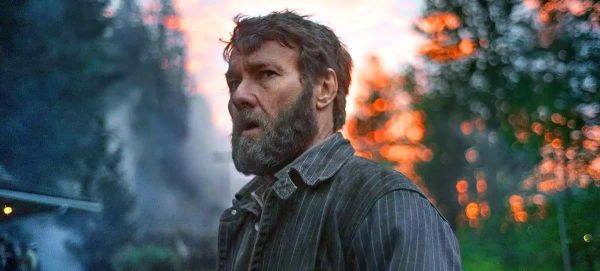
The film is a faithful adaptation of Denis Johnson’s celebrated novella, tracing the life of Robert Grainier (Joel Edgerton), a dedicated railroad worker in early 20th-century America. Set against the vast landscapes of the Pacific Northwest, Train Dreams follows Robert as he builds a life with his wife Gladys (Felicity Jones) and their young daughter Katie, only to face devastating loss when a devastating forest fire claims his family. What could easily tip into melodrama instead unfolds with grace and restraint, highlighting themes of love, grief, resilience, and the quiet dignity of ordinary lives.
Edgerton delivers a performance that has been universally praised as exceptional—subtle, devastating, and filled with quiet power. His portrayal of a man grappling with survivor’s guilt and the passage of time feels profoundly human. Felicity Jones, as Gladys, matches him with equal sensitivity, capturing the quiet strength and fleeting happiness of a relationship built on love and sacrifice. Supporting turns from William H. Macy, Kerry Condon, and others add layers to the ensemble, but Edgerton remains the emotional core.
The movie’s biggest strength lies in its refusal to sensationalize. Released initially in select U.S. theaters before its Netflix debut, Train Dreams arrived quietly, yet it quickly climbed charts and earned widespread critical acclaim. Reviewers at outlets like Pajiba and Rolling Stone have hailed it as “extraordinarily beautiful” and a modern masterpiece, praising its ability to find profound beauty in the mundane. It has even sparked conversations about whether it deserved a wider theatrical release worldwide—many feel its intimate, meditative pace and emotional weight make it feel like a festival darling that never quite reached the big screen.
What makes Train Dreams unforgettable, however, is its ending. Audiences describe it as “aching,” “devastating in the most beautiful way,” and one that leaves viewers sobbing in the best sense of the word. The final act shifts in subtle, transcendent ways, offering closure without cheap sentimentality. Rather than a grand climax, the story unfolds in vignettes that span decades, showing Robert’s life evolving from frontier isolation to a connected, reflective existence. A haunting sequence involving a mysterious “wolf girl” at his cabin—open to interpretation as either a literal figure or a manifestation of grief—leads to quiet acceptance. The film then culminates in a breathtaking biplane flight over the same landscapes, where Robert experiences a profound realization: “That’s us.” In that moment, his personal losses dissolve into a sense of belonging to something larger—humanity, nature, time itself.
Critics have noted that this resolution avoids mawkishness while delivering genuine catharsis. It underscores the film’s core message: that despite overwhelming loss, human beings are capable of standing back up, finding light again, and connecting across the invisible threads that bind us. One reviewer captured the feeling perfectly: the ending is “such an aching conclusion that it left my screening in tears,” yet it ultimately feels hopeful and uplifting.
Train Dreams has already earned recognition, including nods at the 2025 Gotham Film Awards and strong festival buzz from its Sundance premiere. Edgerton, who also appeared in high-profile projects like The Great Gatsby, has spoken about the personal resonance the role held for him, especially as a father. “It’s a celebration of an ordinary life and shows the majesty in that,” he noted, adding that the film holds up a mirror to our own experiences of loss and renewal.
Why was this masterpiece overlooked in theaters? Perhaps it was simply too slow for some, too emotionally raw for others, or too focused on the spaces between moments rather than explosive action. But in the age of streaming, Netflix has given it the perfect home—allowing audiences worldwide to discover it at their own pace. Social media is flooded with posts praising the performances, the cinematography of the rugged landscapes, and especially that unforgettable finale. “I watched thinking it was just another quiet drama,” one viewer wrote, “but the ending wrecked me in the best way.”
If you’re searching for something that lingers in your mind long after it ends, Train Dreams is the film. It doesn’t chase blockbuster thrills or viral moments—it builds something deeper. In a world full of noise, this remarkable drama whispers with wisdom, love, and loss. It’s a reminder that the most powerful stories are often the ones we don’t expect—and that sometimes the most unforgettable moments come at the very end.