🚨 VIEWERS SAY OLIVIA COLMAN’S CRIME DRAMA IS “IMPOSSIBLE TO FORGET” AFTER THAT FINAL TWIST
Every episode of Accused begins with an accusation. A person stands in the dock. The court is waiting. The jury is waiting. And so are we. We do not yet know what they are accused of, only that the weight of judgment is about to fall. Then the story slowly unspools, revealing just how much can be destroyed long before the truth has any chance of rising to the surface.
Created by Jimmy McGovern, the British anthology series first aired on BBC One between 2010 and 2012. It has recently found a powerful second life on Netflix, where its ten self-contained episodes have drawn new audiences into its unflinching examination of ordinary people pushed into extraordinary moral corners. Each hour follows a different defendant. There are no recurring detectives, no familiar procedural rhythms. Only the accused, the people who love them, and the chain of choices that led them into that courtroom.
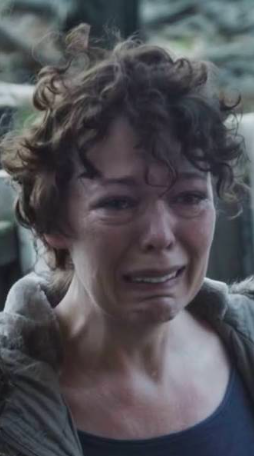
Among the formidable cast — which includes Stephen Graham, Sean Bean, Sheridan Smith, Anne-Marie Duff, Christopher Eccleston and Peter Capaldi — one performance has lingered with particular force. Olivia Colman, in the episode known as “Mo’s Story,” delivers a raw and deeply affecting turn as Sue Brown, a woman whose world is shattered by violence and then further dismantled by the secrets that follow. Her work earned her a BAFTA for Best Supporting Actress, and it is easy to see why. Colman does not play grief as spectacle. She plays it as something quieter, heavier, and far more dangerous: the slow erosion of trust between people who once believed they stood on the same side.
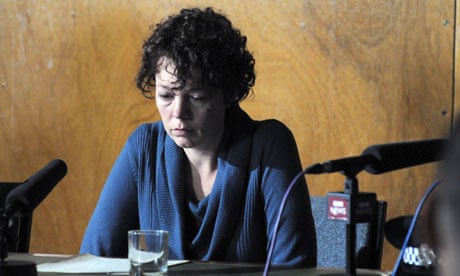
The series thrives on this kind of moral complexity. An accusation is never simply about the act itself. It is about the relationships that fracture under its pressure, the loyalties that are tested, and the quiet decisions made in kitchens and hair salons and living rooms that later become evidence. One accusation can tear a family apart. One protective lie can follow someone for years. One moment of defiance against the wrong people can set a tragedy in motion that no one can stop.
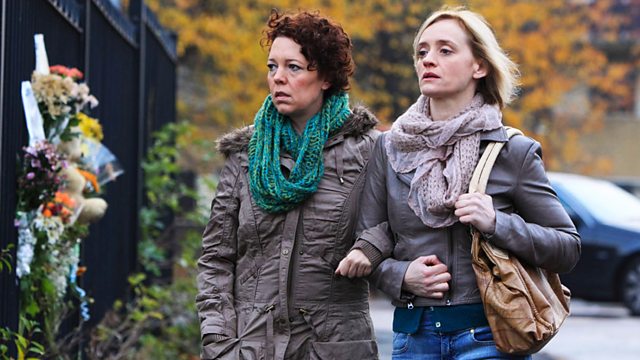
In Colman’s episode, the setting is a working-class estate where gangs hold quiet power and ordinary businesses must decide whether to open or close on days when respect is demanded at gunpoint. Two mothers run a hair salon together. They are friends. Their sons are friends. When they choose not to bow to intimidation, the consequences arrive with devastating speed. What follows is not a simple story of crime and punishment. It is a story about the unbearable weight of knowing too much, of protecting someone you love while another mother is left destroyed, of the gap that opens between people who once shared everything.
Colman’s Sue is the emotional centre of this particular storm. She does not dominate scenes with speeches. She inhabits them. The camera finds her in the aftermath, in the silences, in the way her face changes when the full truth begins to surface. There is fury. There is disbelief. There is a grief so specific it feels almost private, even as it plays out in public. When the final pieces fall into place, the person paying the highest emotional price may not be the one the court names. That is the quiet cruelty the series understands so well.
McGovern’s writing has always specialised in these grey zones. He is less interested in whether someone is technically guilty than in how they became the kind of person who could stand in that dock. The flashbacks in Accused are not mere exposition. They are acts of reconstruction, showing us the ordinary pressures — money, fear, loyalty, love, the desire to keep a child safe — that can turn a life into evidence. Viewers are rarely allowed the comfort of easy judgment. By the time the verdict arrives, many find themselves less certain of what justice would even look like.
That uncertainty is part of the show’s lasting power. On Netflix, the series has been rediscovered by audiences who came for the star power and stayed for the moral unease. Each episode works as a complete story, yet the cumulative effect is something larger: a portrait of how easily the ground can shift beneath people who believed they were simply trying to do the right thing. One wrong decision. One secret kept too long. One friendship asked to carry more than it can bear.
Colman’s performance stands out even in this crowded field of strong turns because it refuses sentimentality. There is no tidy catharsis. The pain she portrays is not the kind that softens with understanding. It hardens. It isolates. It leaves the audience with the uncomfortable sense that the real damage was never fully visible in the courtroom. The law deals in facts and sentences. Lives deal in consequences that stretch far beyond either.

The series as a whole operates with the same principle. An accusation is only the beginning. What matters is everything that had to go wrong — the small compromises, the protective silences, the moments when someone looked away or looked too closely — before that accusation could even be spoken. When the final pieces finally fall into place, the person who has paid the highest price is often the one who never expected to be standing there at all.
Accused does not offer easy answers or comforting resolutions. It offers something rarer: the uncomfortable recognition that the truth, when it finally surfaces, can hurt more than the original crime ever did. And in Olivia Colman’s hands, that recognition becomes almost unbearable to watch — and impossible to look away from.
The series is available to stream in full on Netflix.