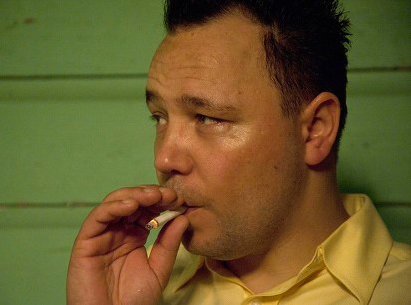
🚨 Stephen Graham’s Forgotten Crime Thriller Is a Brutal, Nerve-Shredding Hidden Gem — And Once the Killing Begins, It’s Almost Impossible to Look Away
Stephen Graham’s Forgotten Crime Thriller Is a Brutal, Nerve-Shredding Hidden Gem — And Once the Killing Begins, It’s Almost Impossible to Look Away
A missing girl. A landscape haunted by unsolved murders. A detective desperate to find the truth. And Stephen Graham delivering the kind of unsettling performance that makes even the smallest scene feel dangerous. Texas Killing Fields is the dark, atmospheric crime thriller that deserves another look — especially for viewers who love their mysteries disturbing, unpredictable and emotionally devastating.
There are crime thrillers that entertain you for two hours, and then there are those that leave an uncomfortable feeling long after the final credits.
Texas Killing Fields, the 2011 thriller directed by Ami Canaan Mann, belongs firmly in the second category.

Set against the bleak industrial landscapes and desolate stretches of southeast Texas, the film plunges viewers into a world where young women disappear, bodies are discovered in isolated places, and the line between justice and obsession becomes increasingly difficult to see.
Starring Sam Worthington, Jeffrey Dean Morgan, Jessica Chastain, Chloë Grace Moretz and Stephen Graham, the film combines a deeply disturbing premise with a cast capable of making even its quietest moments feel loaded with danger.
And for anyone who has become fascinated by Graham’s extraordinary ability to portray damaged, volatile and morally complicated characters, his presence adds another reason to revisit this overlooked thriller.
It is not a conventional murder mystery built around clever clues and a neat final revelation.
Instead, it is a grim journey into a landscape where violence has become frighteningly familiar — and where the people trying to stop it risk being swallowed by the darkness themselves.
For viewers who enjoy the slow-burning tension of True Detective, the moral unease of Prisoners, or the relentless atmosphere of Seven, this is the kind of film that can make an ordinary evening feel considerably more disturbing.
And what makes it even more chilling is the real-world history behind its setting.
THE REAL-LIFE NIGHTMARE THAT INSPIRED THE FILM
Perhaps the most unsettling thing about Texas Killing Fields is that the darkness at the heart of its story did not emerge entirely from a screenwriter’s imagination.
The film was loosely inspired by real murders connected to the Interstate 45 corridor between Houston and Galveston, an area that became notorious after the disappearances and deaths of numerous young women over several decades.
The real cases involved different victims, locations and investigations, and should not be mistaken for the film’s fictionalized central murder plot.
But the history was disturbing enough to provide the filmmakers with a powerful foundation.
Director Ami Canaan Mann researched the cases and visited locations associated with the crimes. In an interview with Tribeca, she explained that she wanted the film to evoke the unsettling atmosphere of a ghost story rather than simply follow the familiar formula of a television detective drama.
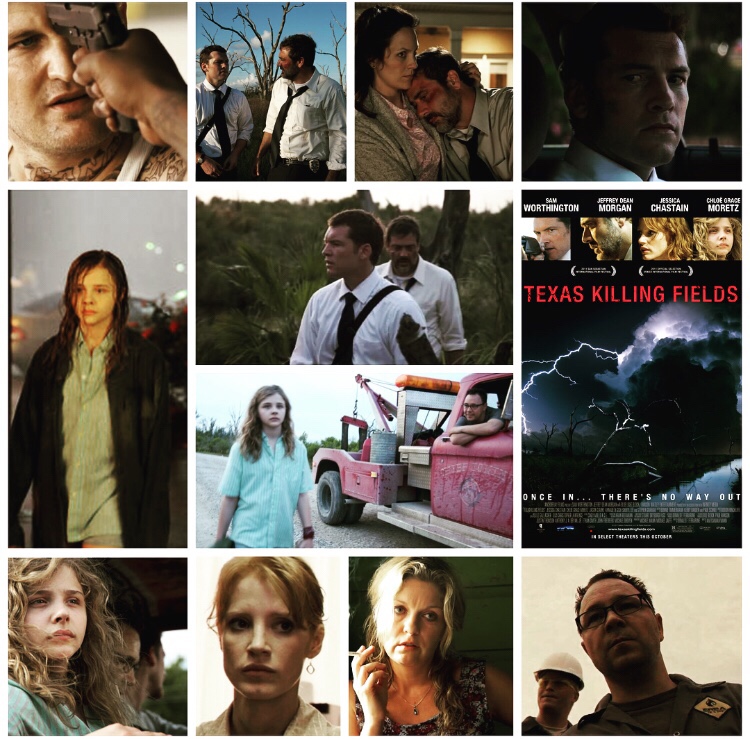
That decision is visible throughout the movie.
The landscapes seem to carry memories of violence.
The empty roads feel threatening.
The marshes appear capable of hiding terrible secrets.
And every abandoned stretch of land seems to suggest that something dreadful might be waiting just beyond the camera’s view.
What makes this approach particularly effective is the way it transforms ordinary surroundings into something deeply sinister.
There are no supernatural monsters here.
No elaborate fantasy.
No comforting distance between the viewer and the horror.
The danger comes from people — and from the terrifying possibility that someone capable of extraordinary cruelty might look entirely ordinary.
That sense of realism is what gives the film much of its power.
TWO DETECTIVES. ONE TERRIFYING INVESTIGATION. AND A KILLER WHO ALWAYS SEEMS ONE STEP AHEAD
At the center of the story are two detectives whose contrasting personalities create a constant source of tension.
Sam Worthington plays Mike Souder, a hardened local detective who knows the territory, understands its dangers and has little patience for reckless decisions.
Jeffrey Dean Morgan portrays Brian Heigh, a former New York detective whose determination to pursue the murders often pushes him beyond the boundaries of his official responsibilities.
They are partners, but they do not always see the world in the same way.
Souder is practical, guarded and increasingly frustrated by the risks involved in the investigation.
Heigh is more emotionally invested, unwilling to accept that jurisdictional boundaries should prevent him from pursuing justice for murdered women.
Their disagreement becomes particularly significant when bodies are discovered in the isolated marshlands outside their immediate jurisdiction.
For Heigh, walking away is unthinkable.
For Souder, charging into dangerous territory without a clear strategy could have devastating consequences.
And as the investigation deepens, both men discover that finding the truth may demand far more than they anticipated.
The film builds suspense through these conflicting instincts.
One detective wants to control the investigation.
The other cannot stop himself from pursuing it.
Neither fully understands how dangerous the situation is becoming.
And the more they uncover, the more the case begins to affect their judgment.
It is a familiar crime-thriller setup, but Morgan and Worthington give the partnership enough emotional friction to make the central conflict compelling.
Morgan, in particular, brings a sense of quiet desperation to Heigh.
He is not portrayed as an invincible investigator who can solve every mystery through sheer intelligence.
Instead, he is a man increasingly troubled by the suffering around him.
Every victim seems to deepen his sense of responsibility.
Every missed opportunity becomes another burden.
And every new development threatens to push him closer to a line he may not be able to cross without consequences.
STEPHEN GRAHAM BRINGS ANOTHER DISTURBING EDGE TO THE STORY
For many viewers discovering the film years after its original release, Stephen Graham may be one of its most intriguing attractions.
Long before his later performances introduced him to new generations of television audiences, Graham had already developed a reputation for making complicated characters feel unnervingly authentic.
In Texas Killing Fields, he plays Rhino, a supporting character whose presence contributes to the film’s grim atmosphere.
It is not the central role, and the movie should not be mistaken for a Stephen Graham-led thriller.
But his appearance is memorable precisely because of the qualities that have made him such a compelling screen performer.
Graham has an unusual ability to make an audience uncomfortable without relying on theatrical exaggeration.
A glance can suggest hostility.
A change in expression can alter the emotional temperature of a scene.
Even when a character has limited screen time, Graham can create the impression of a much larger, more troubling life beyond the immediate story.
That talent fits naturally into the world of Texas Killing Fields.
This is a film populated by damaged relationships, dangerous personalities and people whose intentions are not always immediately apparent.
Graham’s Rhino belongs to that unsettling environment.
He does not need to dominate the entire narrative to contribute to its sense of unease.
Indeed, part of the film’s appeal lies in watching performers like Graham make relatively small moments feel significant.
For audiences familiar with his work in This Is England, Boardwalk Empire, The Virtues and Adolescence, the performance provides an opportunity to revisit an earlier chapter of his career.
The role is smaller than some of his most celebrated performances, but his ability to inhabit the film’s uncomfortable world remains evident.
And there is something particularly compelling about seeing a performer now so widely admired appearing in a dark crime thriller that many viewers may have overlooked.
Stephen Graham is credited as Rhino in the film’s official cast listings.
CHLOË GRACE MORETZ DELIVERS THE FILM’S MOST HEARTBREAKING EMOTIONAL STORYLINE
While the murder investigation provides the film’s central mystery, the emotional stakes become particularly powerful through Chloë Grace Moretz’s portrayal of Little Ann Sliger.
Ann is a vulnerable young girl growing up in an unstable and deeply troubling environment.
She is surrounded by adults who cannot always protect her, and her circumstances leave her exposed to dangers that no child should have to confront.
Moretz plays the character with a combination of toughness and fragility.
Ann has learned to navigate an unforgiving world.
She understands more about its dangers than someone her age should.
Yet beneath that defensive exterior remains a child who desperately needs safety, stability and compassion.
Her relationship with Heigh introduces a more personal dimension to the detective’s investigation.
He does not simply see Ann as another person living near the violence.
He recognizes the possibility that she could become another victim.
And his concern for her gradually becomes one of the film’s strongest emotional threads.
This is where Texas Killing Fields begins to feel particularly uncomfortable.
The audience is not merely following detectives attempting to identify a killer.
It is watching a young girl move through a world where danger appears to be closing in from multiple directions.
Every encounter feels uncertain.
Every moment of apparent safety seems temporary.
And the knowledge that other young women have already been murdered gives her storyline an increasingly ominous weight.
Moretz’s performance helps prevent Ann from becoming merely a plot device.
She gives the character enough personality, fear and resilience to make the audience genuinely concerned about what might happen next.
When Ann’s situation becomes more dangerous, the film’s investigation suddenly feels much more urgent.
The mystery is no longer only about uncovering what happened to victims in the past.
It becomes a desperate struggle to prevent another tragedy.
JESSICA CHASTAIN IS A FORCE OF NATURE IN A ROLE THAT DESERVED EVEN MORE SCREEN TIME
Another standout is Jessica Chastain, who portrays Detective Pam Stall.
Chastain brings a directness and intensity to the character that immediately distinguishes her from the other investigators.
Pam is determined, confrontational and unwilling to tolerate unnecessary interference.
She understands the pressures of the job and has little interest in softening her personality to make other people comfortable.
In a film filled with exhausted men struggling to navigate a violent investigation, her presence provides a welcome change of energy.
She is sharp.
She is decisive.
And she has an ability to cut through the emotional chaos surrounding the case.
What makes Chastain’s performance particularly interesting is that she avoids turning Pam into a simplistic action-movie stereotype.
Her toughness feels rooted in experience rather than exaggerated bravado.
She appears to understand the dangers of the environment and the cost of making mistakes.
And when she confronts the escalating investigation, she brings a sense of authority that makes her scenes immediately engaging.
The frustrating part is that the film does not always give her enough space.
There are moments when Pam feels capable of carrying an entire crime thriller of her own.
Her character could easily have supported a deeper exploration of the investigation, the local community and the professional tensions surrounding the case.
Nevertheless, Chastain makes the most of the material.
Even in a crowded ensemble, she leaves a strong impression.
And when combined with Morgan’s emotional intensity, Worthington’s guarded determination and Graham’s unsettling supporting performance, she helps create a cast that is arguably stronger than the screenplay itself.
THE ATMOSPHERE IS SO BLEAK THAT EVEN THE SILENCE FEELS DANGEROUS
One of the film’s greatest strengths is its visual atmosphere.
Director Ami Canaan Mann understands that a crime thriller does not need constant violence to generate fear.
Sometimes the most unsettling image is simply an empty road.
A lonely building.
A deserted stretch of marshland.
Or a figure standing in a place where nobody should be.
The cinematography by Stuart Dryburgh emphasizes the harsh industrial surroundings, turning the landscape into something that feels almost hostile.
There is a sense of isolation running through the entire film.
Even when characters are surrounded by other people, they rarely seem completely safe.
The locations feel worn down by poverty, neglect and years of hardship.
The buildings are ordinary rather than glamorous.
The streets appear tired.
And the marshlands become a haunting symbol of the secrets buried beneath the surface.
Mann frequently allows the environment to communicate danger before the characters fully recognize it.
This creates a different kind of suspense from the frantic editing and relentless action found in more conventional thrillers.
The fear is often slow.
It develops through anticipation.
A scene may begin quietly, with little indication that anything dramatic is about to happen.
But the audience has already learned to distrust the surroundings.
That knowledge changes everything.
An isolated location no longer feels peaceful.
A seemingly harmless interaction can become uncomfortable.
And a journey along an empty road carries the possibility of something dreadful waiting ahead.
This atmospheric approach is not always matched by the screenplay’s structure, but it gives the film a distinctive identity.
It also makes Texas Killing Fields especially appealing to viewers who prefer their crime stories grounded in mood, psychology and a persistent sense of dread.
WHY THE FILM FEELS LIKE A TRUE-CRIME NIGHTMARE RATHER THAN A CONVENTIONAL HOLLYWOOD THRILLER
There is a reason the film can feel more disturbing than its individual scenes might suggest.
Its central fear is not simply that a killer is operating in the area.
It is that the surrounding world appears capable of allowing such violence to continue.
The investigation unfolds against a backdrop of social vulnerability, strained relationships and communities where people can disappear without attracting immediate attention.
The victims are not presented as wealthy, powerful figures surrounded by extensive protection.
Many are young women whose circumstances leave them particularly exposed.
That vulnerability gives the story a more troubling dimension.
The detectives are trying to solve crimes, but they are also confronting an environment in which danger seems deeply embedded.
The result is a film that often feels less interested in celebrating investigative brilliance than in examining the emotional consequences of confronting repeated violence.
Heigh’s growing obsession reflects that tension.
He wants to believe that determination and compassion can make a difference.
But every new discovery challenges his ability to remain detached.
The more personally invested he becomes, the more difficult it is for him to make purely professional decisions.
This is where the movie touches on a theme that has made many modern crime dramas so compelling.
The investigation changes the investigator.
It is not enough to identify suspects, examine evidence and pursue leads.
The people conducting the investigation must also confront the possibility that the horrors they encounter will permanently alter their lives.
That psychological dimension gives the film a weight that extends beyond its central mystery.
And it is precisely why the darker moments linger after the credits.
A DARK HIDDEN GEM — BUT NOT WITHOUT ITS FLAWS
For all its strengths, Texas Killing Fields is not a universally acclaimed masterpiece.
In fact, its original critical reception was decidedly mixed.
Rotten Tomatoes lists a 39 percent critics’ score and a 28 percent audience score, reflecting the fact that many viewers found the film’s storytelling uneven.
Critics praised elements of the atmosphere and performances, but others questioned the screenplay’s clarity, character development and resolution.
Those criticisms are understandable.
At times, the film introduces characters and developments without giving them enough narrative space.
Certain relationships could have been explored more deeply.
Some investigative threads feel more confusing than suspenseful.
And the conclusion does not deliver the same level of emotional satisfaction that the strongest scenes appear to promise.
Anyone expecting an intricately constructed detective mystery in which every clue leads elegantly to a devastating final revelation may therefore feel disappointed.
But that does not mean the film lacks value.
Its appeal lies elsewhere.
The performances are compelling.
The setting is unforgettable.
The atmosphere is consistently unsettling.
And its connection to a disturbing real-world history adds a layer of seriousness that distinguishes it from more disposable thrillers.
For viewers willing to accept an imperfect narrative in exchange for powerful imagery and a deeply uncomfortable mood, the film still has plenty to offer.
It is also the sort of production that benefits from being revisited without the expectations surrounding a major theatrical release.
Watched as an overlooked crime drama rather than a prestige masterpiece, its strengths become easier to appreciate.
The performances carry scenes that might otherwise feel underdeveloped.
The landscapes provide a haunting visual identity.
And the central story maintains enough urgency to keep viewers invested in the fate of its vulnerable characters.
THE FINAL ACT TURNS THE INVESTIGATION INTO A DESPERATE RACE AGAINST TIME
As the film approaches its conclusion, the danger becomes increasingly personal.
The investigation that initially revolved around the discovery of bodies and the pursuit of a suspected killer develops into something more immediate.
Ann’s vulnerability becomes central to the escalating tension.
The detectives are no longer simply attempting to understand a series of terrible crimes.
They must confront the possibility that another life could be lost before they can intervene.
This shift gives the later scenes a more urgent rhythm.
The emotional pressure on Heigh intensifies.
Souder’s concerns about the investigation become increasingly significant.
And the distinction between professional responsibility and personal desperation begins to collapse.
Without revealing the outcome, the final stretch brings together several of the film’s most important themes.
Fear.
Guilt.
Responsibility.
And the terrible consequences of violence that has been allowed to spread through a vulnerable community.
The action becomes more immediate, but the emotional impact comes from understanding what the characters stand to lose.
By this point, the audience has spent enough time with Ann to recognize the seriousness of her situation.
Her fate matters.
And that gives the climax a stronger emotional foundation than a conventional confrontation between detectives and a criminal.
The resolution may divide viewers, particularly those who prefer their mysteries meticulously explained.
But the final act reinforces the film’s central idea: that the damage caused by violence extends far beyond the immediate victims.
It affects families, communities and the people who spend their lives trying to uncover the truth.
WHY STEPHEN GRAHAM FANS SHOULD GIVE THIS OVERLOOKED THRILLER A CHANCE
For audiences who have followed Stephen Graham’s career, Texas Killing Fields offers something slightly different from his more celebrated work.
It is not a showcase built entirely around his performance.
Nor is it a tightly focused character study like some of the projects for which he has received widespread recognition.
Instead, it places him within a sprawling ensemble thriller filled with damaged people and troubling moral ambiguity.
That makes his supporting role an interesting addition to the film.
Graham’s ability to make characters feel authentic fits the material’s rough, unsettling atmosphere.
He seems at home in stories where danger emerges from ordinary human behavior rather than elaborate cinematic spectacle.
And while viewers looking exclusively for a major Graham performance may wish he had more screen time, his involvement is another reason the film deserves attention.
The real discovery, however, is the ensemble as a whole.
Jeffrey Dean Morgan gives the story its emotional center.
Sam Worthington provides the necessary conflict.
Jessica Chastain injects intensity and authority.
Chloë Grace Moretz delivers the vulnerability that makes the investigation matter.
And Graham contributes to the film’s darker supporting world.
Together, they help elevate material that might otherwise have felt like a routine police procedural.
THE VERDICT: A DISTURBING CRIME THRILLER THAT DESERVES A SECOND LOOK
Texas Killing Fields is not a flawless film.
Its screenplay can be uneven, its mystery occasionally becomes difficult to follow, and its conclusion may leave some viewers wanting more.
But dismissing it entirely would mean overlooking several genuinely compelling qualities.
There is an oppressive atmosphere that few conventional thrillers manage to sustain.
There is a strong ensemble cast delivering performances filled with tension and emotional exhaustion.
There is a young character whose vulnerability gives the story a heartbreaking urgency.
And there is the knowledge that the fictional narrative draws inspiration from a real history of violence against women.
For anyone who enjoys dark detective stories, morally complicated characters and the kind of unsettling atmosphere that lingers long after viewing, this is a film worth discovering.
It is especially suitable for an evening when a lighthearted mystery simply will not do.
At approximately 105 minutes, it is a single feature film rather than a multi-episode series — but it has the grim, absorbing atmosphere that often draws audiences into a late-night crime-drama binge.
And perhaps that is the most striking thing about Texas Killing Fields.
Long after the investigation has reached its conclusion, the film leaves behind something more uncomfortable than the identity of a fictional killer.
It leaves the image of a desolate landscape, the memory of young lives placed in danger, and the realization that some of the most frightening stories begin in places that appear entirely ordinary.
For Stephen Graham fans and lovers of atmospheric crime thrillers, Texas Killing Fields is an imperfect but chilling hidden gem — one whose darkest images are difficult to forget.