
🚨 STARRING KATE WINSLET & PATRICK WILSON: THE SHOCKING PSYCHOLOGICAL MASTERPIECE EXPOSING AMERICA’S DIRTIEST SECRETS IS STREAMING NOW!
The Anatomy of Suburban Despair: Why Kate Winslet’s ‘Little Children’ Remains an Unflinching Masterpiece of Human Restlessness
There are films that wash over you like a warm tide, offering comforting resolutions and tidy morals, and then there are films that feel like an interrogation. Released in 2006 and directed by Todd Field, Little Children—anchored by a career-defining, razor-sharp performance from Kate Winslet—firmly belongs to the latter category. Based on Tom Perrotta’s critically acclaimed novel, the film strips away the pristine, manicured veneer of American suburbia to expose a rotting foundation of unspoken regrets, mid-life panics, and the quiet desperation of adults playing house. Two decades on from its release, as audiences continue to seek out complex, character-driven psychological dramas that mirror the grit of prestige television, Little Children stands not merely as a period piece of 2000s cinema, but as a timeless, harrowing anatomy of human unhappiness.
To understand the gravitational pull of the film is to understand Sarah Pierce, played with blistering vulnerability by Kate Winslet. Sarah is a woman trapped in a life of her own reluctant construction. She lives in a world of stifling playgroups, endless concrete sidewalks, and playground politics that mirror the high-school hierarchy she thought she had escaped. Her husband, Richard (played with oblivious smugness by Noah Emmerich), is a porn-addicted internet dweller whose detachment leaves Sarah stranded in a sea of domestic isolation. Winslet’s portrayal avoids the cliché of the weeping, passive housewife. Instead, Sarah is prickly, intellectually starved, sharp-tongued, and teetering on the edge of emotional mutiny. When Winslet gazes out across a sunlit park filled with screaming children, her eyes do not convey maternal bliss; they betray a profound, suffocating terror that her life has already been written, bound, and shelved.
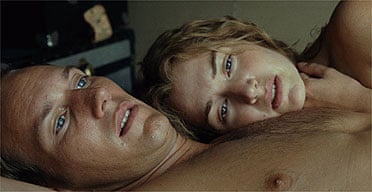
Enter Brad Adamson, played by Patrick Wilson. Brad is the neighborhood’s resident “King of the Playground”—a handsome, perpetually unemployed former law student coasting on athletic good looks and his wife’s breadwinning career as a high-powered documentary filmmaker (played with chilly perfection by Jennifer Connelly). Brad is supposed to be studying for the bar exam, but he spends his afternoons pushing his toddler on the swings and nursing a bruised ego. When Sarah and Brad’s paths cross at the municipal pool, the attraction is not a spark; it is a wildfire fueled by mutual exhaustion. Their affair, when it finally ignites, is remarkably unglamorous. It is sweaty, desperate, awkward, and driven less by deep romantic destiny than by a shared, frantic desire to claw their way out of the quicksand of their mundane realities.
What elevates Little Children far above a standard suburban adultery melodrama is Todd Field’s unflinching directorial vision, which treats the neighborhood itself as a living, breathing antagonist. The suburban landscape is shot with a hyper-real, almost clinical brightness that makes every pastel house look like a movie set ready to collapse. The omniscient voiceover narration, a bold stylistic choice that echoes a classic novel, acts as an invisible moral judge. It dissects the secret shames of every character, reminding us that no one in this community is safe from their own internal rot. The camera lingers on the suffocating details: the hum of a lawnmower, the plastic crunch of playground equipment, the toxic positivity of neighborhood moms gossiping over lattes. It creates a palpable sense of claustrophobia, proving that you can live on a sprawling American street and still feel entirely buried alive.
Parallel to Sarah and Brad’s illicit romance runs a secondary narrative thread that injects a chilling strain of menace into the film: the arrival of Ronnie Jajojian, played by Jackie Earle Haley in an Oscar-nominated performance. Ronnie is a convicted sex offender who has just moved back into the neighborhood to live with his doting, overprotective mother (Phyllis Somerville). Ronnie is a tragic, deeply disturbed figure, trapped in a psychological cage as inescapable as Sarah’s suburban kitchen. His presence acts as a lightning rod for the community’s collective paranoia, most visibly embodied by Larry Hedges (played by a ferocious Noah Emmerich-adjacent archetype, though portrayed by veteran actor Ned Beatty), a disgraced ex-cop who takes it upon himself to terrorize Ronnie and rally the neighborhood into a pitchfork-wielding mob.

The brilliance of the film’s structure lies in how it braids these two storylines together. While Sarah and Brad risk everything for a stolen hour in a dilapidated motel room, the rest of the neighborhood is descending into a frenzy of fear and moral panic over Ronnie. Field draws a razor-sharp, uncomfortable parallel between the two forms of transgression: the quiet, socially acceptable destruction of a marriage versus the overt, predatory deviance of a sex offender. Both involve people crossing lines they swore they never would; both are driven by an inability to govern base impulses. The juxtaposition forces the audience to confront a deeply unsettling question: Where does the true danger to children lie? Is it the monster lurking on the sex offender registry, or is it the parents who are so utterly consumed by their own selfish misery, boredom, and existential dread that they are emotionally neglecting the children sitting right in front of them?
As the narrative hurtles toward its climax, the affair between Sarah and Brad reaches a fever pitch. They hatch a reckless, romanticized plan to run away together, packing their bags like teenagers playing at rebellion. Yet, Little Children refuses to offer easy Hollywood catharsis. It is a film deeply rooted in psychological realism, and it understands that changing your zip code rarely fixes a broken soul. The denouement is a masterclass in tension, culminating in a rainy-night sequence that shatters any illusions of a fairy-tale ending. Without spoiling the emotional gut-punch of the final reels, suffice it to say that the film leaves its characters to reckon with the heavy collateral damage of their choices.
Kate Winslet’s work in Little Children deserves to be studied in film academies for generations. In lesser hands, Sarah could have come across as unsympathetic—a woman abandoning a stable life simply because she is bored. But Winslet infuses her with such raw, bruised humanity that you feel every drop of her suffocation. You see it in the way she clutches a book like a lifeline, in the desperate hunger of her laughter, and in the sheer exhaustion that creeps into her posture when she realizes she is trapped in a cage of her own making. It is a performance that demands emotional endurance from the viewer, refusing to let us look away from the ugly, beautiful mess of human frailty.
In the landscape of modern cinema, where characters are often neatly categorized into heroes and villains, Little Children remains a vital, bruising reminder of the gray areas in between. It is a cinematic monument to the paths not taken, the regrets that curdle into resentment, and the terrifying cost of waking up to realize you hate the life you chose. Driven by Kate Winslet at the absolute peak of her powers and backed by a fearless, uncompromising creative team, this suburban nightmare is not just a film to be watched—it is an experience to be survived, processed, and remembered long after the credits fade.