
🚨 “NEARLY 90% ON ROTTEN TOMATOES IN JUST 3 DAYS — BUT NOTHING PREPARES YOU FOR STEPHEN GRAHAM’S DIABOLICAL SERIAL KILLER!” — HIS LATEST 10-PART PSYCHOLOGICAL NIGHTMARE IS UNLEASHING A LEVEL OF TERROR THAT WILL HAUNT VIEWERS LONG AFTER THE CREDITS ROLL!
STEPHEN GRAHAM’S NOCTURNE IS A CHILLING DESCENT INTO THE MIND OF A SERIAL KILLER — AND HIS MOST TERRIFYING WEAPON IS A SMILE
NOCTURNE (2026) — Crime Thriller | Psychological Drama | 10-Part Series
There are villains who terrify audiences through violence, and then there are those who barely need to move. A glance, a silence, or the faintest suggestion of a smile can become more disturbing than an entire sequence of bloodshed. Stephen Graham understands this distinction better than most actors working today, and his portrayal of Jurek Walter in Nocturne places that understanding at the centre of a relentlessly dark psychological thriller.
Adapted from the crime fiction of bestselling Swedish authors Lars Kepler, Nocturne explores a frightening possibility: what happens when a serial killer remains psychologically dangerous even after society has physically contained him?
The answer is a story built around manipulation, obsession, hidden trauma, and the terrifying uncertainty of whether justice can ever truly neutralize evil.
Graham, celebrated for his emotionally devastating performances in This Is England, The Virtues, Time, and Adolescence, takes on a very different challenge here. Instead of asking audiences to sympathize with a broken man, he invites them to confront someone whose apparent composure conceals a deeply threatening intelligence.
And that reversal makes Nocturne particularly unsettling.
1. A Serial Killer Who Doesn’t Need Freedom to Remain Dangerous
At the heart of Nocturne is a disturbing contradiction.
Jurek Walter is confined within a secure psychiatric institution. His movements are restricted, his environment is controlled, and the authorities believe they have separated him from the outside world.
Yet physical confinement does not necessarily mean psychological defeat.
This is the central fear driving the drama. Walter is not presented simply as a violent criminal waiting for an opportunity to escape. His influence operates through suggestion, intimidation, and his ability to recognize emotional vulnerabilities in the people surrounding him.
The institution becomes more than a place of imprisonment. It becomes a psychological battleground.
Walls and locked doors may restrict movement, but they cannot necessarily prevent a determined manipulator from affecting the decisions of others.
The most effective tension emerges from this imbalance. Investigators possess institutional authority, access to evidence, and the ability to control Walter’s physical circumstances. Walter, meanwhile, appears to understand how to turn their curiosity and determination against them.
The result is a thriller in which conversations can feel as dangerous as confrontations.
2. Stephen Graham’s Terrifying Transformation
Stephen Graham has built his reputation on emotional intensity.
His performances frequently explore men struggling with guilt, grief, shame, violence, or circumstances beyond their control. What distinguishes his work is an ability to make complicated emotions visible without relying on excessive dialogue.
In Nocturne, that talent is redirected toward something colder.
As Jurek Walter, Graham’s most unsettling quality is his restraint. The character’s threatening presence does not depend on constant shouting or obvious aggression. Instead, the performance emphasizes the disturbing contrast between outward composure and implied menace.
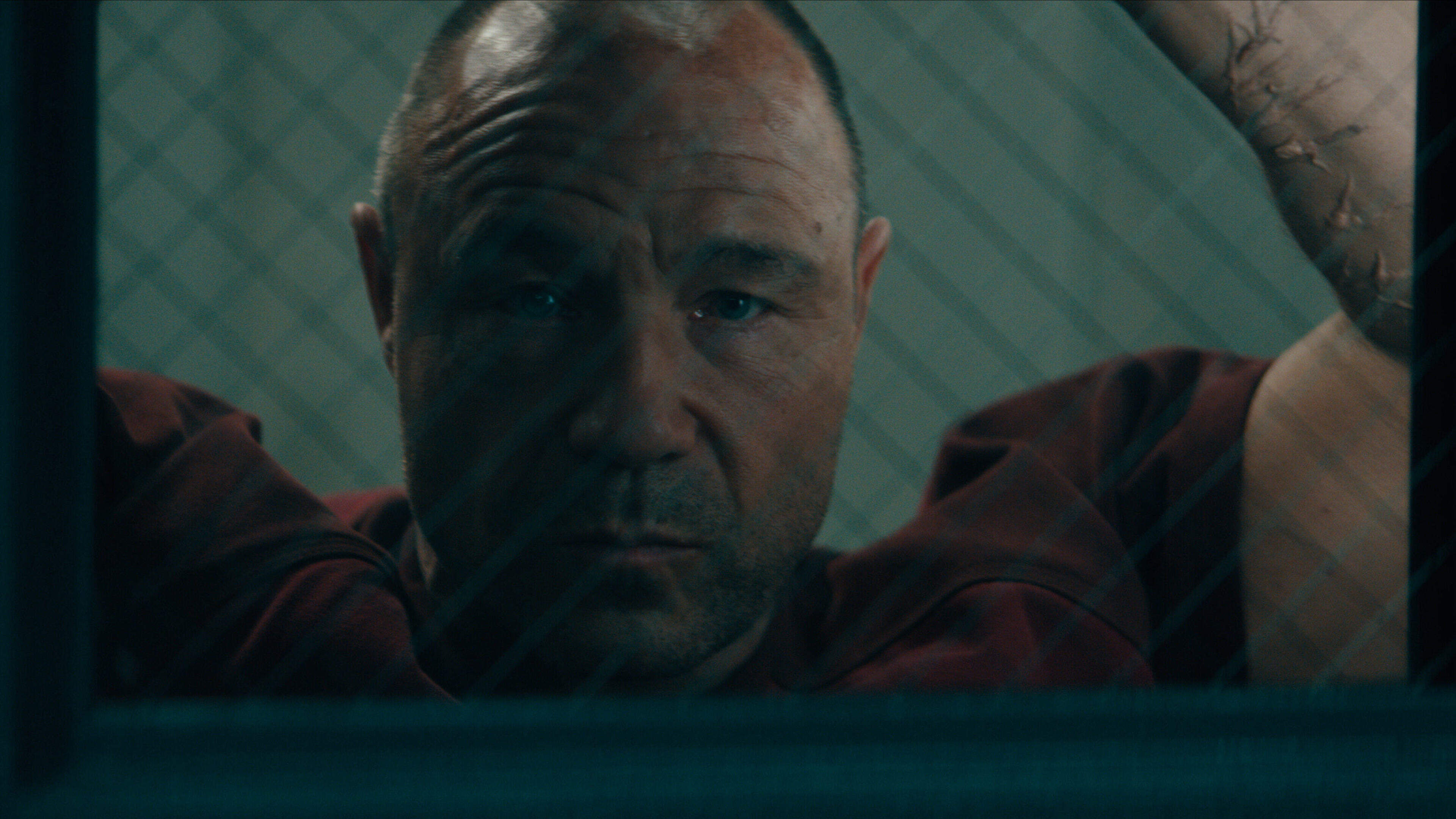
Consider the visual of Walter leaning over a metal sink.
It is an ordinary action in an ordinary institutional environment. Yet the expression on his face transforms the image into something profoundly uncomfortable.
His smile appears almost playful, but there is nothing reassuring about it.
That contrast captures the psychological foundation of the character. Walter’s apparent amusement suggests a man who does not experience confinement in the same way as those trying to control him.
Graham’s greatest strength has always been his ability to suggest emotional complexity beneath a character’s surface. Here, that ability makes even a moment of stillness feel threatening.
Rather than relying exclusively on the familiar conventions of serial-killer performances, he creates menace through small gestures and unpredictable shifts in expression.
It is precisely this kind of controlled acting that can make a villain linger in the viewer’s imagination.
3. The Disappearance That Reopens an Old Nightmare
Although Graham provides the show’s most immediately frightening presence, Nocturne is not simply a character study of a murderer.
Its central investigation begins when Michael Frost, a boy who disappeared three years earlier alongside his sister Felicia, unexpectedly returns alive.
His reappearance should be a moment of celebration. Instead, it exposes the terrifying possibility that his sister remains somewhere in captivity.
For Jonah Lynn, played by Liev Schreiber, the development reopens an investigation that has already consumed years of his life.
Jonah is a former homicide detective carrying profound personal losses. His determination to find the missing girl is driven by professional responsibility, but it is also entangled with grief and unresolved guilt.
This emotional foundation gives the mystery a more human dimension.
The missing children are not merely clues in an elaborate puzzle. Their disappearance represents a devastating failure that Jonah has never been able to accept.
The investigation becomes a race against time, but it also becomes an examination of how obsession can gradually erase the boundaries between duty and personal desperation.
Schreiber’s controlled performance provides a compelling contrast to Graham’s sinister unpredictability.
Where Walter appears to take pleasure in manipulating uncertainty, Jonah is a man desperate to impose order on a world that has repeatedly denied him peace.
Their opposition forms the dramatic backbone of the series.
Apple TV Press+1
4. Zazie Beetz Brings Courage and Vulnerability to the Investigation
One of the most consequential developments involves Saga Bauer, portrayed by Zazie Beetz.
An FBI agent and Jonah’s surrogate daughter, Saga volunteers to enter the psychiatric facility undercover in an attempt to uncover information about Walter and his possible accomplices.
The decision transforms the investigation from an external search into an intimate psychological confrontation.
Saga must operate within an environment where trust is dangerous, institutional routines are restrictive, and the person she needs to understand has an extraordinary talent for exploiting human weakness.
Beetz brings a different energy to the series.
Her character is determined, resourceful, and courageous, but the performance is most effective when it allows that confidence to coexist with uncertainty.
Saga’s greatest challenge is not merely avoiding discovery. It is maintaining control over her own identity while pretending to be someone else.
Her mission also creates a difficult emotional conflict for Jonah.
He understands the danger of approaching Walter more intimately than almost anyone, yet the search for Felicia may depend upon precisely that risk.
This creates one of the show’s most effective dilemmas: the people trying to save an innocent life must expose someone they love to a profoundly dangerous individual.
5. The Psychiatric Hospital Becomes a Character of Its Own
The institutional setting is central to Nocturne’s atmosphere.
Cold concrete, reinforced doors, narrow corridors, and oppressive lighting establish an environment that feels both physically secure and psychologically unstable.
The hospital is supposed to represent containment.
Yet the more time the drama spends within its walls, the less reassuring that containment becomes.
The production repeatedly emphasizes the contrast between Walter’s limited physical surroundings and the apparently unlimited reach of his influence.
One of the most disturbing early sequences demonstrates how he communicates with another patient through the plumbing connecting their cells.
It is an extraordinarily simple idea.
Two people separated by concrete remain connected by something as mundane as a pipe.
But that small architectural detail becomes a vehicle for psychological domination.
The scene establishes Walter’s ability to weaponize conversation while making the institution itself seem vulnerable.
The hospital’s most important weakness is not necessarily a broken lock or an inadequate security system.
It is the human beings who work within it.
6. Rory Culkin’s Karl Shows How Manipulation Really Works
Rory Culkin plays Karl, a young hospital employee whose interactions with Walter provide another unsettling dimension to the story.
Karl is not introduced as an obvious villain.
His vulnerability emerges from qualities that might ordinarily be considered admirable: empathy, curiosity, and a willingness to see humanity in people others have condemned.
Walter recognizes those qualities and begins exploiting them.
This relationship illustrates a central psychological theme of the series.
Manipulation does not always begin with intimidation. Sometimes it begins with apparent vulnerability, carefully chosen confidences, or the suggestion that one person possesses a special understanding of another.
Walter’s ability to make people feel uniquely important is arguably more dangerous than his capacity for physical violence.
Culkin’s nervous energy complements Graham’s unnerving calm.
Their scenes establish a troubling imbalance between a young man who wants to understand and a killer who understands far too well how to exploit that desire.
There is also a broader institutional question beneath their interactions.
How can professionals maintain compassion without allowing compassion to become a vulnerability?
Nocturne does not always explore that question with complete subtlety, but the relationship between Karl and Walter gives it genuine dramatic force.
The Guardian+1
7. A Nordic Noir Nightmare Reimagined in Pennsylvania
Nocturne draws inspiration from The Sandman and Lazarus, novels by Lars Kepler, the pen name of Swedish authors Alexandra Coelho Ahndoril and Alexander Ahndoril.
The television adaptation relocates the story to western Pennsylvania, replacing its Scandinavian setting with American small towns, forests, and isolated communities.
This relocation could easily have stripped the material of its original atmosphere.
Instead, the landscape provides a different expression of the same underlying darkness.
The broad, open spaces outside the institution contrast with the claustrophobic rooms in which Walter is confined.
Yet neither environment feels particularly safe.
Forests suggest concealment. Empty roads create isolation. Ordinary communities become places where horrifying secrets may remain undetected for years.
The series uses these contrasts to connect two apparently different worlds.
Inside the institution, Walter represents controlled, concentrated evil.
Outside, investigators confront the possibility that his influence has spread through places where people believe they are protected by normality.
That visual opposition is one of the adaptation’s strongest ideas.
It allows the story to retain the fatalistic atmosphere associated with Nordic noir while developing a distinctly American sense of geographical isolation.
8. Direction, Sound, and the Art of Building Dread
Director Tim Van Patten helps establish the series’ restrained but threatening visual language.
Rather than making every sequence aggressively cinematic, the direction frequently allows ordinary environments to become unsettling through framing, performance, and duration.
The camera does not always need to announce danger.
Sometimes the most disturbing image is simply a character remaining unnaturally still.
This approach works particularly well with Graham.
His performance benefits from close observation. Small changes in expression become significant, and moments of silence invite viewers to search his face for intentions that remain deliberately obscure.
Sound is equally important.
Institutional noises, distant movement, and uncomfortable silences contribute to the sensation that danger exists just outside the viewer’s immediate perception.
The score occasionally pushes the atmosphere toward more conventional thriller territory, but the strongest scenes understand that restraint can create more fear than constant musical escalation.
The direction also recognizes the dramatic value of contrast.
Scenes of investigative activity and domestic conversation provide temporary relief from the hospital’s oppressive atmosphere.
Yet that relief rarely lasts.
The audience is continually reminded that the investigation remains connected to Walter, even when he is nowhere in sight.
9. The Hannibal Lecter Comparison Is Impossible to Ignore
Any thriller involving an imprisoned, intellectually manipulative serial killer inevitably invites comparisons with The Silence of the Lambs.
Nocturne is no exception.
Walter shares certain narrative characteristics with Hannibal Lecter: exceptional psychological perception, confinement within a secure institution, and the ability to unsettle people through conversation.
The similarity is both an advantage and a limitation.
Audiences immediately understand the danger of approaching someone whose mind may be more threatening than his physical circumstances.
But the comparison also creates expectations that are difficult for any new character to escape.
Graham’s performance is most interesting when it moves away from the polished intellectual superiority associated with Lecter.
Walter feels less elegant and more physically unpredictable.
His menace is not entirely cerebral. There is something almost animalistic beneath his controlled behaviour.
That combination of bodily threat and psychological calculation gives Graham opportunities to establish a distinctive presence.
The series occasionally relies too heavily on familiar genre devices, but Walter remains frightening because Graham makes his emotional reactions difficult to anticipate.
One moment, he appears almost harmless.
The next, the smallest change in his expression suggests something profoundly dangerous.
10. The Series’ Greatest Strength Is Also Its Biggest Weakness
For all its atmospheric confidence, Nocturne is not without flaws.
The storytelling sometimes becomes excessively complicated.
Multiple investigations, traumatic histories, hidden connections, and shifting suspicions compete for attention.
The result can be a narrative that feels more elaborate than emotionally necessary.
Certain developments require considerable suspension of disbelief, particularly around the undercover operation and the decisions made by experienced investigators.
The series also occasionally leans on familiar crime-drama character types.
There is the brilliant but damaged detective, the determined agent prepared to ignore warnings, and the criminal mastermind whose influence appears almost supernatural.
These conventions are not inherently weaknesses.
They become problematic when the story depends on them instead of finding new ways to explore its characters.
The pacing presents another challenge.
Some sequences unfold with gripping precision, while others delay important developments through repeated investigative conversations or additional complications.
The most significant weakness, however, concerns the victims.
Because Walter is such a commanding presence, the series sometimes risks making his psychological brilliance more fascinating than the human devastation caused by his crimes.
The suffering of families and survivors deserves as much attention as the mechanics of his manipulation.
When the drama remembers that emotional responsibility, it becomes more powerful.
When it concentrates primarily on Walter’s elaborate games, it can feel like an exceptionally stylish but familiar serial-killer thriller.
These reservations are reflected in the critical reception. The Guardian praised Graham’s frightening presence while questioning the emotional depth of parts of the story. The Los Angeles Times admired the cast while noting the mystery’s occasional implausibility, and Radio Times offered a considerably less enthusiastic assessment.
Los Angeles Times+2
11. Critical Reception: An Impressive Start for a Divisive Thriller
The early response to Nocturne has been encouraging, although not universally enthusiastic.
As reported on November 2, the series held an 85% Rotten Tomatoes critics score and a Metacritic rating of 70.
Those figures suggest a broadly positive reception rather than unanimous acclaim. Scores may change as additional reviews are included.
The strongest consensus concerns Stephen Graham.
Even reviewers who have reservations about the plotting acknowledge the disturbing effectiveness of his performance.
The Financial Times awarded the series four stars, highlighting its tension and atmospheric execution while recognizing its familiar genre elements.
NME similarly praised Graham’s restraint and the show’s intricate mystery, although it identified sluggish passages and some conventional characterization.
Meanwhile, The Guardian emphasized the remarkable impact of Graham’s villain, suggesting that his presence repeatedly restores the series’ momentum whenever the wider narrative becomes less convincing.
These reactions help explain the show’s appeal.
Nocturne may not reinvent the serial-killer thriller, but it places an exceptionally compelling performer at the centre of a carefully constructed atmosphere of dread.
TVLine+2
12. Why Stephen Graham Makes Nocturne Worth Watching
The most persuasive reason to watch Nocturne is not the complexity of its central mystery.
It is the extraordinary contrast between Stephen Graham’s character and the emotional world surrounding him.
Jonah Lynn is haunted by loss.
Saga Bauer is driven by determination and personal loyalty.
Karl struggles with the vulnerability created by empathy.
Walter, meanwhile, appears to view those emotional qualities as opportunities.
This contrast gives the series its most compelling psychological dimension.
Graham understands that a frightening villain does not need to dominate every scene physically.
Sometimes the knowledge that he might be influencing events elsewhere is sufficient.
His performance creates that lingering uncertainty.
Even when the narrative shifts away from the institution, Walter’s presence remains embedded in the viewer’s expectations.
The audience begins searching for his influence in conversations, suspicious behaviour, and apparently unrelated discoveries.
That is the hallmark of an effective psychological antagonist.
He changes not only the behaviour of the characters but also the way viewers interpret the story.
And although the series occasionally stretches its credibility, Graham repeatedly pulls it back toward something immediate and unsettling.
His Jurek Walter is not frightening because he seems invincible.
He is frightening because he understands how ordinary human emotions can become instruments of control.
Final Verdict: A Disturbing Thriller Elevated by an Extraordinary Villain
Nocturne is an ambitious, atmospheric crime drama that succeeds most convincingly when it allows its performances to carry the tension.
Its complicated mystery does not always justify every twist, and its reliance on established serial-killer conventions prevents it from feeling entirely original.
Nevertheless, the combination of a haunting institutional setting, an emotionally burdened detective, a dangerous undercover investigation, and Stephen Graham’s terrifying central performance makes it a compelling addition to the psychological-thriller genre.
Liev Schreiber provides emotional gravity. Zazie Beetz brings determination and vulnerability. Rory Culkin gives the story a disturbing illustration of how manipulation can begin with apparently innocent human connections.
But Graham is the figure who dominates the imagination.
His performance transforms confinement into an illusion of safety and a simple smile into a warning.
For viewers who appreciate dark crime mysteries, slow-burning tension, and morally complicated characters, Nocturne offers plenty to admire.
It is not a flawless masterpiece, nor does it need to be.
Its greatest achievement is creating a villain whose influence seems to extend beyond the physical boundaries of the screen.
And when the episode ends, the image that remains is not necessarily one of violence or chaos.
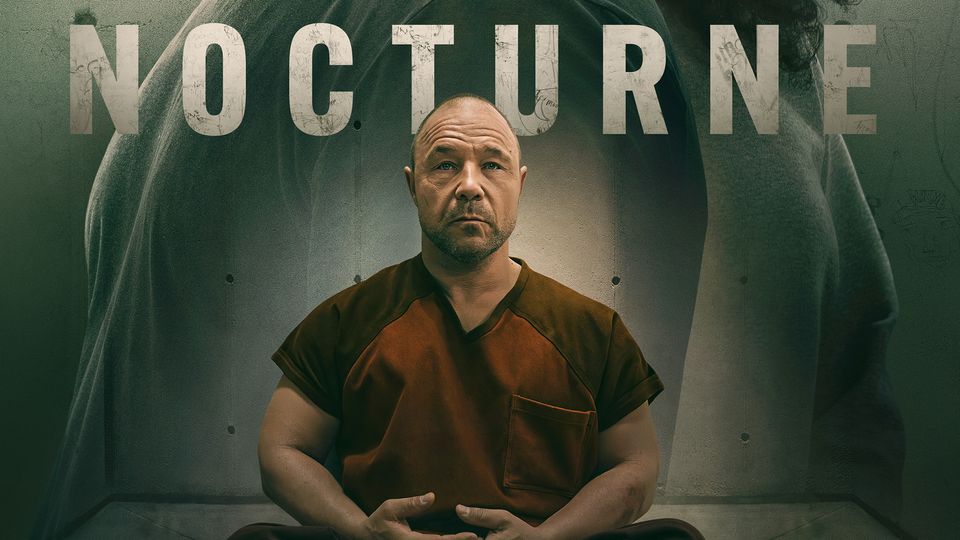
It is Stephen Graham, standing in a cold institutional room, wearing a faint, almost amused smile.
A man who has lost his freedom but may not have lost his power.
That is the true horror of Nocturne.
Review verdict: 8/10 — A gripping, occasionally overcomplicated psychological thriller anchored by one of Stephen Graham’s most unnerving performances.
Nocturne premiered on Apple TV on October 30, 2026. It has 10 episodes, with new episodes releasing weekly. This review discusses the premise and early developments without revealing the ending; the full season has not yet aired.
Apple TV Press+1