🚨 FORGET MR DARCY — COLIN FIRTH’S MOST DEVASTATING PERFORMANCE MAY BE THE ONE THAT QUIETLY BREAKS YOUR HEART!
Colin Firth Gives One Of His Most Moving Performances In A Single Man — The Devastating Drama About Love, Grief And One Day That Changes Everything
Colin Firth has spent decades making restraint look effortless.
Whether playing the famously proud Mr Darcy, a stammering future king or the quietly complicated men who have become his speciality, the British actor has repeatedly demonstrated that some of his most powerful moments arrive when he says almost nothing at all.
But few performances have used that quality as devastatingly as A Single Man.
Released in 2009 and directed by fashion designer-turned-filmmaker Tom Ford in his feature directorial debut, the drama places Firth at the centre of an intimate story about grief, loneliness and the extraordinary difficulty of continuing with ordinary life after the person you love is suddenly gone.
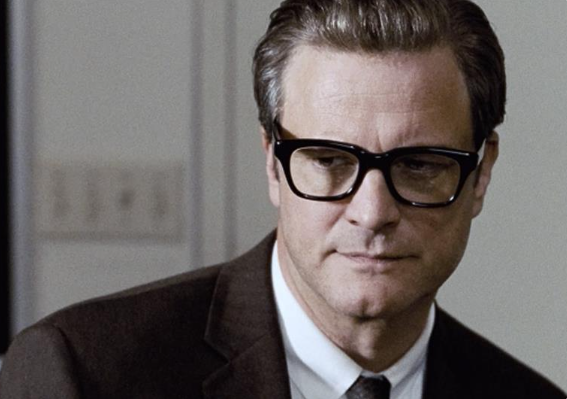
Firth plays George Falconer, a British university professor living in Los Angeles in 1962.
From the outside, George appears immaculate.
His clothes are precise. His home is beautiful. His manners remain controlled. He lectures his students, drives through the city and participates in the rituals of everyday life with the quiet professionalism expected of him.
Inside, however, George is collapsing.
His longtime partner, Jim, played by Matthew Goode, has died suddenly in a car accident.
Months later, George remains trapped inside the loss.
And over the course of one carefully observed day, A Single Man asks a painfully simple question: what happens when a man who believes he has reached the end suddenly begins noticing reasons to remain?

Colin Firth Strips Away Everything Except Grief
There are actors who communicate grief through enormous emotional scenes.
Firth takes almost the opposite approach.
George’s pain is controlled so tightly that the control itself becomes heartbreaking.
His morning routine is performed with meticulous precision. His appearance is assembled almost like armour. Every detail suggests a man constructing the version of himself that other people expect to see.
It is a performance built around the enormous distance between appearance and reality.
Firth rarely allows George to become theatrically devastated.
Instead, the audience watches him navigate a world that continues functioning despite the fact that his own world has stopped.
People talk.
Students attend lectures.
Cars move through Los Angeles.
Neighbours continue their lives.
The sun rises.
And George remains there, carrying an absence that nobody around him can completely see.
That contradiction gives the film much of its emotional force.
Grief has not destroyed the physical world.
It has simply made George feel detached from it.
And Firth captures that sensation with extraordinary precision.
A pause lasts slightly too long.
A smile appears and disappears.
A conversation continues while George seems mentally somewhere else entirely.
The result is one of the most restrained performances of Firth’s career — and arguably one of his most affecting.
The Phone Call That Changes Everything
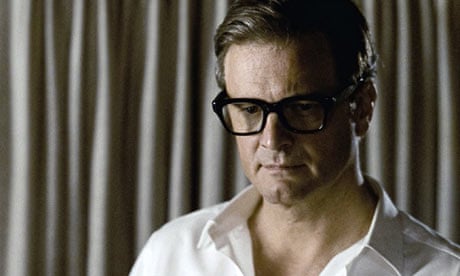
At the centre of George’s grief is the sudden death of Jim.
The film gradually reveals the life they shared through memories rather than presenting their relationship as exposition.
There are ordinary moments.
Conversations.
Touches.
Private jokes.
The comfortable intimacy of two people who have built a life together.
That normality is essential.
George is not merely mourning an abstract romance.
He is mourning routine.
He is mourning companionship.
He is mourning the person who occupied the other side of his home and the other half of his daily existence.
And the circumstances surrounding Jim’s death deepen that devastation.
George learns that Jim has been killed in a car accident, but his position as Jim’s partner is painfully vulnerable in the social world of 1962.
The loss is therefore both intensely private and socially complicated.
He has suffered the death of the person closest to him without receiving all the recognition or rituals traditionally offered to a grieving spouse.
It gives Firth’s performance another layer.
George is not only lonely because Jim is dead.
He is lonely because the world around him cannot fully acknowledge what Jim was to him.

Matthew Goode Makes Jim Feel Painfully Alive
Matthew Goode faces a difficult task.
Jim is already gone when the central story unfolds.
Yet the audience must understand why his absence has devastated George so completely.
Goode achieves this through warmth rather than melodrama.
In George’s memories, Jim feels relaxed, affectionate and completely woven into the texture of his life.
The relationship feels lived-in.
That is crucial because A Single Man depends on the audience believing that George has not simply lost someone he loved.
He has lost the future he expected to have.
Every memory therefore becomes bittersweet.
The happier Jim appears, the more painful the present becomes.
Ford repeatedly contrasts the warmth of memory with George’s emotionally muted existence after Jim’s death.
And the effect can be brutal.
For George, remembering Jim is both comforting and unbearable.
Memory briefly gives him back the person he loves.
Then reality takes him away again.
One Day In Los Angeles
The film unfolds primarily across a single day.
George has reached a frightening point in his grief.
He is contemplating ending his life.
What follows, however, is not structured like a conventional thriller racing toward an obvious deadline.
Instead, the drama becomes a collection of encounters.
George moves through Los Angeles believing he understands what the day will mean.
But the world keeps interrupting him.
A student asks questions.
A stranger catches his attention.
A neighbour appears.
A longtime friend needs him.
Small details suddenly become vivid.
Faces seem more interesting.
Colours appear richer.
Human contact becomes unexpectedly significant.
The genius of the structure is that none of these moments initially seems large enough to change a life.
That is precisely the point.
A Single Man is interested in the tiny experiences that become enormous when someone has almost stopped expecting anything from tomorrow.
Nicholas Hoult Arrives As An Unexpected Disruption
Among the most important figures George encounters is Kenny Potter, a student played by Nicholas Hoult.
Hoult was still very young when the film was made, but his performance carries an unusual mixture of curiosity, confidence and vulnerability.
Kenny becomes fascinated by George.
He senses something behind his professor’s carefully constructed exterior.
Their conversations begin to push beyond the ordinary boundaries of teacher and student, moving toward questions of loneliness, fear, connection and what people conceal from one another.
Kenny represents something George has almost forgotten how to experience: possibility.
Not necessarily in a simplistic romantic sense.
Something broader.
Curiosity.
Spontaneity.
The unexpected arrival of another human being who genuinely wants to understand him.
Their scenes gradually become some of the film’s most important because Kenny does not know the full significance of the day he has entered.
George does.
That imbalance creates extraordinary tension.
A casual conversation to Kenny can carry enormous emotional weight for George.
A swim can feel like an awakening.
A moment of companionship can suddenly make the future seem less empty.
Hoult wisely avoids playing Kenny as a convenient saviour.
He cannot repair George.
No one can simply erase grief.
But he can remind him that connection still exists.
And sometimes that reminder is enough to alter the direction of a day.
Julianne Moore Nearly Steals The Film As Charley
Then there is Charley.
Played by Julianne Moore with a combination of glamour, sadness and emotional volatility, Charley is George’s longtime friend and another person struggling with her own version of loneliness.
Their relationship is affectionate but complicated.
They share history.
They understand one another.
They drink together.
They remember another version of their lives.
But Charley’s feelings and George’s grief do not fit neatly together.
Their evening scenes provide some of the film’s richest emotional material.
At first, the encounter carries the appearance of escape.
There are drinks, beautiful clothes, music and nostalgia.
But the longer George and Charley talk, the more obvious it becomes that both are attempting to survive disappointments that cannot simply be laughed away.
Moore gives Charley an aching desperation beneath her elegance.
She wants closeness.
She wants reassurance.
She wants to believe that something from the past might still be recoverable.
George loves her.
But not in the way she might wish.
And that distinction creates one of the film’s most painful interpersonal conflicts.
Neither character is cruel.
Neither is entirely wrong.
They simply need things from each other that the other cannot provide.
Tom Ford Makes Grief Look Almost Uncomfortably Beautiful
A Single Man was Tom Ford’s first feature film, and his background in fashion is visible almost immediately.
Every frame appears considered.
Costumes are immaculate.
Interiors are carefully arranged.
Faces are photographed with extraordinary attention.
George’s modernist home is not merely a backdrop but an extension of his personality: elegant, ordered and increasingly empty.
Los Angeles itself appears caught between beauty and alienation.
But the visual sophistication is not merely decorative.
Ford and cinematographer Eduard Grau use changes in colour and visual intensity to reflect George’s emotional relationship with the world around him.
When George is withdrawn, life can appear drained and distant.
When something catches his attention — a face, a conversation, a human connection — the world seems to become richer.
Colour becomes emotion.
Beauty becomes evidence that George is still capable of noticing something beyond grief.
That stylistic decision could easily have become distracting.
Instead, it reinforces the film’s central idea.
George believes he has become disconnected from life.
Yet throughout the day, life keeps presenting itself to him in fragments.
The Film Refuses To Make Grief Simple
One of the most powerful aspects of A Single Man is its refusal to pretend that a profound loss can be solved by one inspirational conversation.
George does not wake up healed.
Kenny cannot replace Jim.
Charley cannot remove the loneliness.
There is no magical speech that suddenly makes everything acceptable.
Grief remains.
Jim remains absent.
The years they spent together cannot be recreated.
But George’s relationship to that grief begins to shift.
That difference matters.
The film is less interested in “moving on” than in whether someone can continue moving at all.
For much of the story, George experiences memory as evidence of everything he has lost.
Gradually, however, those memories begin to exist alongside new experiences rather than completely replacing them.
He can remember Jim and still notice another person.
He can mourn and still laugh.
He can feel devastated and still experience beauty.
Those things do not cancel one another.
They coexist.
Firth’s Performance Is About Everything He Doesn’t Say
Perhaps the most impressive aspect of Firth’s work is how little he asks the audience to admire him.
George is not transformed into a saint by suffering.
He can be distant.
He can be impatient.
He can appear emotionally inaccessible.
His grief has made him intensely inward-looking.
Yet Firth keeps revealing the humanity underneath the immaculate surface.
Watch his eyes when another character speaks.
Watch the slight changes in his expression when Jim enters his memory.
Watch how George behaves when someone unexpectedly reaches him emotionally.
The performance depends on micro-reactions.
That restraint made the role a landmark moment in Firth’s career.
He received widespread acclaim and earned an Academy Award nomination for Best Actor, while winning the BAFTA for Leading Actor.
It is easy to understand why.
George requires an actor willing to trust silence.
Firth does.
A Different Colin Firth
For audiences who principally associate Colin Firth with romantic dramas, A Single Man can initially feel startling.
There is still romance here, but it is romance viewed from the other side of loss.
The central relationship has already happened.
George and Jim have already fallen in love.
They have already built the shared life another film might have treated as its happy ending.
A Single Man asks what happens after that ending is violently interrupted.
That gives Firth an opportunity to explore a different kind of romantic hero.
George is not trying to win someone’s heart.
He is trying to understand what remains of his own.
And the performance becomes more powerful because Firth refuses easy sentimentality.
Why It Still Hits So Hard
More than a decade after its release, A Single Man remains striking because its central concerns are not tied to one period.
The setting is specifically 1962.
George’s experience as a gay man in that era is essential to the story.
But the emotional questions reach far beyond it.
What happens to routine after someone disappears from it?
What happens to a home after one of the people who made it a home is gone?
How do memories change when there will be no new memories with that person?
And how does someone recognise the moment when survival quietly begins becoming life again?
The film never offers easy answers.
Instead, it gives us George.
A man walking through one apparently ordinary day while privately carrying an extraordinary decision.
And Firth makes every encounter matter.
A Performance That Lingers Long After The Final Scene
There is a temptation with beautifully photographed films to remember the images before the characters.
A Single Man certainly provides unforgettable images.
The immaculate suits.
The modernist architecture.
The Los Angeles light.
Julianne Moore’s glamorous Charley.
Nicholas Hoult’s youthful Kenny.
Matthew Goode appearing through George’s memories like someone simultaneously present and unreachable.
But eventually everything returns to Firth’s face.
That is where the film truly lives.
George begins the day convinced that his story has effectively finished.
Then life begins interrupting his certainty.
A conversation matters.
A memory changes shape.
Someone looks at him.
Someone listens.
Something beautiful briefly catches his attention.
None of these moments eliminates Jim’s death.
They do something subtler.
They remind George that grief and life are not mutually exclusive.
He can carry one while still experiencing the other.
And Colin Firth makes that realization extraordinarily moving.
A Single Man is not an easy film about overcoming loss.
It is something more complicated and, ultimately, more affecting: a story about the unpredictable moments that can reach someone even when they believe they are beyond being reached.
Julianne Moore brings aching vulnerability.
Nicholas Hoult brings youth and possibility.
Matthew Goode makes the lost relationship feel heartbreakingly real.
Tom Ford wraps the story in images of extraordinary elegance.
But Colin Firth is its wounded heart.
More than anything, his performance reminds us that sometimes the biggest battle is not learning how to forget the person who is gone.
It is discovering whether loving them can coexist with choosing to remain.
And in A Single Man, one extraordinary day forces George Falconer to confront precisely that question.