🚨 BBC’S MOST EMOTIONAL TRUE STORY IS LEAVING VIEWERS IN TEARS — ONE QUIET MAN, 699 CHILDREN SAVED, AND A REUNION THAT CHANGED EVERYTHING!
Introduction: The Weight of a Single Life
History is frequently taught through the deafening roar of its grandest catastrophes and the monumental figures who command armies or sign treaties. We study the maps of invading nations, the casualty counts of global conflicts, and the speeches that rallied millions. Yet, true moral courage is rarely born in the grand halls of power; more often than not, it is forged in the quiet corners of everyday life, by ordinary people who look at an impossible crisis and decide, simply, that doing nothing is not an option.
One Life, the profoundly moving biographical drama directed by James Hawes and anchored by a career-defining performance from legendary actor Sir Anthony Hopkins, stands as a monument to one such quiet hero. Telling the true story of Sir Nicholas Winton—a young London stockbroker who, in the months leading up to the outbreak of the Second World War, orchestrated the rescue of 669 children (predominantly Jewish) from Nazi-occupied Czechoslovakia—the film has captured the global consciousness, leaving audiences worldwide in tears.
It is a cinematic achievement that avoids the saccharine traps of standard Hollywood sentimentality, choosing instead to focus on the heavy, unglamorous, and heartbreaking administrative burden of saving lives. Through Hopkins’s masterful portrayal, One Life explores the profound echoes of historical trauma, the enduring power of ordinary human decency, and the staggering weight of a legacy that remained hidden for nearly half a century.

Part I: The Eve of Destruction – Prague, 1938
To understand the magnitude of Nicholas Winton’s actions, one must first step back into the freezing, chaotic atmosphere of late 1938. Europe stood on the precipice of total war. Following the infamous Munich Agreement, Nazi Germany annexed the Sudetenland region of Czechoslovakia, creating a humanitarian disaster of unprecedented proportions.
Thousands of political dissidents, anti-fascist refugees, and Jewish families fled inward toward Prague, desperate to escape the impending Nazi occupation of the rest of the country. They arrived with nothing—starving, terrified, and trapped in makeshift refugee camps amidst the bitter Central European winter. The international community, paralyzed by appeasement and bureaucracy, offered little more than sympathetic platitudes.
It was into this freezing theater of despair that a young, unassuming London stockbroker named Nicholas “Nicky” Winton (played in flashbacks by Johnny Flynn) arrived for what was supposed to be a simple skiing holiday. Invited by a friend working with the British Committee for Refugees from Czechoslovakia, Winton visited the refugee camps outside Prague.
What he witnessed changed the trajectory of his life forever. He saw families sleeping in the mud, children shivering without adequate clothing, and the unmistakable, suffocating shadow of the impending Holocaust closing in. While others saw a geopolitical quagmire too vast to solve, Winton saw individual children whose lives had value. Returning to his hotel room, he made a quiet, resolute vow: he was going to get them out.
Part II: The Bureaucratic Battlefield – Red Tape vs. Human Lives
If popular culture has taught us to associate wartime heroism with physical combat, espionage thrillers, or daring battlefield rescues, One Life offers a radically different, deeply gripping perspective. Nicholas Winton’s war was fought across a desk, surrounded by stacks of paper, fountain pens, telegrams, and stubborn government officials.
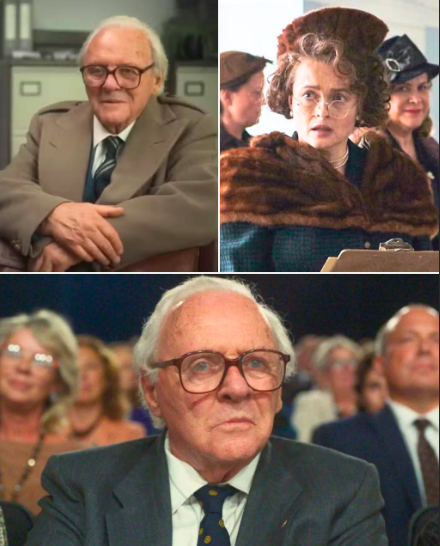
What makes Winton’s achievement—known historically as the Czech Kindertransport—so astonishing is the sheer administrative mountain he had to climb. To evacuate a single child from Nazi-occupied Prague to safety in Great Britain, Winton and his small, dedicated team (including his indomitable mother, Babette, played with fierce brilliance by Helena Bonham Carter) had to clear an impossibly hostile bureaucratic gauntlet:
-
Guarantors and Homes: The British Home Office demanded that for every child admitted, a British foster family must be found who would pay a 50-pound guarantee (a substantial sum at the time) to ensure the child would not become a public charge.
-
Exit Visas: They had to acquire increasingly difficult exit permits from the occupying Nazi authorities, who viewed the departing children with suspicion and greed.
-
Transit Permissions: They had to negotiate safe passage across Nazi-controlled Germany and secure transit visas from neighboring countries, all while time was quite literally running out.
Working out of a dining room table in London and a smoke-filled hotel room in Prague, Winton bypassed red tape, forged documents when necessary, badgered wealthy donors, and placed advertisements in British newspapers pleading for foster families. Day after day, fueled by sheer moral outrage and relentless determination, he engineered a logistical miracle. Between March and August 1939, eight trains successfully carried 669 children out of Prague to safety. A tragic ninth train, scheduled to depart on September 1, 1939—the very day Germany invaded Poland and World War II officially began—was canceled, and its 250 children vanished into the darkness of the Holocaust. Winton would carry the weight of that final, lost train for the rest of his life.
Part III: Anthony Hopkins and the Portrait of Quiet Guilt

Decades pass, and the world moves on. The harrowing events of 1939 fade into history textbooks, and Nicholas Winton lives a quiet, unassuming life as an elderly man in Maidenhead, quietly volunteering for local charities and tending to his garden. He never spoke of the Kindertransport. To him, what he did was simply what anyone should have done; it was not a badge of honor, but a completed task—and one shadowed by the haunting memory of the children he could not save.
This is where the film finds its emotional anchor. Sir Anthony Hopkins steps into the role of the elderly Nicholas Winton, delivering a performance of breathtaking subtlety, emotional restraint, and shattering power.
Hopkins does not play Winton as a self-righteous icon. Instead, we see an aging man wrestling with quiet, private grief. In one of the film’s most poignant motifs, Winton’s study is cluttered with an old, leather-bound scrapbook containing the photographs, names, and desperate application letters of the children he rescued. To his wife, Grete (played with immense warmth and grounding by Lena Olin), Nicky is simply her husband, a man who hoards paper and worries about clearing out his office.
Hopkins captures the universal tragedy of survivors and rescuers alike: the human tendency to focus entirely on what was not done rather than what was achieved. Winton looks at the scrapbook not with pride, but with a lingering ache for the 250 children on that final, cancelled train. He feels a profound sense of failure, entirely unaware that the lives he did save have blossomed into generations of children, grandchildren, and great-grandchildren.
Part IV: The Television Studio That Changed Everything – That Reunion
For fifty years, the story of Nicholas Winton remained a well-kept secret, known only to a handful of people and the surviving “Winton children” who grew up scattered across the globe, often unaware of the exact mechanism that had plucked them from the jaws of death.
That changed forever in 1988, thanks to the BBC consumer television program That’s Life!, hosted by Esther Rantzen.
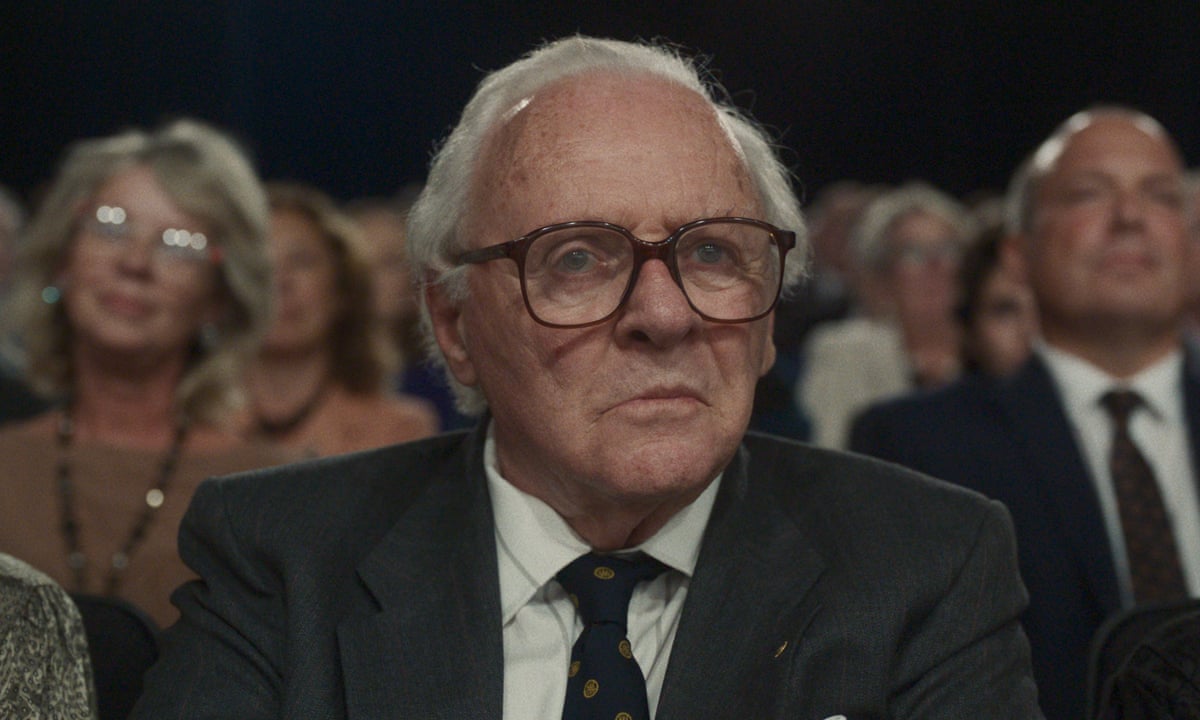
In a sequence that has become legendary—and which forms the emotional climax of One Life—Winton is invited into the studio audience as an ordinary guest. He believes he is simply there to watch a segment on historical archives. He has no idea that the producers have tracked down dozens of the children he saved, now adults with families of their own.
As the broadcast unfolds, Esther Rantzen holds up Winton’s original scrapbook. She explains its history to a surprised audience. Then, she asks a simple question that echoes across television history:
“Is there anyone in our audience tonight who owes their life to Nicholas Winton? If so, could you please stand up?”
Slowly, one by one, individuals sitting all around Winton begin to rise. Within seconds, virtually the entire studio audience is standing, looking toward him with tears streaming down their faces, breaking into overwhelming applause.
Hopkins recreates this jaw-dropping moment with heart-wrenching authenticity. Sitting in the studio chair, blinking back tears, overwhelmed and entirely unaccustomed to praise, Winton’s stoic facade cracks. He looks around at the living, breathing legacy of his youth—doctors, artists, teachers, parents, and grandparents—all existing because one man refused to look away. It is a cinematic moment so overwhelmingly powerful that it is virtually impossible to watch without breaking down.
Part V: Why One Life Resonates So Deeply Today
In contemporary culture, biographical dramas frequently fall into the trap of hagiography—elevating historical figures into untouchable saints. One Life resists this impulse by emphasizing the radical accessibility of human goodness.
Nicholas Winton was not a superhero with extraordinary powers. He was a stockbroker who enjoyed the outdoors, worried about finances, and simply possessed an unyielding moral compass. By framing his heroism as an everyday choice rather than an unattainable ideal, the film issues a quiet, urgent challenge to every viewer: What are we doing in the face of today’s humanitarian crises?
In an era marked by global displacement, refugee crises, rising nationalism, and political polarization, the themes of One Life feel painfully urgent. The world today is once again filled with displaced children caught in the crossfire of adult conflicts. Winton’s legacy reminds us that indifference is a choice, and that saving a single life—as the Talmudic proverb inscribed on his ring notes—is akin to saving an entire universe.
Furthermore, the film serves as a meditation on the importance of remembering. In a world where historical memory is increasingly fragile and survivors of the Holocaust are passing away, cultural artifacts like One Life act as vital torchbearers of truth. They ensure that the atrocities of the past are never minimized, and that the quiet, unsung heroes who fought against the darkness are never forgotten.
Conclusion: A Masterpiece of Humanity and Grace
One Life is not an easy film to watch, but it is an essential one. It is a masterclass in cinematic storytelling that balances historical gravity with intimate emotional resonance.
At the center of it all is Anthony Hopkins, delivering a performance that ranks among the finest of his storied career. He reminds us that true strength is quiet, true heroism requires no applause, and the deepest measure of a human life is found not in accumulated wealth or professional status, but in the love we extend to others when they need it most.
As the credits roll and the tears finally dry, viewers are left with a lingering sense of awe—and a profound challenge to carry forward the torch of human empathy in a fractured world. Sir Nicholas Winton proved that one person, armed with nothing more than a pen, a scrapbook, and an unshakeable belief in human dignity, can change the course of history.
One Life reminds us that we can do the same.