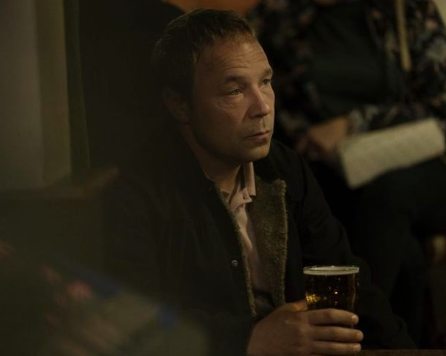
😭 NOW STREAMING ON NETFLIX: “ONE OF STEPHEN GRAHAM’S MOST HEARTBREAKING PERFORMANCES!” — THIS DEVASTATING BRITISH DRAMA WILL STAY WITH VIEWERS LONG AFTER THE FINAL SCENE!
🚨 STEPHEN GRAHAM’S MOST DEVASTATING PERFORMANCE? THE VIRTUES IS A BRUTAL, HEARTBREAKING BRITISH MASTERPIECE THAT WILL LEAVE VIEWERS EMOTIONALLY SHATTERED! 💔😭
Film Review | The Virtues (2019) | British Psychological Drama | Starring Stephen Graham, Niamh Algar, Helen Behan and Frank Laverty | Directed by Shane Meadows
Some television dramas entertain. Others disturb. And then there are those rare, extraordinary productions that reach into the darkest corners of human experience and leave audiences struggling to find the words to describe what they have witnessed.
The Virtues, starring Stephen Graham, belongs firmly in that final category.
Created by Shane Meadows and Jack Thorne, this four-part British drama is not a conventional crime thriller, a neatly constructed mystery or an uplifting tale about overcoming adversity. It is something considerably more uncomfortable: an unflinching examination of childhood trauma, addiction, abandonment, shame and the terrible emotional consequences of memories that refuse to disappear.
At its centre stands Joseph, a deeply troubled man whose outward toughness conceals an almost unbearable reservoir of pain.
Played with astonishing vulnerability by Stephen Graham, Joseph is neither an uncomplicated hero nor a character designed to win immediate sympathy. He is volatile, damaged, frequently self-destructive and painfully human.
His journey begins with a separation that threatens to destroy the fragile stability he has managed to build. His young son is leaving England to begin a new life in Australia with his mother and her partner.
For Joseph, the departure is more than a heartbreaking goodbye. It becomes the emotional trigger that sends him spiralling toward a past he has spent much of his adult life desperately trying to escape.
What follows is one of the most emotionally demanding performances of Graham’s career.
And the deeper Joseph travels into his own history, the more disturbing the story becomes.
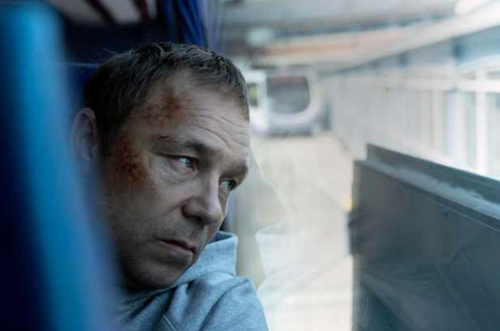
A Father’s Goodbye That Becomes the Beginning of a Nightmare
The opening episode demonstrates why The Virtues is so different from more conventional television dramas.
There is no sensational crime scene, no elaborate opening mystery and no attempt to manufacture excitement through relentless action.
Instead, there is a father trying desperately not to fall apart in front of his child.
Joseph works as a painter and decorator. His life is modest, his relationships complicated and his emotional resources almost exhausted.
When he visits his former partner Debbie and their son Shea for a farewell dinner, he understands that the boy’s move to Australia is intended to offer him a better future.
But knowing that something may be good for his child does not make the separation any less devastating.
Graham makes this contradiction almost physically painful to watch.
Joseph tries to smile. He attempts ordinary conversation. He struggles to remain supportive, even as the possibility of losing regular contact with his son threatens to overwhelm him.
The remarkable achievement of the scene is its restraint.
The character does not need an explosive argument to communicate the depth of his despair.
His face tells the story.
A hesitant expression, a sudden silence and the effort required to maintain composure reveal a man standing dangerously close to emotional collapse.
When Joseph finally leaves, the audience can sense that something terrible is approaching.
Not because the script announces it, but because Graham has made his vulnerability impossible to ignore.
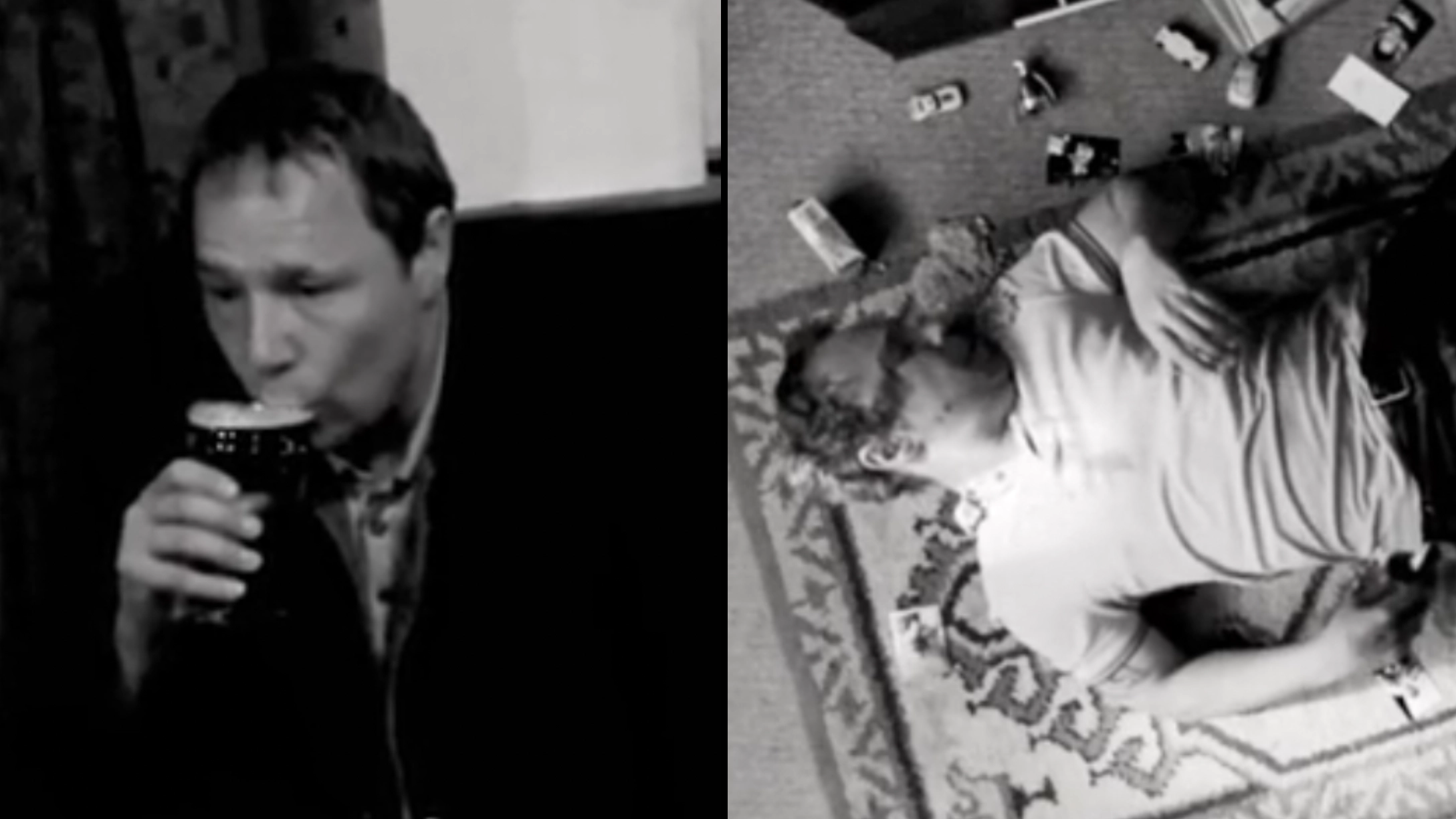
The Drinking Scene That Reveals Stephen Graham’s Extraordinary Talent
One of the drama’s most unforgettable sequences follows Joseph into a pub.
It begins with a drink.
For a recovering alcoholic struggling with overwhelming grief, however, that apparently ordinary decision carries enormous consequences.
Joseph initially appears isolated and withdrawn. Then, as the alcohol takes effect, his behaviour begins to change.
He becomes increasingly sociable, striking up conversations with strangers and throwing himself into the temporary companionship of the people around him.
For a fleeting moment, he almost appears happy.
But the happiness is an illusion.
As the evening progresses, his behaviour grows increasingly chaotic, exposing the desperation beneath his attempts at celebration.
Graham’s performance is astonishing because the transformation never feels artificial.
Every stage of Joseph’s intoxication seems connected to the emotions he is trying to suppress.
The drinking is not presented as an entertaining spectacle. It is a painful act of self-destruction.
And the aftermath is just as disturbing.
When Joseph wakes to confront the consequences of his relapse, the temporary escape has vanished.
His grief remains.
His son is still leaving.
And the memories that have haunted him since childhood are beginning to return.
The sequence demonstrates how Meadows can transform an everyday setting into an almost unbearable psychological experience.
Irish Independent+1
A Journey Back to Ireland — And a Childhood That Refuses to Stay Buried
Joseph’s decision to travel to Ireland changes the direction of the entire drama.
At first, the journey appears to offer the possibility of reconnection.
He has been separated from his childhood home and family for many years, and the prospect of recovering some connection to that past offers a fragile hope.
But the Ireland he encounters is not simply a place of familiar landscapes and comforting memories.
It is the setting of experiences he has struggled to understand throughout his adult life.
His reunion with his sister Anna, played by Helen Behan, is particularly affecting.
The siblings have spent decades apart, and their unexpected reunion brings together two people whose lives have developed in profoundly different directions.
Anna has established a family and a sense of belonging.
Joseph arrives carrying confusion, emotional instability and questions he cannot easily articulate.
Their interactions are filled with the uncomfortable tenderness of people attempting to recover a relationship that time has almost erased.
The drama understands that reconciliation is rarely instantaneous.
There is uncertainty, awkwardness and the persistent awareness of everything that has been lost.
Yet these scenes also provide moments of genuine warmth.
For the first time, Joseph encounters the possibility that his future might contain something other than isolation.
That hope makes the gradual emergence of his childhood memories even more disturbing.
The series slowly reveals that Joseph’s early life involved institutional care and experiences of abuse that left deep psychological scars.
His anger, addiction and difficulty sustaining emotional relationships begin to acquire a heartbreaking context.
The story is not simply asking what happened to Joseph.
It is asking what happens to a person when the damage inflicted during childhood remains unresolved for decades.
Niamh Algar’s Dinah Brings Another Devastating Story Into Focus
Although Graham provides the emotional centre of The Virtues, the drama becomes even more powerful through the introduction of Dinah, played by Niamh Algar.
Dinah initially appears tough, confrontational and unwilling to tolerate Joseph’s unpredictable behaviour.
Her sharp humour and defensive attitude create a striking contrast with his troubled vulnerability.
But as their relationship develops, it becomes clear that Dinah is also carrying profound emotional wounds.
Her past includes the painful experience of being separated from her child when she was a teenager.
Like Joseph, she has spent years attempting to survive the consequences of experiences that fundamentally altered her life.
Their connection becomes one of the drama’s most compelling elements.
Neither character possesses the answers the other desperately needs.
Both struggle with anger, shame and the temptation to respond destructively to suffering.
Yet their shared recognition of emotional pain creates a bond that is simultaneously fragile and deeply affecting.
Algar gives Dinah a fierce energy that prevents the character from becoming merely another tragic figure.
She is funny, defensive, compassionate and sometimes difficult.
Most importantly, she feels real.
The drama becomes richer because Joseph’s suffering is no longer treated as an isolated experience.
Instead, The Virtues explores how different forms of trauma can shape people in unexpectedly similar ways.
The Guardian+1
Shane Meadows Turns Ordinary Life Into Almost Unbearable Drama
Director Shane Meadows has built much of his reputation on stories about working-class lives, damaged relationships and the emotional consequences of violence.
His work on This Is England demonstrated an unusual ability to move between humour, tenderness and devastating psychological confrontation.
The Virtues develops those strengths further.
Meadows rarely allows the audience the comforting distance associated with more polished television productions.
His camera remains close to the characters, observing awkward conversations, prolonged silences and moments of emotional vulnerability.
Scenes are permitted to unfold at their own pace.
Sometimes very little appears to happen.
A character sits quietly.
Someone struggles to complete a sentence.
An ordinary family conversation becomes uncomfortable.
Yet beneath these apparently insignificant moments, powerful emotions are constantly shifting.
The effect is almost documentary-like.
The audience is not simply watching a carefully structured story.
It can feel as though they have been invited into the private lives of people who do not know they are being observed.
That naturalism is central to the series’ impact.
Meadows also draws on deeply personal experiences in exploring childhood trauma, giving the production an emotional seriousness that extends beyond conventional dramatic storytelling.
The result is uncomfortable but never casually sensational.
Rather than presenting suffering as entertainment, the series demands that viewers consider the long-term consequences of experiences society often prefers not to confront.
The Guardian+1
The Terrifying Power of Memories That Never Disappear
One of the most disturbing aspects of The Virtues is its depiction of memory.
Joseph does not possess a clear, uninterrupted understanding of his childhood.
Instead, fragments emerge through recollections, emotional reactions and encounters with places associated with his early life.
These fragments are often confusing.
They do not arrive in a convenient order.
Nor do they immediately explain the anger and distress that have shaped his adulthood.
This fragmented storytelling reflects the psychological complexity of Joseph’s experiences.
The audience must gradually assemble an understanding of his past, just as Joseph struggles to make sense of it himself.
The uncertainty creates a different kind of suspense from that found in conventional crime dramas.
There is no detective racing to identify a suspect.
There is no elaborate conspiracy to expose.
Instead, the central mystery concerns the experiences that transformed a vulnerable child into a deeply troubled adult.
And the closer Joseph comes to understanding those experiences, the more painful the journey becomes.
The drama also refuses to suggest that recovering a memory automatically resolves its emotional consequences.
Knowing what happened is not the same as recovering from it.
Recognition can bring relief, but it can also release grief and anger that have remained suppressed for years.
This distinction gives The Virtues much of its psychological credibility.
It is not a story about discovering one secret and suddenly becoming whole again.
It is about the frightening difficulty of confronting experiences that have shaped an entire life.
Stephen Graham Delivers a Performance Built on Pain, Silence and Vulnerability
Stephen Graham has long demonstrated an extraordinary ability to portray emotionally complicated characters.
He can be intimidating, volatile, charismatic and deeply vulnerable, sometimes within the same scene.
But The Virtues demands something particularly challenging.
Joseph is a character whose emotions are often too overwhelming for him to express clearly.
He does not always understand why he behaves as he does.
His attempts at affection can become awkward.
His frustration can turn into aggression.
His longing for connection is frequently undermined by the very behaviour that pushes others away.
Graham captures these contradictions without reducing Joseph to a collection of symptoms.
He remains recognisably human.
Even during his most difficult moments, there is a sense of the frightened child who still exists beneath the adult exterior.
The actor’s physical performance is especially impressive.
His posture changes with Joseph’s emotional state.
His facial expressions communicate shame and confusion before the dialogue has established either feeling.
At times, the smallest movement carries more emotional weight than an entire speech.
What makes the performance so remarkable is Graham’s refusal to seek easy sympathy.
Joseph can be frustrating.
He makes damaging choices.
He sometimes behaves in ways that threaten the relationships he desperately needs.
Yet Graham never allows the audience to forget the suffering beneath those actions.
It is a performance of extraordinary emotional honesty.
And by the time the story approaches its conclusion, the accumulated effect becomes almost overwhelming.
A Final Episode That Refuses to Offer Easy Comfort
The following section discusses the finale’s themes without revealing every major plot development.
The final episode brings Joseph and Dinah closer to confronting the truths they have spent years trying to understand.
The emotional intensity increases considerably.
Long-suppressed memories become impossible to ignore, and both characters must consider what confronting their past might mean for their futures.
The drama explores questions of justice, forgiveness, revenge and survival without pretending that any of them has a simple answer.
For Joseph, the confrontation is particularly painful because the past has influenced nearly every aspect of his adult identity.
His relationships, his struggles with addiction and his difficulty accepting love all exist within the shadow of experiences he did not choose.
Dinah faces her own difficult reckoning.
Their stories intersect not because their suffering is identical, but because both must decide whether they can move forward without allowing the people and events that hurt them to determine everything that comes next.
Meadows handles these questions with extraordinary intensity.
The concluding passages are emotionally exhausting, yet they resist the artificial neatness of a conventional television resolution.
The damage does not simply disappear.
There is no suggestion that one conversation can erase decades of suffering.
Instead, the series offers something more tentative and believable: the possibility that acknowledging painful truths may create the beginning of change.
That possibility is not presented as a guarantee.
It is fragile, uncertain and deeply human.
The finale attracted considerable critical praise for precisely this combination of emotional force and restraint.
The Guardian+1
Why Critics Have Embraced This Extraordinary British Drama
Rotten Tomatoes — Critics’ Score
100%
Based on 34 professional reviews listed for the 2019 miniseries.
Rotten Tomatoes+1
The critical reception of The Virtues reflects the unusual power of its storytelling.
On Rotten Tomatoes, the miniseries holds a 100% critics’ score from 34 reviews, an impressive indication of the admiration it has received.
That acclaim is not difficult to understand.
Graham’s performance is exceptional, but the series also benefits from Meadows’ direction, Jack Thorne’s writing and an ensemble cast that consistently makes the characters feel believable.
The soundtrack, composed by PJ Harvey, adds another layer of emotional unease.
Rather than overwhelming the drama with conventional musical cues, the soundscape reinforces its sense of vulnerability and psychological disorientation.
The cinematography also deserves recognition.
Everyday interiors, ordinary streets and unremarkable family homes become settings for profound emotional confrontations.
Nothing needs to look spectacular.
The devastation lies in what the characters are experiencing.
There is, however, an important qualification.
The Virtues is not comfortable viewing.
Its deliberate pacing, difficult subject matter and sustained emotional intensity may be challenging for audiences seeking escapism.
Those expecting a fast-moving mystery filled with constant plot twists may find the series unusually demanding.
But for viewers who appreciate psychologically complex character studies, its restraint becomes one of its greatest strengths.
The drama earns its emotional impact by taking its characters seriously.
The Hidden Tragedy Behind Joseph’s Anger
Perhaps the most heartbreaking achievement of The Virtues is the way it gradually changes the audience’s understanding of Joseph.
At the beginning, he appears to be a man whose life is collapsing under the weight of addiction, loneliness and emotional instability.
His behaviour can seem unpredictable and self-destructive.
As the story progresses, however, those outward characteristics become part of a much larger picture.
The audience begins to recognise how profoundly his childhood experiences have influenced the adult he has become.
This does not excuse every harmful decision he makes.
But it provides a context that transforms judgment into understanding.
The distinction matters.
Too often, fictional portrayals of damaged individuals reduce them to either villains or helpless victims.
Joseph is neither.
He is a complicated man attempting to survive emotions he has never learned to process.
His suffering has consequences for the people around him, particularly those he loves.
Yet his capacity for affection, loyalty and tenderness remains visible even during his darkest moments.
The scenes involving his son are especially important because they reveal the person Joseph desperately wants to be.
He longs to offer the security and love that were missing from his own childhood.
But his unresolved pain makes that ambition extraordinarily difficult.
This tension gives the series a devastating emotional centre.
Joseph is not merely searching for answers about the past.
He is struggling to prevent that past from determining the rest of his life.
Final Verdict: A Masterpiece That Leaves Scars — But Also a Glimmer of Hope
The Virtues is one of those rare dramas that refuses to disappear from the mind when the final credits roll.
Its power does not come from sensational revelations, elaborate production design or constant suspense.
It comes from its extraordinary understanding of human vulnerability.
Stephen Graham delivers a performance that feels painfully authentic, capturing the contradictory emotions of a man who has spent much of his life trying to escape himself.
Niamh Algar and Helen Behan provide equally important emotional depth, while Shane Meadows creates an atmosphere of intimacy that makes the characters’ suffering impossible to dismiss.
The series is difficult, frequently distressing and sometimes almost unbearable.
But it is also compassionate.
Beneath the grief and anger lies a story about the possibility of human connection.
Joseph’s journey suggests that confronting the past does not necessarily mean escaping its consequences.
Sometimes it means learning how to live without allowing those consequences to destroy every remaining opportunity for happiness.
That is what makes the drama so powerful.
It recognises that healing is not a dramatic transformation achieved in a single moment.
It can be uncertain, painful and incomplete.
And sometimes the smallest gesture of understanding carries more significance than the grandest declaration.
For audiences willing to confront its difficult themes, The Virtues offers an unforgettable experience.
It is a remarkable showcase for one of Britain’s finest actors, an exceptional achievement in naturalistic storytelling and a deeply moving exploration of what it means to survive.
Final rating: 5/5 — An emotionally devastating, beautifully acted British drama that deserves to be remembered as one of Stephen Graham’s finest performances.
Viewing note: The Virtues is a four-episode Channel 4 miniseries, originally released in 2019. Streaming availability varies by country. The series contains mature themes involving childhood sexual abuse, addiction and trauma.