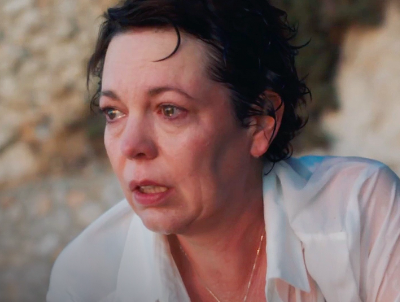
😭 NOBODY WARNED ME HOW EMOTIONALLY BRUTAL THIS FILM WOULD BE — ONE WOMAN’S DARKEST REGRET WILL STAY WITH YOU LONG AFTER THE CREDITS!
OLIVIA COLMAN DELIVERS A HAUNTING MASTERCLASS IN MOTHERHOOD, REGRET AND REPRESSION — THE LOST DAUGHTER IS A FILM THAT WILL STAY WITH YOU LONG AFTER THE CREDITS ROLL
FILM REVIEW | The Lost Daughter (2021) • Psychological Drama
There are films that entertain, films that move us, and then there are films that quietly enter our minds and refuse to leave. The Lost Daughter belongs firmly in the third category. Directed by Maggie Gyllenhaal and led by an extraordinary performance from Olivia Colman, this unsettling psychological drama explores one of the most complicated subjects in cinema: motherhood, and the emotional cost of becoming a mother while struggling to understand oneself.
Based on the 2006 novel by Elena Ferrante, the film refuses to offer easy answers or comforting resolutions. Instead, it takes viewers into the mind of a woman whose seemingly peaceful holiday becomes an unexpected confrontation with the choices she made decades earlier. Through fragmented memories, uncomfortable encounters, and moments of extraordinary emotional honesty, the story challenges conventional ideas about maternal love, sacrifice, guilt, and identity.
Olivia Colman is the emotional centre of this experience. Her portrayal of Leda is restrained, mysterious, and frequently uncomfortable to watch, yet it is precisely this complexity that makes the performance so remarkable.
A STORY THAT BEGINS WITH A QUIET HOLIDAY AND BECOMES A PSYCHOLOGICAL NIGHTMARE

The film opens with Leda, a middle-aged university professor, arriving alone at a beautiful seaside holiday destination in Greece. Initially, everything appears peaceful. The warm sunshine, picturesque coastline, and relaxed atmosphere suggest the beginning of a restorative escape from the pressures of everyday life.
However, the tranquillity does not last.
Leda soon encounters a large, noisy family occupying the beach. Among them is Nina, a young mother played by Dakota Johnson, whose complicated relationship with her daughter reminds Leda of her own experiences raising two children. What begins as a casual observation gradually develops into an uncomfortable psychological fascination.
When Nina’s young daughter temporarily disappears on the beach, Leda becomes involved in the search. Although the child is eventually found, Leda makes an unexpected decision involving a missing doll. This seemingly insignificant incident becomes the catalyst for a much deeper exploration of her emotional history.
The brilliance of the screenplay lies in its ability to transform ordinary situations into moments of extraordinary psychological tension. A forgotten object, a brief conversation, or an uncomfortable glance can suddenly reveal something deeply unsettling about the characters.
OLIVIA COLMAN: A PERFORMANCE BUILT ON SILENCE AND EMOTIONAL COMPLEXITY
Olivia Colman’s portrayal of Leda is undoubtedly the film’s greatest achievement.
Rather than presenting her character as an immediately sympathetic protagonist, Colman creates a woman who is intelligent, independent, emotionally guarded, and occasionally difficult to understand. Leda is neither entirely admirable nor entirely unlikeable. She is simply human, carrying contradictions that she cannot always explain.
One of the most impressive aspects of Colman’s performance is her facial expression. Her character frequently communicates through silence, allowing tiny changes in her eyes, posture, and breathing to reveal emotions that dialogue could never fully capture.
There are moments when Leda appears completely detached from the world around her. Yet beneath that controlled exterior, viewers can sense an enormous amount of unresolved emotional pain.
Colman also avoids making Leda’s behaviour unnecessarily dramatic. Even when her character makes questionable decisions, the actress maintains an extraordinary level of restraint.
It is a performance that demands attention because it refuses to tell audiences exactly what to think.
Her work earned her an Academy Award nomination for Best Actress, a recognition that reflects the remarkable psychological depth she brings to the character.
JESSIE BUCKLEY AND THE PAINFUL MEMORIES OF YOUTH
The film’s structure moves between Leda’s present-day holiday and memories of her younger years.
Jessie Buckley plays the younger version of Leda, portraying a woman struggling to balance intellectual ambition, personal freedom, marriage, and the responsibilities of raising two young daughters.
These flashbacks are essential because they reveal the emotional experiences that shaped the woman audiences encounter on the Greek island.
Young Leda loves her children, but motherhood also becomes a source of overwhelming pressure. Her academic ambitions and desire for independence repeatedly clash with the demands of family life.
Buckley captures this internal conflict with remarkable intensity.
Her performance is particularly effective because it avoids presenting motherhood as a straightforward emotional experience. Instead, she portrays a woman who can feel genuine affection for her children while simultaneously experiencing frustration, exhaustion, and a desperate longing to reclaim her own identity.
The relationship between Buckley and Colman’s interpretations is one of the film’s greatest strengths. Although they portray the same person at different stages of life, both actresses create a convincing psychological continuity.
DAKOTA JOHNSON AND THE MIRROR BETWEEN TWO MOTHERS
Dakota Johnson’s performance as Nina provides another important dimension to the story.
Nina is a young mother struggling with the pressures of family life and an increasingly uncomfortable relationship with the people surrounding her. Her interactions with Leda gradually become more complicated, particularly as the older woman begins recognizing aspects of her own past in Nina’s experiences.
Their relationship is fascinating because it is built on an uneasy combination of sympathy, curiosity, and suspicion.
Leda appears drawn to Nina, almost as though observing her offers an opportunity to revisit decisions she made years earlier. However, this fascination is not entirely innocent.
Johnson brings vulnerability and emotional uncertainty to the role, creating a character whose apparent confidence conceals significant personal difficulties.
The contrast between these two women gives the film much of its psychological power. They belong to different generations, yet both are struggling with questions about motherhood, desire, responsibility, and personal freedom.
MAGGIE GYLLENHAAL’S IMPRESSIVE DIRECTORIAL DEBUT
One of the most remarkable aspects of The Lost Daughter is that it marks Maggie Gyllenhaal’s feature directorial debut.
Her approach is confident, atmospheric, and deliberately uncomfortable.
Rather than relying on conventional thriller techniques, Gyllenhaal builds suspense through character behaviour, fragmented memories, and carefully controlled visual storytelling.
The director understands that the most frightening moments do not always involve physical danger. Sometimes the greatest tension comes from watching someone make a decision that cannot easily be explained.
The screenplay also deserves considerable praise. Gyllenhaal adapts Elena Ferrante’s novel with sensitivity, preserving its psychological complexity while giving the story a distinct cinematic identity.
The dialogue is frequently understated, allowing uncomfortable silences to carry considerable emotional weight.
Importantly, the film never attempts to provide a simple moral judgment about Leda’s experiences.
CINEMATOGRAPHY, MUSIC AND THE ATMOSPHERE OF ISOLATION
Visually, the film creates an intriguing contrast between the beauty of its surroundings and the emotional discomfort experienced by its protagonist.
The Greek coastline looks inviting, peaceful, and almost dreamlike. Yet the beach becomes a place where Leda’s memories and anxieties gradually overwhelm her holiday.
Cinematographer Hélène Louvart uses natural lighting and carefully composed images to establish an intimate atmosphere.
The camera frequently remains close to the characters, emphasizing their facial expressions and physical reactions. This approach makes the audience feel unusually close to Leda’s internal world.
The sound design and music also contribute significantly to the film’s unsettling mood. Instead of overwhelming emotional scenes with dramatic musical cues, the production frequently allows ordinary environmental sounds and silence to create tension.
The result is an atmosphere that feels strangely realistic, as though viewers are witnessing private moments that were never intended to be shared.
THE MOST PROVOCATIVE QUESTION: WHAT DOES IT MEAN TO BE A MOTHER?
At its heart, The Lost Daughter is not simply a story about family relationships or childhood memories.
It is an examination of the expectations society places on women and the complicated emotions that can exist alongside motherhood.
The film challenges the assumption that maternal love must always be effortless, unconditional, and completely self-sacrificing.
Through Leda’s experiences, it explores the uncomfortable possibility that a woman can love her children while simultaneously feeling overwhelmed by the responsibilities associated with raising them.
This is not an easy subject, and the film deliberately avoids offering reassuring conclusions.
Some viewers may find Leda’s behaviour frustrating or even unforgivable. Others may recognize aspects of her emotional struggle, particularly the tension between personal ambition and family responsibilities.
That disagreement is precisely what makes the film so compelling.
Rather than instructing audiences how to interpret motherhood, Gyllenhaal invites them to confront feelings that are rarely discussed openly.
THE ENDING: A FINAL MOMENT THAT CHANGES THE EXPERIENCE
The final section of the film is deliberately ambiguous, encouraging audiences to reconsider everything they have witnessed.
Without revealing the full ending, Leda’s experiences eventually bring together the film’s central themes of guilt, memory, forgiveness, and emotional survival.
The final moments do not provide a conventional resolution. Instead, they leave viewers questioning how much of Leda’s story should be understood literally and how much reflects her complicated psychological state.
It is an ending that may divide audiences, but it perfectly suits a film that has resisted straightforward answers from the beginning.
FINAL VERDICT: AN EXTRAORDINARY FILM THAT REFUSES TO MAKE MOTHERHOOD SIMPLE
The Lost Daughter is an ambitious, emotionally challenging psychological drama that succeeds because of its extraordinary performances and willingness to explore uncomfortable human experiences.
Olivia Colman delivers one of the most nuanced performances of her career, while Jessie Buckley, Dakota Johnson, and the supporting cast provide compelling contributions.
Maggie Gyllenhaal demonstrates impressive confidence behind the camera, transforming a deeply introspective novel into a visually striking and psychologically absorbing film.
This is not a conventional thriller filled with constant twists or dramatic confrontations. Its power comes from the emotions people hide, the memories they cannot escape, and the decisions that continue shaping their lives long after they have been made.
For viewers who appreciate sophisticated character studies, exceptional acting, and stories that encourage difficult conversations, this is an essential watch.
Final rating: 9/10.
A haunting, beautifully performed exploration of motherhood and identity, The Lost Daughter is the kind of film that stays in your thoughts long after the screen goes dark.