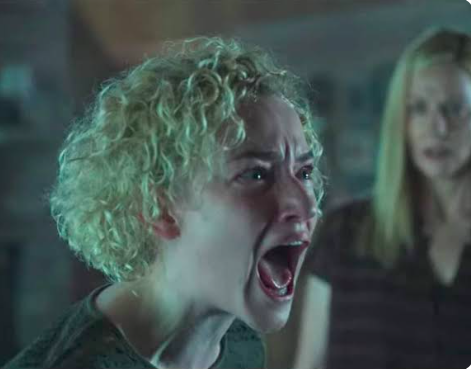
🔥 STREAMING NOW ON NETFLIX: THIS IS THE FOUR-SEASON CARTEL THRILLER BECAME AN AWARDS POWERHOUSE, WINNING MULTIPLE EMMYS — AND VIEWERS STILL CALL IT ONE OF THE MOST ADDICTIVE CRIME SERIES EVER MADE!
ONE WRONG MOVE — AND THE WHOLE FAMILY IS PULLED INTO A DANGEROUS WORLD: Why Ozark Remains One of Netflix’s Most Addictive Crime Dramas
There are television shows that introduce danger slowly, allowing audiences to settle comfortably into their world before everything begins to unravel. And then there is Ozark, the Netflix crime drama that effectively grabs an ordinary suburban family by the collar, throws them into a nightmare of money laundering, drug cartels, murder and betrayal — and spends four seasons tightening the noose.
Originally premiering in 2017 and concluding in 2022, Ozark stars Jason Bateman as Marty Byrde, a seemingly unremarkable financial adviser whose extraordinary talent for moving money has connected him to people no sensible accountant would ever want as clients.
Beside him is Laura Linney as Wendy Byrde, his wife, who initially appears to be another passenger aboard Marty’s rapidly sinking ship.
That assumption does not survive for long.
What begins as the story of a desperate husband trying to keep his family alive gradually becomes something much more disturbing: a portrait of an entire household adapting to criminality so successfully that the audience begins wondering whether survival is still really the objective.
And that is precisely what makes Ozark so difficult to stop watching.
The premise is brilliantly simple.
Marty’s money-laundering operation for a Mexican drug cartel collapses after his business partner makes a catastrophic mistake. Suddenly, Marty must convince dangerous men that he is more valuable alive than dead.
His solution is almost absurdly ambitious.
He promises that if they spare him, he can relocate to Missouri’s Lake of the Ozarks and launder enormous quantities of cartel money through local businesses.
It is less a business proposal than a desperate attempt to buy another day.
But it works.
Marty packs up Wendy and their children, Charlotte and Jonah, and moves the family from Chicago to the Ozarks, where he immediately begins searching for businesses through which he can funnel dirty money.
For another series, this could have become a repetitive story about hiding cash and avoiding detection.
Ozark has much bigger ambitions.
Every solution Marty creates seems to generate two new problems. Every person he recruits introduces another vulnerability. Every secret requires another lie, and every lie threatens to expose the one beneath it.
The result is television built around consequences.
Marty does not simply make a dangerous decision and move on to the next episode. Decisions follow him. They mutate. They affect his marriage, his children, his associates and eventually entire communities.
That relentless cause-and-effect structure gives Ozark its extraordinary momentum.
Jason Bateman is perfectly cast because Marty is almost the opposite of what viewers expect from the central figure in a cartel thriller.
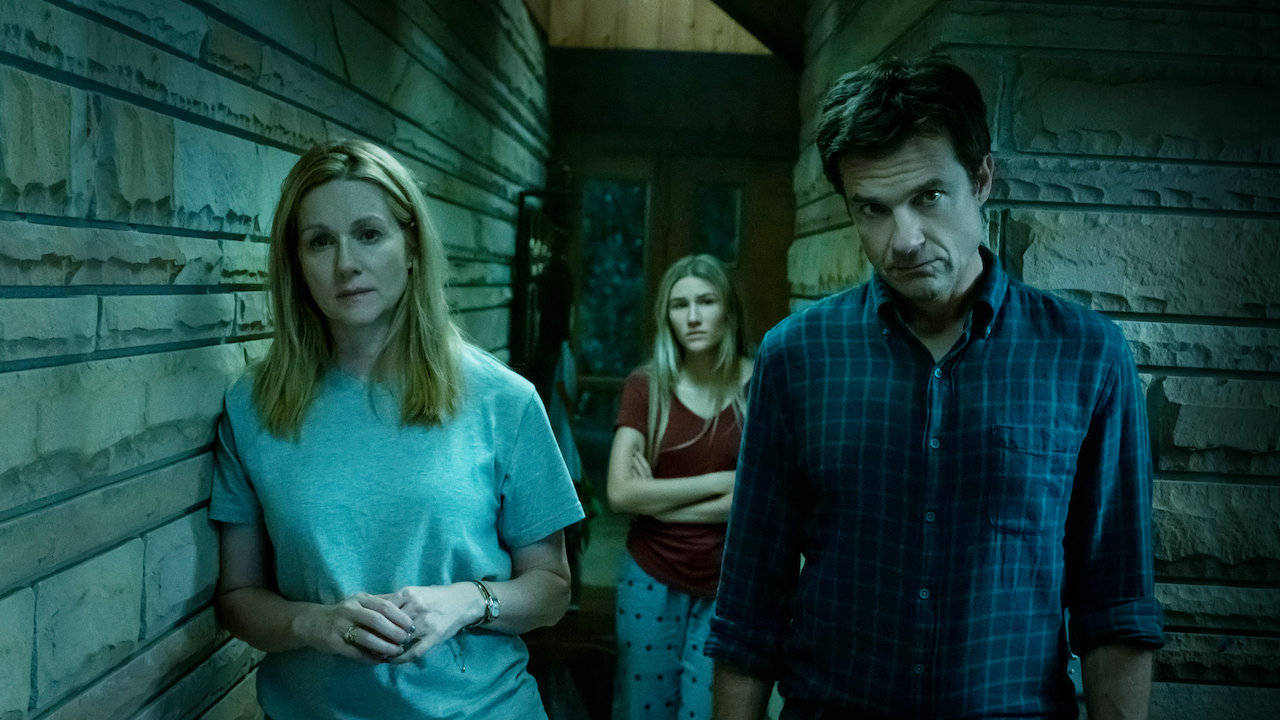
He is not physically intimidating.
He rarely explodes with theatrical rage.
He does not swagger into rooms like a gangster.
Instead, Marty talks.
And talks.
And calculates.
Bateman plays him as a man whose brain appears permanently trapped inside an emergency spreadsheet. Even when somebody is threatening his life, Marty seems to be mentally calculating percentages, risks and possible exits.
His greatest weapon is his ability to convince someone that keeping him alive is financially advantageous.
Watching him negotiate his way out of apparently impossible situations becomes one of the show’s most entertaining recurring pleasures.
Yet Bateman also allows exhaustion to creep gradually into Marty.
This is not a man enjoying his criminal empire. For much of the series, he resembles someone attempting to repair a machine while standing inside it as the gears continue moving.
His calm becomes both his strength and his tragedy.
But if Marty initially appears to be the centre of Ozark, Laura Linney’s Wendy increasingly becomes its most fascinating force.
Wendy’s transformation is remarkable because it never feels like a sudden twist.
She does not wake up one morning and decide to become ruthless.
Instead, the series reveals piece by piece that the qualities required to survive this world — ambition, strategic thinking, manipulation and emotional control — may have been inside her all along.
At first, Wendy’s involvement appears motivated largely by protecting her children.
Then something changes.
She begins understanding power.
More importantly, she begins enjoying her ability to wield it.
Linney gives Wendy an extraordinary mixture of warmth and calculation. She can sound reassuring while simultaneously manoeuvring somebody into exactly the position she needs them to occupy.
That tension transforms the Byrde marriage into one of the show’s greatest battlegrounds.
Marty and Wendy are technically partners, but they increasingly operate according to different definitions of victory.
Marty often wants an exit.
Wendy increasingly wants influence.
And when two intelligent people who know virtually everything about each other begin pulling in different directions, the results are explosive.
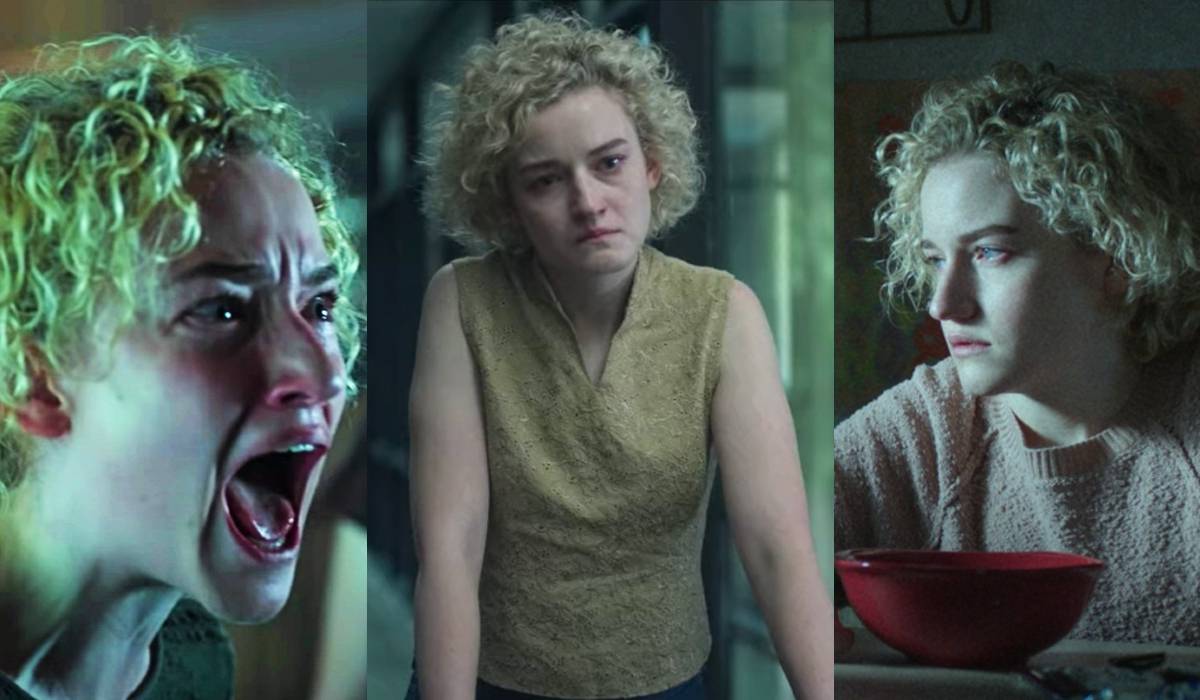
Yet perhaps the most unforgettable performance belongs to Julia Garner as Ruth Langmore.
Ruth enters the story as a sharp-tongued young woman from a troubled local family who immediately recognises that Marty represents an opportunity.
She is intelligent, suspicious, furious and desperately determined not to be trapped by the circumstances into which she was born.
Garner plays her with astonishing energy.
Ruth can walk into a room containing people with more money, education and authority than she has and somehow make them seem nervous.
Her relationship with Marty becomes one of the emotional foundations of the series.
He recognises her intelligence.
She recognises his.
At different moments they become employer and employee, teacher and student, allies, adversaries and something approaching family.
But Ozark never allows that relationship to become sentimental.
Trust in this world is temporary.
Loyalty has limits.
And love does not protect anyone from consequences.
The Langmores also provide an important counterweight to the Byrdes.
Marty arrives in Missouri believing he can understand the area through numbers. He sees businesses, property and opportunities for laundering money.
But the Ozarks are already filled with people who have histories, grudges, alliances and survival systems of their own.
The Byrdes have not entered an empty chessboard.
They have stepped onto one where the game has been running for generations.
That becomes clear through characters including Darlene Snell, played with terrifying unpredictability by Lisa Emery.
Darlene is particularly effective because she does not behave according to Marty’s assumptions.
Marty believes nearly everything can be negotiated.
Darlene repeatedly demonstrates the terrifying flaw in that philosophy: negotiation only works when the other person values the same things you do.
The Snells have their own ideas about land, family, respect and ownership.
Money cannot always resolve those conflicts.
Sometimes it makes them worse.
Then there is the cartel itself, constantly looming over the Byrdes even when its representatives are nowhere to be seen.
This is another area where Ozark succeeds.
The threat does not need to be physically present in every scene because Marty knows what failure means.
The audience knows too.
That knowledge turns apparently mundane moments — buying a business, opening a bank account, moving cash — into sources of extraordinary suspense.
A conversation across a desk can feel as dangerous as a gunfight because one incorrect number could expose everything.
Visually, the series embraces darkness.
Its cool, muted palette gives the Ozarks an almost permanently threatening atmosphere. Lakes, forests and quiet roads that might ordinarily seem peaceful become strangely claustrophobic.
The landscape is beautiful, but rarely comforting.
Even daylight can feel ominous.
That visual identity suits a story in which the Byrdes are constantly surrounded by open space yet seem increasingly unable to escape.
Their enormous lake becomes a particularly effective symbol.
Water suggests freedom, movement and possibility.
But in Ozark, it often feels like another boundary.
The family has travelled hundreds of miles from Chicago only to discover that geography cannot separate them from what they have done.
And then there are the children.
Charlotte and Jonah could easily have been reduced to frustrated teenagers complaining about their parents.
Instead, the series understands that children raised inside extreme circumstances inevitably begin adapting to them.
Sofia Hublitz gives Charlotte a convincing mixture of anger, fear and growing independence, while Skylar Gaertner’s Jonah undergoes one of the show’s most unsettling transformations.
The crucial question is not simply whether Marty and Wendy can keep their children physically alive.
It is what survival is turning those children into.
That distinction matters.
The Byrdes repeatedly justify their decisions by claiming that everything is being done for the family.
But as the body count, lies and betrayals accumulate, the phrase begins to sound increasingly hollow.
If every terrible decision is made to protect your family, when do those decisions themselves become the greatest danger to that family?
Ozark returns to that contradiction again and again.
It is also why the show can be more psychologically interesting than its cartel premise initially suggests.
This is not merely a story about criminals chasing money.
It is about moral adaptation.
The first compromise feels enormous.
The second becomes easier.
By the tenth, the characters have constructed an entirely new definition of normal.
That gradual erosion is frightening precisely because it happens so convincingly.
Nobody announces that they have crossed a moral line.
They simply look back and discover the line disappeared miles ago.
The show is not flawless.
There are stretches where its deliberate pacing may frustrate viewers expecting constant action.
Certain business negotiations become complicated, and the endless cycle of laundering operations, political manoeuvres and shifting alliances occasionally threatens to overwhelm the emotional story underneath.
But those quieter periods frequently serve an important purpose.
Ozark understands that suspense does not require somebody to be running or shouting.
Sometimes the most frightening scene involves two characters sitting silently across a table, both knowing that only one of them truly controls the conversation.
And when the series does erupt, those explosions feel more powerful because of the tension accumulated beforehand.
The writing also becomes increasingly ambitious as the seasons progress.
What starts as a relatively contained story about one man laundering cartel money expands into something involving local businesses, organised crime, political influence, federal investigators and competing visions of what the Byrde family might become.
Yet the core conflict remains surprisingly intimate.
Marty wants control through logic.
Wendy wants control through power.
Ruth wants control over her own destiny.
Their desires repeatedly collide.
And the tragedy is that each character can often understand exactly why the others behave as they do.
That does not stop them from hurting one another.
Few crime dramas are as interested in the mechanics of survival as Ozark.
Money has to move.
Businesses have to appear legitimate.
Accounts have to balance.
Authorities must be satisfied.
Cartel demands must be met.
Local enemies must be managed.
Children must somehow be raised.
A marriage must somehow continue.
Each requirement would be difficult individually.
The Byrdes must accomplish all of them simultaneously.
That pressure gives the show its addictive rhythm.
Just when Marty appears to have solved the impossible problem in front of him, another one arrives.
Sometimes it is bigger.
Sometimes it is closer to home.
And occasionally it comes from the person sitting beside him.
By its later seasons, Ozark has travelled far beyond its original question of whether Marty can successfully launder enough money to survive.
The more unsettling question becomes whether survival has changed the Byrdes so fundamentally that returning to ordinary life is no longer possible.
That is the genius at the heart of the series.
The cartel may have forced the family into this world.
But eventually, force is no longer the whole explanation.
Ambition enters the equation.
So does pride.
So does resentment.
And once those motivations appear, Ozark becomes much more than a story about innocent people trapped among criminals.
It becomes a story about what happens when people discover they may be disturbingly good at the very thing that was supposed to destroy them.
The performances keep that transformation believable.
Bateman’s controlled anxiety, Linney’s increasingly formidable presence and Garner’s ferocious vulnerability create three very different centres of gravity.
Whenever they share the screen, the show becomes unpredictable because each character is simultaneously trying to survive and trying to define what survival actually means.
There are no comfortable heroes here.
There are simply people making decisions and then discovering what those decisions cost.
That is why Ozark remains so compulsive even after its final episode.
Its greatest shocks are not necessarily the violent ones.
They are the moments when a character does something once unimaginable — and you suddenly realise the series has spent dozens of episodes showing exactly how they became capable of doing it.
For anyone discovering the show for the first time, the opening episodes offer only a glimpse of how deep the nightmare eventually goes.
Marty Byrde thinks he has moved his family to Missouri to solve a financial problem.
Instead, he has opened the door to an entirely different existence.
Crime becomes business.
Business becomes power.
Power becomes family politics.
And family loyalty becomes increasingly difficult to distinguish from mutual destruction.
Across four seasons, Ozark takes one desperate bargain and follows every consequence until the Byrdes barely resemble the family who first arrived beside that enormous Missouri lake.
It can be bleak. It can be deliberately slow. It can be almost unbearably tense.
But when its machinery is operating at full force, few Netflix crime dramas are quite as effective at making one episode turn into three, and three somehow become an entire evening.
Because in Ozark, the question is rarely whether something will go wrong.
Something always does.
The question is what Marty, Wendy and Ruth will be willing to sacrifice when it does — and whether, after everything they have done to survive, there will be anything left worth saving.
OZARK (2017–2022)