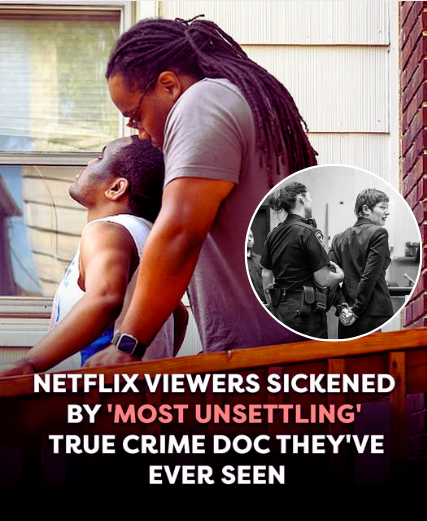
💔 Netflix Viewers Shocked by ‘Most Disturbing’ True Crime Documentary: Tell Them You Love Me
From the moment the documentary dropped on Netflix, social media erupted with reactions from viewers describing it as “the most disturbing documentary” they had ever watched. “I’ve watched A LOT of documentaries, but this was truly some of the sickest s*** I’ve ever seen,” wrote one Twitter user. Another commented, “It ended up being one of the most disturbing and uncomfortable documentaries I’ve ever seen and I’ve seen a lot.” Others admitted it “made me sick to my stomach” or called it “one of the most unsettling documentaries I’ve ever watched on Netflix.”
The intensity of the reactions is perhaps unsurprising given the subject matter, which explores the controversial and legally complex case of Anna Stubblefield, a former philosophy professor whose actions sparked national debate over consent, disability, and power.
The Story Behind the Documentary
Tell Them You Love Me is directed by Nick August-Perna, known for his work on The Swell Season, and executively produced by renowned documentarian Louis Theroux. The film investigates the 2009 case involving Anna Stubblefield, who, at the age of 41, became entangled with Derrick Johnson, a 30-year-old non-verbal man with cerebral palsy. Their introduction occurred through Derrick’s brother, John Johnson, who had been a student in one of Stubblefield’s courses at Rutgers University in Newark, New Jersey.
According to media reports, Stubblefield’s family background included significant experience in working with people with disabilities. Her parents, both holding Ph.D.s in special education, instilled in her the idea that individuals with communication challenges could still participate in meaningful, educational, and personal interactions. This background formed the initial premise of her relationship with Derrick: she offered to help him improve his communication skills, a mission framed as educational and supportive.
However, the situation quickly became controversial when Stubblefield claimed that her relationship with Derrick had become consensual in a sexual context, despite his inability to verbally communicate and his cerebral palsy, which significantly impaired his motor function and comprehension. Derrick’s mother, Daisy Johnson, strongly disputed this claim, arguing that her son was incapable of providing informed consent due to his condition.
The Legal Case
The documentary chronicles the ensuing legal proceedings, which attracted national attention due to their complexity and sensitivity. Initially, Stubblefield was convicted of two counts of first-degree aggravated sexual assault and sentenced to 12 years in prison, according to NJ.com. This verdict ignited debates about consent, disability, and the responsibilities of caregivers and educators in positions of power.
In 2017, Stubblefield’s conviction was overturned, and she was granted a new trial. Subsequently, she accepted a plea deal, pleading guilty to a lesser charge of third-degree aggravated criminal sexual contact. This plea resulted in her being sentenced to time served and released from prison. Despite this resolution, Stubblefield maintains her innocence in the documentary, stating, “I’m not guilty of a crime.”
The case raises fundamental ethical and legal questions: can individuals with severe cognitive or communicative impairments consent to sexual activity? How do power dynamics, familial relationships, and societal biases affect the interpretation of consent? Tell Them You Love Me challenges viewers to confront these uncomfortable questions head-on.
Viewer Reactions
From the moment it premiered, Tell Them You Love Me provoked intense reactions across social media platforms. Many viewers reported feeling physically ill or emotionally disturbed by the documentary’s subject matter and the ethical ambiguities it presents.
One viewer tweeted: “I had to stop watching halfway through. This documentary is horrifying and deeply unsettling.” Another wrote: “It’s hard to look away even when you know you should. I’ve never felt so conflicted about a story before.” The recurring theme among viewers is a mix of fascination, horror, and ethical contemplation.
Discussion forums and comment sections are filled with debates over the nuances of consent, the responsibilities of caregivers, and the role of legal systems in protecting vulnerable individuals. Some viewers praised the documentary for raising awareness about these complex issues, while others criticized it for what they perceive as sensationalism or exploitation of a deeply vulnerable individual for entertainment purposes.
The Role of True Crime Documentaries
Tell Them You Love Me exemplifies a growing trend in true crime documentaries: not simply recounting crimes, but exploring the broader social, psychological, and cultural forces that contribute to them. Netflix has produced a range of documentaries in this vein, from high-profile murder cases to obscure, complex legal battles, often highlighting systemic failures, social inequities, and human vulnerability.
In this context, Tell Them You Love Me operates on multiple levels. On one hand, it chronicles a sensational legal case; on the other, it forces audiences to grapple with difficult questions about power, consent, disability, and societal responsibility. By doing so, the documentary fits into the true crime genre’s evolution from simple storytelling to social and psychological examination.
Louis Theroux’s involvement as an executive producer adds additional credibility and gravitas. Known for his nuanced approach to controversial subjects, Theroux ensures that the documentary does not simply sensationalize events but also probes deeply into the underlying human and societal factors.
Ethical Considerations and Controversy
The ethical dimensions of Tell Them You Love Me are particularly complex. The documentary portrays the life of Derrick Johnson and the circumstances of his interactions with Stubblefield, which some viewers found distressing or invasive. Questions arise about how documentaries should handle subjects who are non-verbal or cognitively impaired, and how filmmakers can balance public interest with respect for personal dignity and privacy.
The film’s handling of Stubblefield’s perspective—her insistence on her innocence—is also controversial. Critics argue that presenting her narrative alongside the accounts of family members could create confusion for audiences and inadvertently shift sympathy toward someone who has been legally judged. Supporters counter that including multiple perspectives is essential to understanding the case’s full complexity.
Ultimately, the documentary forces a confrontation with the uncomfortable truth that legal outcomes do not always align with moral intuitions, and that societal biases can shape both legal and public perceptions of crime and consent.
Cultural Impact
Since its release, Tell Them You Love Me has sparked conversations not only about the specific case but also about broader social issues. Disability advocates, legal experts, and ethicists have engaged with the documentary’s content, debating how society defines consent, autonomy, and agency for individuals with significant disabilities.
The film has also sparked debate about the role of streaming platforms in disseminating sensitive or potentially traumatic content. Critics argue that Netflix and other platforms have a responsibility to provide content warnings and contextual information, particularly when dealing with vulnerable subjects or graphic material.
Despite—or perhaps because of—its controversy, Tell Them You Love Me has become a cultural touchstone for discussions about morality, law, and disability. It is cited in academic discussions, journalistic analyses, and social media discourse as a case study in the intersection of legal, ethical, and psychological complexity.
Production and Storytelling
Director Nick August-Perna approached the documentary with a careful balance of narrative urgency and ethical sensitivity. Using interviews, archival footage, and courtroom recordings, he constructs a timeline that allows viewers to understand the sequence of events while also grappling with their disturbing implications.
The documentary’s pacing is deliberate, gradually revealing the complexity of Stubblefield’s interactions with Derrick and the subsequent legal ramifications. By juxtaposing personal testimonies with legal documents and media coverage, the film encourages viewers to question initial assumptions and consider multiple perspectives.
The cinematography and editing also contribute to the unsettling atmosphere. Close-up shots, stark lighting, and deliberate pacing heighten tension, creating an immersive experience that underscores the psychological and emotional stakes of the case.
The Broader Conversation About Consent
At its core, Tell Them You Love Me prompts viewers to reconsider how society understands consent, particularly in cases involving individuals with disabilities. The documentary raises critical questions:
-
How should legal systems assess the ability of non-verbal or cognitively impaired individuals to consent?
-
What role does familial authority play in mediating such relationships?
-
How do societal perceptions of race, disability, and power influence legal outcomes?
By confronting these issues head-on, the documentary transcends the boundaries of standard true crime storytelling, challenging viewers to engage with uncomfortable moral and ethical dilemmas.
Availability and Viewing
Tell Them You Love Me is currently available on Netflix in the United States, and viewers in the U.K. can access it via Sky. Given its sensitive content, viewers are advised to approach the documentary with caution and to be aware of the intense emotional and psychological impact it may provoke.
The gripping trailer, which provides a preview of the documentary’s key themes, has been widely shared on social media, contributing to its notoriety and sparking early discussions about its disturbing content.
Conclusion
Tell Them You Love Me is not merely a documentary about a controversial legal case—it is a meditation on consent, disability, power, and societal perception. It challenges viewers to confront unsettling questions about human relationships, morality, and the justice system. Its disturbing content, combined with thoughtful storytelling and ethical complexity, makes it one of the most talked-about true crime documentaries of recent years.
While the documentary has left many viewers physically and emotionally unsettled, it also serves an important cultural function: prompting conversation, reflection, and a deeper understanding of the complexities surrounding consent, autonomy, and societal responsibility. In doing so, it reaffirms the power of true crime as a genre not only to entertain but also to illuminate the darker corners of human behavior and social systems.