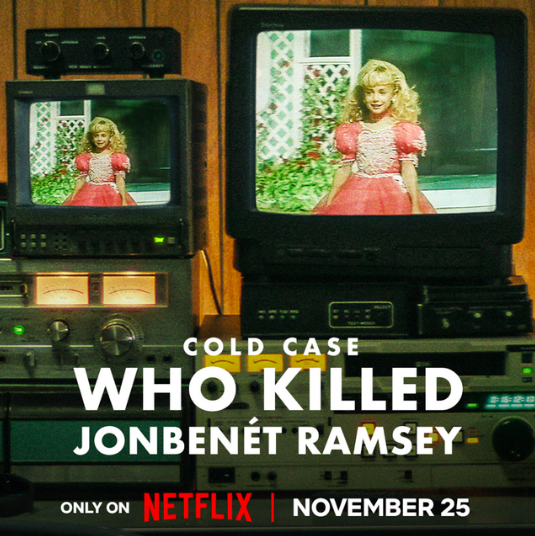
🚨 Netflix’s Chilling New Docuseries Exposes Decades-Old Mysteries in JonBenét Ramsey Murder – Can Justice Finally Be Served?
It has been nearly three decades since the world was gripped by the horrifying murder of six-year-old beauty queen JonBenét Ramsey, found strangled in the basement of her Boulder, Colorado, home on December 26, 1996. Now, Netflix’s harrowing new docuseries Cold Case: Who Killed JonBenét Ramsey promises to shed unprecedented light on the case, aiming not only to examine the facts but to clear the names of those wrongfully maligned in the public eye.
From the moment it debuted, the three-part series soared to the top of Netflix’s charts, proving once again that the appetite for true crime, scandal, and courtroom drama has never been higher. But beyond the ratings, this documentary carries an unmistakable urgency: a call for justice and an unflinching look at how law enforcement missteps, media frenzy, and public bias have haunted a family for decades.
A Family Under Siege
Executive producer and Oscar-nominated director Joe Berlinger, who has a storied history with high-profile true crime cases, pulls no punches in describing the Ramseys’ ordeal. “I truly believe this is one of the most brutalized families in American history,” Berlinger says. “Can you imagine losing your child under any circumstances, let alone through a brutal sexual assault and murder, and then being blamed for it? That’s what the Ramseys endured. The fact that John Ramsey is still standing and demanding the truth says a lot about his character.”
The series revisits the central figures: JonBenét’s parents, Patsy and John Ramsey, and her older brother, Burke. From the beginning, Berlinger and his team make a decisive choice — the series is not about proving guilt but about exploring innocence. Episode one details the case against the family, showing the widespread suspicion and public vilification they endured, while episode two pivots to evidence suggesting their innocence. This stark narrative decision is refreshing in a genre too often obsessed with finger-pointing.

Police Missteps and Investigative Failures
At the heart of the series is an unflinching critique of the Boulder Police Department. For years, the investigation was marred by inexperience, bias, and procedural errors, according to the documentary. Lou Smit, a retired detective who returned specifically to work the Ramsey case, recognized that the family was being unfairly targeted. After 18 months, he resigned, convinced that John and Patsy Ramsey were innocent yet subjected to relentless scrutiny.
The docuseries meticulously charts missteps by law enforcement, from the initial mishandling of the crime scene to the feeding of false or misleading information to the press. These errors, compounded by the media’s voracious appetite for scandal, ensured that the Ramseys became symbols of suspicion in the public imagination — long before any official verdict could be reached.
Even after grand jury proceedings in 1999 failed to indict them, public opinion remained harsh. In 2008, the family was formally cleared, with Boulder County District Attorney Mary Lacy apologizing to John Ramsey for the undue suspicion and negative portrayal they suffered. Yet decades of rumors and alternate theories, including a CBS docuseries that falsely implicated Burke Ramsey in 2016, continued to haunt them. Burke, then eight at the time of JonBenét’s death, later sued CBS for $750 million, settling in 2019.
New Evidence and Modern Forensics
One of the series’ most compelling elements is its focus on what modern forensic science could reveal. Despite the limitations of evidence collected more than 28 years ago, there remains male DNA at the crime scene that does not belong to any family member. While initially too mixed to provide conclusive results, advances in DNA testing and genealogical databases now offer the potential to identify the perpetrator definitively.
Berlinger highlights the possibilities of revisiting the evidence: “With new DNA testing, there’s a real chance we could solve the crime. Technology today is leagues ahead of what was available in the 1990s. Mixed DNA can be separated, profiled, and even used in genealogical testing to track down suspects. This is the breakthrough the case has been waiting for.”
Media Sensationalism and Public Bias
The series does not shy away from critiquing the media’s role in shaping public perception. From the earliest coverage, outlets relied on leaked, unverified details from law enforcement, feeding a national obsession with the narrative of parental guilt. Berlinger argues that this blurring of news and entertainment laid the groundwork for today’s culture of misinformation: “The early ’90s explosion of cable news and the 24-hour cycle created a hunger for sensational stories. JonBenét’s case became fodder for tabloids and opinion journalism, long before the facts were fully established.”
This intersection of flawed police work and sensational media coverage resulted in a family wrongly condemned by public opinion. The docuseries lays bare the psychological and social consequences, painting a picture of a household under relentless scrutiny, enduring fear, grief, and humiliation while attempting to navigate a justice system that seemed indifferent to their plight.
Interviews and Personal Accounts
Netflix audiences are given unprecedented access to key figures in the case. John Ramsey appears on camera, reflecting on decades of accusation and advocating for DNA testing that could finally exonerate his family. Interviews with legal experts, investigators, and journalists provide context for the failures that have kept the case unsolved, while archival footage and media clips illustrate the relentless public gaze.
Burke Ramsey, true to form, declined to participate, wary of further misrepresentation. Nonetheless, the documentary’s sensitive approach ensures his story is included without sensationalizing his childhood or contributing to harmful speculation.

The Human Cost of Tragedy
Perhaps the most poignant aspect of Cold Case: Who Killed JonBenét Ramsey is its human dimension. Berlinger emphasizes that while true crime can be sensational, it carries an ethical responsibility: “I ask myself at the start of each project, what is the needle I’m going to move? What help can I bring to the table? This is about justice, about truth, about closure for families.”
Throughout the series, viewers are reminded of the enormity of the loss JonBenét’s family endured. From her parents’ grief to the persistent cloud of suspicion, the narrative underscores that the real victims extend far beyond the headlines — a lesson often lost amid tabloid frenzy.
Lessons for Modern True Crime
In addition to revisiting the Ramsey case, the series raises broader questions about the criminal justice system, media accountability, and the ethics of true crime storytelling. It highlights how bias, tunnel vision, and institutional inertia can distort investigations, and how modern forensic science offers new hope for long-cold cases.
Berlinger draws parallels to other high-profile cases, including the Menendez brothers, emphasizing that public opinion often lags behind justice. Unlike those cases, where guilt was established, the Ramseys were victims of circumstance, procedural errors, and public misconception. The series challenges viewers to reconsider what they think they know about the case and, in doing so, provides a blueprint for ethical true crime storytelling.
Verdict: Essential Viewing
Cold Case: Who Killed JonBenét Ramsey is more than a documentary; it is a meticulous investigation, a plea for justice, and a reminder of the human cost of wrongful suspicion. With gripping storytelling, exclusive interviews, and the tantalizing possibility that DNA evidence could finally resolve the mystery, the series is essential viewing for true crime enthusiasts and anyone interested in one of the most infamous unsolved murders in American history.
Netflix’s docuseries not only examines the cold case but also confronts the broader societal forces that allowed decades of public misjudgment to fester. In a media landscape increasingly driven by clickbait and speculation, it serves as both a cautionary tale and a beacon of hope — that even decades-old injustices may yet be corrected.
The series leaves viewers with questions, yes, but also with clarity: the Ramseys, long vilified, deserve the truth. And if modern science and renewed investigative effort prevail, justice for JonBenét Ramsey and her family may finally be within reach.
Stream Cold Case: Who Killed JonBenét Ramsey exclusively on Netflix.