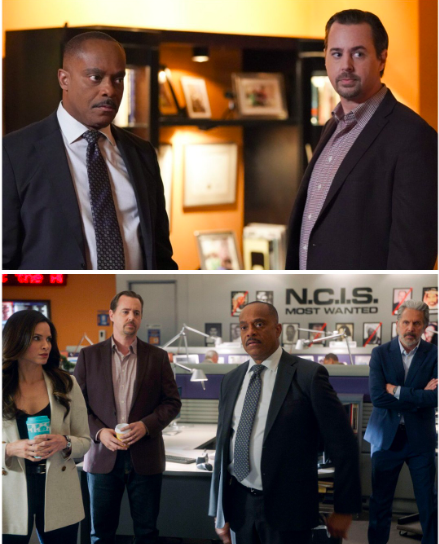
🚨 NCIS ROCKED TO ITS CORE: Leon Vance’s “Death” Ignites a Ruthless Power War — The Next Leader Could Change Everything!
The loss of Director Leon Vance has sent shockwaves through NCIS, and fans are reeling from the heartbreak. What was once a tight-knit, loyal team is now teetering on the brink of destruction.
In a move no one saw coming, the landmark 500th episode of NCIS (Season 23, Episode 13, titled “All Good Things”) delivered a gut-wrenching blow: the death of Director Leon Vance, portrayed by Rocky Carroll for 18 seasons and nearly 400 episodes. Vance didn’t go down in a blaze of glory during a routine field operation or a dramatic standoff with a long-time nemesis. Instead, he sacrificed himself to save the very agency he had dedicated his life to protecting—one that was on the verge of being dismantled and absorbed into the Army Criminal Investigative Division (CID).
The episode unfolded against a backdrop of institutional crisis. NCIS faced shutdown amid allegations of mismanagement and inflated numbers pushed by corrupt elements within the CID. Vance, ever the steadfast leader, refused to let the agency he loved fade into oblivion. Working alongside a CID agent named Dolan Thompson (played by Matt Cook), he raced to uncover a smuggling ring tied back to a case from the show’s early days—specifically, an echo of Season 2’s “Hung Out to Dry.” The team reunited to clear the name of an innocent petty officer framed in the conspiracy.
In a heart-stopping twist, Thompson revealed himself as a double-crosser. He shot Vance multiple times in the chest at point-blank range. For a fleeting moment, viewers—and Vance himself—believed a bulletproof vest had saved him. The illusion shattered when it became clear he had not been wearing one. As agents Parker and McGee took down Thompson, Vance’s fate was sealed.
The episode’s final moments shifted from high-stakes action to profound introspection. In a surreal, emotional sequence, Vance found himself in a liminal space, guided toward the afterlife by a young version of Dr. Donald “Ducky” Mallard (played by Adam Campbell in a poignant callback). Hearing the voice of his late wife, Jackie, Vance accepted his sacrifice with quiet dignity. Ducky reminded him of the legacy he left behind: a restored NCIS, a team united, and justice served. The corrupt CID director’s schemes were exposed, the numbers were corrected, and the agency was reinstated. But the cost was immense.
Fans took to social media and forums immediately after the March 24 airing, describing the scene as devastating. Many “gasped and sobbed,” feeling that a character who had been a moral anchor for nearly two decades deserved a different send-off. Rocky Carroll himself admitted the news came as a shock when showrunner Steven D. Binder approached him months earlier. Binder pitched the 500th episode as something that would “turn the NCIS universe upside down” and serve as a love letter to Vance. Carroll, after initial surprise, embraced the storyline, calling it “a terrific story” and noting how emotional filming the final scenes felt for the entire cast and crew.
The Immediate Aftermath: Grief and Resolve
The following episode (Season 23, Episode 14, airing March 31) previewed the team’s raw grief. In a poignant moment, they toast Vance’s empty desk—raising glasses in silence to the man who gave everything. Executive producer Steven D. Binder emphasized in interviews that while mourning is inevitable, the team’s focus remains on honoring Vance’s sacrifice. “Vance died to protect them all,” Binder told TV Insider. “They are going to honor that by putting one foot in front of the other, and just continuing on their mission to protect and safeguard their country.”
This resolve is classic NCIS: the show has always thrived on resilience in the face of loss. From Gibbs’ departures to Ducky’s passing, the team has repeatedly proven that personal tragedy fuels their dedication rather than breaking it. Yet Vance’s death feels different. As director, he represented stability, bureaucracy tempered with humanity, and a bridge between field agents and Washington politics. His absence leaves a literal and figurative power vacuum in the director’s office.
The Power Struggle Begins: Who Sits in the Chair?
With Vance gone, speculation is rampant about who will step into the role of NCIS Director. The position carries enormous weight—not just operational leadership but political navigation in a high-stakes federal agency. History shows the seat has seen its share of drama: Tom Morrow, Jenny Shepard, and then Vance each brought distinct styles, alliances, and conflicts.
Several strong candidates have emerged in fan discussions and early reporting:
- Timothy McGee (Sean Murray): Many see McGee as the natural successor. An original cast member since Season 1, McGee has evolved from the tech-savvy “Probie” into a seasoned family man with deep institutional knowledge. Vance himself once hinted that McGee was “destined to lead,” noting his growth, responsibility, and understanding of balancing family and duty. Promoting McGee would provide continuity and emotional resonance for longtime viewers. However, some argue it might be too soon—McGee could need more time in the field before taking the desk. Still, his promotion would feel earned and poetic.
- Alden Parker (Gary Cole): The current supervisory special agent has already shown leadership qualities, especially after resolving tensions with Vance earlier in the season. Parker’s experience and no-nonsense approach could make him a stabilizing force. Yet his recent “un-retirement” suggests he may prefer hands-on work over desk duties.
- Returning Legacy Characters: Whispers of Tony DiNozzo (Michael Weatherly) or even Ziva David returning have circulated, fueled by past crossovers and unresolved storylines. A short-arc return as interim director could inject nostalgia and fresh dynamics, though both actors have busy careers outside the show.
- A Fresh Face or External Appointment: NCIS has introduced new directors or antagonists from other agencies before. An outsider—perhaps from the Department of Defense or another branch—could create friction and new storylines, highlighting themes of change versus tradition. This option keeps the show unpredictable and opens doors for guest stars or spin-off ties.
Binder has confirmed that the aftermath will explore these questions organically as part of the team’s forward momentum. The power struggle won’t just be political; it will be personal, testing loyalties, ambitions, and the team’s ability to adapt without their long-time leader.
Vance’s Enduring Legacy
Leon Vance was more than a boss. Introduced in Season 5 as a somewhat antagonistic figure, he grew into a complex, compassionate leader who endured personal losses—including the murder of his wife—and still prioritized duty. He mentored agents, navigated Washington intrigue, and often served as the voice of reason when Gibbs’ gut instincts clashed with protocol.
His death in the 500th episode wasn’t random; it underscored the show’s core theme: real stakes exist even for those behind the desk. By saving NCIS from dissolution, Vance ensured the mission continues. The restored agency stands as his final gift.
Carroll, for his part, isn’t entirely leaving the NCIS family. He has directed episodes in the past and is set to helm another later this season. The show’s tradition of bringing back deceased characters through flashbacks, visions, or “ghost” appearances means Vance could still influence stories from beyond the grave—much like Ducky or even Gibbs in certain contexts.
What Lies Ahead for NCIS
As Season 23 continues (with renewal already confirmed for Season 24), the series faces a pivotal transition. The remaining episodes will likely delve into grief, investigation of lingering conspiracy threads, and the practical realities of leadership change. Will internal rivalries emerge? Could the power vacuum invite new threats from old enemies? How will the team—Parker, McGee, Torres, Knight, and the rest—evolve without Vance’s guiding hand?
NCIS has survived cast departures before by leaning into its ensemble strength and procedural roots while allowing character growth. Vance’s exit, however, strikes at the show’s institutional heart. It forces viewers and characters alike to confront change—the inevitability of loss and the necessity of moving forward.
Fans remain divided: some applaud the bold storytelling for a milestone episode, while others feel the character deserved a longer farewell or a different fate. Yet the consensus is clear—this death has “turned the NCIS universe upside down,” just as Binder intended.
In the end, Vance’s sacrifice echoes the show’s enduring message: the mission matters more than any one person, but the people make the mission worth fighting for. As the team raises their glasses to an empty chair and steps back into the field, one question lingers: Who will lead them now?
The answer will define not only the rest of Season 23 but the future of NCIS itself. In a series built on loyalty, justice, and family, the power struggle ahead promises drama, heartbreak, and—ultimately—renewal.