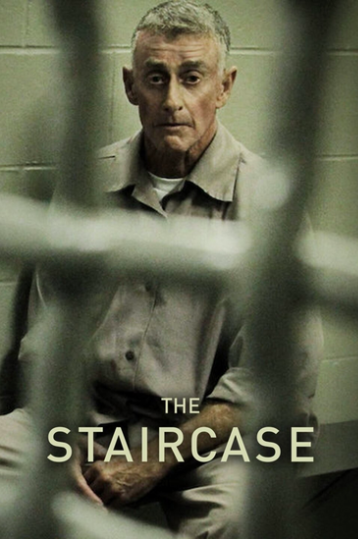
🔥😱 This chilling true-crime series has haunted viewers for years, unraveling a decade-long mystery that questions justice, loyalty, and family secrets.
Netflix’s The Staircase isn’t just another entry in the seemingly endless parade of true crime documentaries. It is, in fact, a meticulously detailed chronicle of a baffling murder case that has haunted Durham, North Carolina, for decades. Directed by French filmmaker Jean-Xavier de Lestrade, the series began in 2004 as a modest project and has since expanded into a sprawling 13-part saga, following the mysterious death of Kathleen Peterson and the complex legal battle surrounding her husband, Michael Peterson. The updated Netflix version, which premiered in 2018, brings this labyrinthine story to a new generation of true crime enthusiasts.
At its core, The Staircase is a study in ambiguity. It is a documentary that refuses to spoon-feed the viewer, instead presenting raw evidence, courtroom footage, family interviews, and expert testimony in a way that encourages interpretation rather than dictating conclusions. In an era dominated by sensationalized true crime, where every episode of Making a Murderer or Tiger King is designed to shock, The Staircase remains remarkably restrained, relying on painstaking documentation over dramatic flair.
A Tragedy That Began on a Winter Morning
The case begins on December 9, 2001. Michael Peterson, a novelist and former Department of Defense employee, discovered his wife Kathleen unconscious at the bottom of a staircase in their Durham home. Kathleen had consumed alcohol and taken Valium that evening, which Michael initially believed contributed to an accidental fall. However, the severity of her injuries — including deep lacerations to her head and significant blood loss — immediately raised suspicions of foul play.
Police investigation quickly focused on Michael Peterson. The case was complicated by the presence of conflicting narratives about how such injuries could have occurred. The prosecution argued that Kathleen could not have sustained such massive trauma from a fall alone, suggesting instead that Michael had struck her with a fireplace poker. The defense, conversely, posited that Kathleen’s injuries were consistent with an accidental fall exacerbated by intoxication. The courtroom became a battleground for competing reconstructions of a horrifying event that would haunt both the family and the legal system for years.
De Lestrade’s Unprecedented Access
What sets The Staircase apart from other documentaries in the genre is de Lestrade’s remarkable access. From the outset, he was allowed to film intimately within the Peterson household, capturing moments of raw emotion, tension, and grief. Viewers witness Michael Peterson and his legal team strategizing, family members reacting to both tragedy and arrest, and forensic experts conducting blood spatter reconstructions on the fateful staircase.
This access grants the series a unique authenticity. Unlike other true crime shows that rely on reenactments or heavily curated interviews, The Staircase presents the unfolding drama in real time. De Lestrade himself is a silent presence, allowing the events to speak for themselves. This approach has influenced the broader true crime genre, inspiring creators to prioritize detail, patience, and procedural authenticity over sensationalism.
The Peterson Family: A Complicated History
Understanding the Peterson family is crucial to grasping the complexities of the case. Michael Peterson had previously been married to Patricia Peterson while stationed in West Germany with the military. Together they had two sons, Clayton and Todd. During this time, they became close with another military family, George and Elizabeth Ratliff, whose daughters, Margaret and Martha, would eventually be taken in by the Petersons following George and Elizabeth’s deaths.
When Michael married Kathleen, her daughter Caitlin joined this already blended family. This created a dynamic that was both loving and fraught, a detail that prosecutors would later exploit by suggesting a pattern in deaths associated with Michael Peterson. Notably, Elizabeth Ratliff had also died from a fall at the foot of a staircase, originally ruled as a brain hemorrhage. This coincidence added another layer of suspicion, creating the impression of a disturbing pattern that prosecutors were eager to highlight.

Trial and the Question of Justice
Michael Peterson’s trial, which culminated in 2003, became a focal point for discussions on the criminal justice system. The documentary does not shy away from illustrating procedural flaws, particularly in the realm of forensic evidence. One of the most controversial figures was Duane Deaver, a North Carolina State Bureau of Investigation analyst whose flawed blood spatter testimony became pivotal to the prosecution. Deaver later admitted to withholding negative results in numerous cases, a revelation that cast a long shadow over the Peterson conviction.
In 2011, Michael Peterson was granted a new trial and released on bail. However, the saga was far from over. Legal battles continued, and questions about the reliability of forensic methods, prosecutorial bias, and the broader handling of the case persisted. The Staircase thus becomes more than a crime documentary; it is a lens through which viewers can examine systemic issues in American criminal justice.
The Cinematic Approach: Restraint and Immersion
De Lestrade’s style is deceptively simple. There is no background music to manipulate emotion, no dramatic reenactments, no sensationalist narration. Instead, the series relies on extended takes, candid conversations, and methodical pacing to build tension. Watching Michael Peterson interact with family, lawyers, and investigators, one experiences the slow burn of anxiety and uncertainty.
This restraint allows moments of genuine human emotion to shine through. Perhaps the most poignant example occurs after the Super Bowl–sized stakes of Michael’s legal battles. The series captures a tender scene between Peterson and his coach, Jeff Fisher, after the Titans’ near-miss in the 2000 Super Bowl. As Michael kneels in frustration, Fisher whispers words of support and affection — a fleeting moment of humanity amidst the storm of accusations, speculation, and media scrutiny.
The Mystery Remains
One of the most striking elements of The Staircase is that, even after 13 episodes and years of legal proceedings, the truth remains elusive. The documentary does not provide a definitive answer regarding Kathleen Peterson’s death, leaving viewers with a profound sense of ambiguity. Various theories circulate, from murder-suicide to accidental fall, and even a more bizarre explanation involving an owl attack.
This unresolved conclusion is both frustrating and compelling. Unlike many true crime narratives that promise closure, The Staircase embraces uncertainty. It challenges viewers to grapple with the limitations of evidence, the biases inherent in the legal system, and the difficulty of discerning truth amidst complex human behavior.
Cultural Impact and Legacy
Since its initial release, The Staircase has influenced both audiences and creators. Its detailed, unvarnished approach has set a standard for immersive true crime storytelling, inspiring subsequent series and podcasts. The show has become a touchstone for discussions about ethics in law, media responsibility, and the balance between storytelling and factual accuracy.
Moreover, the series has left an indelible mark on popular culture. It is frequently cited in conversations about the limitations of forensic science, the challenges of blended families under scrutiny, and the broader societal fascination with crime. Its influence can be seen in later documentaries that prioritize thorough investigation over sensationalism, proving that compelling narratives do not require embellishment.
Conclusion: A Documentary That Challenges Perception
The Staircase is more than a documentary about a tragic death; it is an examination of the human condition under extreme stress. Michael Peterson’s story, the legal battles that ensued, and the unresolved questions surrounding Kathleen’s death all coalesce into a meditation on justice, grief, and the elusive nature of truth.
For viewers seeking a straightforward resolution, the series may frustrate. But for those willing to immerse themselves in nuance, complexity, and moral ambiguity, The Staircase offers a rare and enlightening experience. It is a testament to the power of documentary filmmaking to illuminate not just events, but the deep human currents that drive them.
In the crowded field of true crime, where shock value often outweighs substance, The Staircase stands apart. Its meticulous documentation, respect for the viewer’s intelligence, and unflinching portrayal of a family and legal system under duress make it essential viewing. Netflix’s updated release ensures that this masterclass in investigative storytelling reaches a new audience, reaffirming the enduring fascination with one of the most confounding cases in American legal history.
Whether you come to The Staircase for the crime, the courtroom drama, or the exploration of human behavior, it leaves an indelible impression — a reminder that truth is often stranger, more tragic, and more complicated than fiction.