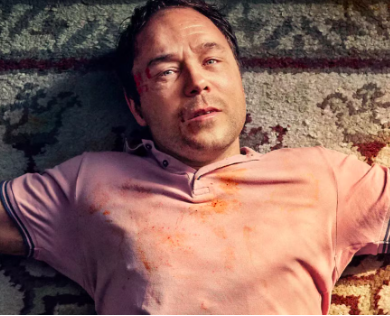
🚨 VIEWERS PLANNED TO WATCH JUST ONE EPISODE OF STEPHEN GRAHAM’S FOUR-PART BRITISH DRAMA — BUT FOUR HOURS LATER, THEY WERE LEFT IN TEARS, STUNNED BY ONE OF THE MOST DEVASTATING STORIES ON TELEVISION!
THE VIRTUES (2019) REVIEW: STEPHEN GRAHAM DELIVERS A HEARTBREAKING PERFORMANCE IN ONE OF BRITAIN’S MOST DEVASTATING TELEVISION DRAMAS
A four-part British psychological drama about childhood trauma, addiction, family, revenge and the painful search for redemption.
Starring: Stephen Graham, Niamh Algar, Helen Behan, Frank Laverty and Mark O’Halloran | Directed by Shane Meadows | Written by Shane Meadows and Jack Thorne | Originally broadcast on Channel 4

Some television dramas entertain you for an evening. Others linger in your thoughts long after the credits have rolled. Then there is The Virtues, a devastating four-part British drama that does something far more unsettling: it makes you feel as though you have witnessed a real human being slowly falling apart.
At its centre is Stephen Graham, delivering one of the most emotionally exposed performances of his career. He plays Joseph, a recovering alcoholic whose fragile existence collapses when his former partner takes their young son to Australia. What follows is not a conventional story about a man overcoming adversity. It is a painful journey into buried childhood memories, damaged relationships and the frightening consequences of suffering left unresolved.
Directed by Shane Meadows and co-written with Jack Thorne, the series originally premiered on Channel 4 in May 2019. Across four episodes, it explores how the past can shape an entire life, even when the person living that life barely understands what happened to them.
The result is intimate, uncomfortable and extraordinary. Rather than relying on spectacular twists, The Virtues finds its greatest power in silence, hesitation, ordinary conversations and the moments when someone tries desperately not to cry.
Content note: This review discusses addiction, childhood abuse and psychological trauma, while avoiding the major revelations of the final episode.
1. A Father’s Goodbye That Begins an Emotional Collapse
The opening episode establishes Joseph’s world with remarkable restraint.
He is an ordinary working-class man, earning a living through manual labour and struggling to maintain his sobriety. His circumstances are modest, his emotional life is fragile, and the relationship that matters most to him is the one he shares with his young son.
Then comes the goodbye.
Joseph’s former partner is moving to Australia with their child and her new partner. The move promises a different future for the boy, but for Joseph it represents the disappearance of the last meaningful connection holding his life together.
Meadows refuses to turn this farewell into a theatrical confrontation. Nobody needs to deliver an enormous speech. Joseph is not presented as a furious father determined to stop the departure.
Instead, he attempts to behave appropriately.
He talks, listens, smiles and tries to make the occasion easier for everyone else. Yet Graham’s face reveals a man struggling to contain a level of grief that words cannot communicate.
The tragedy lies in the contradiction between what Joseph feels and what he believes he is allowed to express.
He wants his son to be happy. He also knows that his son’s happiness may require him to accept a separation he can barely endure.
It is a devastating introduction because the audience understands something Joseph cannot yet admit: his carefully maintained emotional defences are about to collapse.
2. Stephen Graham’s Performance Is Almost Painfully Real

Stephen Graham has built an extraordinary career portraying complicated men whose emotions threaten to overwhelm them.
Yet his work in The Virtues feels unusually exposed.
Joseph is not a traditionally heroic character. He is frequently confused, ashamed, impulsive and unable to explain his own behaviour. Graham refuses to soften those contradictions to make him more conventionally sympathetic.
Instead, he allows Joseph to be difficult.
His performance is built from physical details: a nervous glance, a sudden change in posture, a smile that disappears too quickly, or the desperate effort to maintain eye contact during a painful conversation.
Graham understands that emotional devastation rarely arrives in a tidy, cinematic form. Sometimes it appears as a man trying to make a joke because silence has become unbearable.
At other moments, it emerges through anger directed at the wrong person.
The actor’s greatest achievement is making Joseph’s behaviour comprehensible without excusing the damage he causes.
We can recognise his suffering while also seeing how that suffering affects the people around him.
That distinction gives the performance its moral complexity.
Joseph is not merely a victim of circumstances. He is a human being whose unresolved past has shaped his decisions, relationships and understanding of himself.
Graham makes every contradiction believable.
3. The Pub Sequence: A Masterclass in Emotional Destruction
One of the drama’s most memorable passages occurs when Joseph enters a pub after saying goodbye to his son.
It begins with a deceptively simple decision.
A recovering alcoholic sits down with a drink.
For another character, this might be an ordinary evening. For Joseph, it represents the beginning of a potentially catastrophic relapse.
Meadows allows the scene to unfold at an uncomfortable, almost unbearable pace.
Joseph initially seems determined to remain in control. But as the alcohol takes effect, his behaviour changes. He becomes more sociable, more talkative and increasingly desperate for connection.
The people around him are not necessarily cruel. They are simply strangers enjoying an evening, unaware that the man joining their conversations is experiencing a profound psychological crisis.
That ordinary social setting makes the sequence especially disturbing.
There is no dramatic villain. No elaborate conspiracy. No external force compelling Joseph to continue drinking.
Instead, the audience witnesses the gradual destruction of his self-control.
Graham moves between humour, loneliness, aggression and vulnerability with frightening precision.
What makes the scene so effective is the way it captures addiction as an emotional process rather than a convenient plot device.
The drinking does not create Joseph’s pain. It briefly obscures it before exposing it in a more dangerous form.
By the time the sequence ends, the audience understands that Joseph’s problems began long before this particular evening.
And the question driving the story has changed.
It is no longer simply whether Joseph can stop drinking.
It is what happened to him that made escaping his own memories feel necessary in the first place.
4. A Journey to Ireland Becomes a Journey Into Buried Trauma

After his relapse, Joseph leaves England and travels to Ireland.
On the surface, the journey appears straightforward. He wants to reconnect with his sister, Anna, whom he has not seen since childhood.
But the emotional purpose of the trip is far more complicated.
Joseph spent part of his childhood in the care system, and his memories of that period are fragmented and deeply troubling.
He knows that something about his past remains unresolved. What he does not fully understand is how profoundly those experiences have influenced the man he has become.
Ireland is therefore both a destination and a psychological landscape.
The familiar surroundings offer the possibility of belonging, but they also threaten to expose memories Joseph has spent decades trying to avoid.
Meadows captures this conflict through his characteristic visual restraint.
Roads, houses, workshops and rural landscapes are presented without romantic exaggeration. The physical environment feels ordinary, which makes Joseph’s internal turmoil more striking.
He has travelled hundreds of miles, yet the most difficult distance he must cross is the one separating his adult identity from his childhood experiences.
This is where The Virtues begins to reveal its true ambition.
It is not simply a drama about alcoholism or a man reconnecting with his family.
It is about the terrifying possibility that someone can spend an entire lifetime running from something they do not fully remember.
5. Helen Behan Brings Warmth and Complexity to Anna
Joseph’s reunion with Anna, played by Helen Behan, introduces a desperately needed sense of warmth.
Anna is initially stunned by her brother’s unexpected appearance.
Their separation has lasted decades, and the sudden arrival of a troubled relative naturally raises difficult questions.
Nevertheless, Anna offers him a place within her family.
Her husband, Michael, played by Frank Laverty, is more cautious. Joseph’s unpredictable behaviour and troubled history create understandable concerns about inviting him into their household.
These tensions are handled with impressive realism.
Anna is not presented as an endlessly patient figure whose only purpose is to rescue Joseph. She has her own responsibilities, emotional history and relationships to protect.
Behan brings remarkable sincerity to the role.
Her performance suggests the complicated feelings that can accompany a family reunion: happiness, guilt, uncertainty, affection and the fear of reopening old wounds.
Anna’s kindness matters precisely because it is not effortless.
She is choosing to offer Joseph a connection despite knowing that his presence may disturb the stability of her home.
In a drama dominated by grief, that decision becomes a powerful expression of compassion.
Yet The Virtues never suggests that kindness alone can repair decades of psychological damage.
Family can provide a foundation for recovery, but it cannot erase what happened.
6. Niamh Algar’s Dinah Gives the Drama a Second Emotional Centre
While Graham dominates the opening stages, Niamh Algar gradually becomes equally essential to the drama.
She plays Dinah, Michael’s sister, a fiercely independent woman whose confrontational personality initially makes her difficult to understand.
Dinah can appear abrasive, unpredictable and determined to keep others at a distance.
Yet her defensive behaviour conceals a history of profound emotional suffering.
As her relationship with Joseph develops, the series begins to explore the similarities between two people who have responded differently to deeply painful experiences.
Both are struggling with memories they cannot comfortably discuss.
Both have developed methods of emotional self-protection that sometimes hurt the people closest to them.
And both desperately want connection while fearing the vulnerability that connection requires.
Algar’s performance is extraordinary because she never allows Dinah to become merely a supporting character in Joseph’s story.
Dinah possesses her own emotional world, her own painful history and her own urgent need to be understood.
The relationship between Joseph and Dinah is consequently more complicated than a conventional romance.
It becomes a meeting between two damaged individuals who recognise something familiar in each other’s suffering.
Their connection offers moments of tenderness, but the drama is too psychologically honest to suggest that love automatically produces healing.
Instead, it asks whether people carrying enormous emotional burdens can support each other without becoming overwhelmed by the weight of their shared pain.
7. Shane Meadows Turns Ordinary Life Into Unbearable Suspense
The direction is one of the series’ greatest strengths.
Shane Meadows has long demonstrated an unusual ability to find emotional intensity within everyday working-class environments.
His earlier collaborations with Stephen Graham, particularly This Is England and its television sequels, explored violence, belonging, masculinity and social identity with similar intimacy.
In The Virtues, however, his filmmaking feels even more stripped back.
Conversations unfold at their own pace. Characters interrupt one another, struggle to express themselves and sometimes say the wrong thing.
There are moments when the audience might expect an important revelation, only for the scene to remain painfully ordinary.
This approach creates a distinctive kind of suspense.
Rather than wondering who committed a crime or what dramatic event will happen next, viewers become anxious about whether a character will manage to survive an ordinary conversation without emotionally collapsing.
The camera frequently remains close to faces, allowing the smallest changes in expression to carry enormous meaning.
Silence becomes as important as dialogue.
Meadows also understands the importance of occasional humour.
Even in the darkest circumstances, people make jokes, misunderstand one another and find brief moments of relief.
These details prevent the series from becoming a relentless exercise in misery.
They remind us that Joseph, Anna and Dinah are living people rather than symbols of suffering.
That realism makes the moments of emotional devastation significantly more powerful.
8. Childhood Trauma Is the Story’s Most Disturbing Mystery
As Joseph reconnects with his childhood, the drama begins confronting the subject that has been shaping his life from the beginning: abuse and its lasting consequences.
This is where the series becomes particularly difficult to watch.
Meadows and Thorne resist the temptation to transform traumatic experiences into sensational entertainment.
Instead, they concentrate on how unresolved suffering can distort memory, relationships and self-perception.
Joseph’s childhood is not treated as a convenient explanation for every mistake he has made.
His experiences help us understand him, but they do not eliminate his responsibility for his actions.
This distinction is essential.
The drama recognises that trauma can affect a person’s ability to trust, communicate and regulate emotions, while refusing to suggest that everyone responds to trauma in the same way.
Joseph’s struggles are particular to him.
The series also examines the damaging effects of shame.
For someone who has endured childhood abuse, the difficulty of speaking about the experience may become an additional source of suffering.
Silence can appear safer than disclosure, especially when memories are painful or fragmented.
But silence also allows fear and confusion to persist.
Through Joseph’s journey, The Virtues examines the extraordinary courage involved in confronting experiences that have remained buried for decades.
Its most unsettling insight is that the past does not necessarily disappear simply because someone refuses to discuss it.
Sometimes it continues shaping the present in ways that are difficult to recognise.
9. PJ Harvey’s Music Deepens the Atmosphere of Grief
The original music, composed by PJ Harvey, contributes significantly to the drama’s haunting atmosphere.
Rather than constantly instructing viewers how to feel, the score works alongside the series’ restrained visual language.
The music can make an ordinary landscape feel strangely isolated or allow a moment of apparent calm to carry an underlying sense of dread.
This subtlety is crucial because The Virtues depends upon emotional authenticity.
A more conventional, melodramatic soundtrack might have weakened its impact by announcing every important feeling before the actors had an opportunity to communicate it.
Instead, the music supports the uncertainty surrounding Joseph’s memories and relationships.
The contrast between sound and silence is especially effective.
Some of the most powerful scenes are allowed to unfold with minimal musical accompaniment, forcing the audience to concentrate on voices, breathing and uncomfortable pauses.
When the score becomes more prominent, it feels like an extension of the characters’ emotional worlds rather than an external attempt to manufacture sadness.
Combined with the muted cinematography, the music helps create a distinctive atmosphere of loneliness, unease and fragile hope.
10. The Final Episode Confronts Revenge, Truth and Redemption
Without revealing the central discoveries of the final episode, it is fair to say that The Virtues builds toward an exceptionally demanding emotional conclusion.
By this point, the drama has carefully established the relationships, memories and fears that define its characters.
The final chapter brings those elements together, forcing Joseph to confront truths he has spent much of his life avoiding.
The central question is no longer whether he can uncover the past.
It is what he will do once he understands it.
Anger is an understandable response to suffering, particularly when that suffering was inflicted during childhood.
But the drama challenges the assumption that revenge necessarily produces peace.
It explores the difference between confronting wrongdoing and allowing that wrongdoing to determine the remainder of one’s life.
Stephen Graham’s performance becomes especially powerful as Joseph approaches the emotional limits of what he can endure.
Yet the series avoids offering an easy solution.
There is no suggestion that a single confrontation can erase decades of pain.
Nor does the drama pretend that forgiveness, when it is possible at all, is simple or obligatory.
Instead, it presents redemption as a fragile possibility involving truth, responsibility and the difficult work of rebuilding human connection.
That makes the conclusion more affecting than a conventional revenge narrative.
The greatest struggle is not simply against the people associated with Joseph’s past.
It is against the possibility that his suffering will continue controlling his future.
11. Why The Virtues Deserves to Be Rediscovered
For audiences familiar with Stephen Graham through crime dramas and intense supporting roles, The Virtues offers a particularly revealing demonstration of his range.
His performance contains anger and unpredictability, but its most memorable qualities are vulnerability, tenderness and emotional restraint.
The series also benefits from an outstanding ensemble.
Helen Behan brings humanity to Anna, while Niamh Algar gives Dinah an emotional complexity that prevents the story from revolving entirely around Joseph.
Together, the cast creates a believable portrait of people struggling to reconcile their personal histories with the possibility of a different future.
The drama received considerable critical recognition. Rotten Tomatoes lists a 100% critics’ score from 34 reviews, reflecting the exceptionally positive critical response to the miniseries.
Rotten Tomatoes+2
But its lasting achievement cannot be reduced to a review score.
The Virtues succeeds because it treats damaged people with compassion without simplifying their behaviour.
It understands that suffering does not always make people gentle, that love does not always repair relationships and that finding the truth does not guarantee emotional peace.
These are difficult ideas for television to explore without becoming excessively bleak.
Meadows and his cast make them feel profoundly human.
FINAL VERDICT: A DEVASTATING DRAMA THAT REFUSES TO LET GO
9.5/10 — An extraordinary British drama
Performance · Emotional impact · Direction · Storytelling
The Virtues is not comfortable television, nor does it attempt to be.
Its four episodes take viewers into the life of a man whose deepest wounds have remained hidden for decades. Along the way, the drama explores addiction, fractured families, childhood abuse, grief and the frightening possibility of confronting a past that has shaped every part of the present.
Stephen Graham delivers a performance of exceptional emotional honesty, while Shane Meadows directs with a level of intimacy that makes even the quietest scenes feel almost unbearably powerful.
What ultimately distinguishes the series is its refusal to confuse emotional suffering with dramatic spectacle.
The characters are not merely vehicles for shocking revelations. They are complicated individuals attempting to understand what happened to them and whether their futures can be different from their pasts.
And beneath all the darkness, there remains a fragile but meaningful possibility of hope.
Because The Virtues is not simply about what trauma takes away.
It is about the extraordinary difficulty of reclaiming what remains.
For viewers seeking a powerful, character-driven British drama, this is one of Stephen Graham’s most essential performances — a story that may leave you shaken, but is extraordinarily difficult to forget.