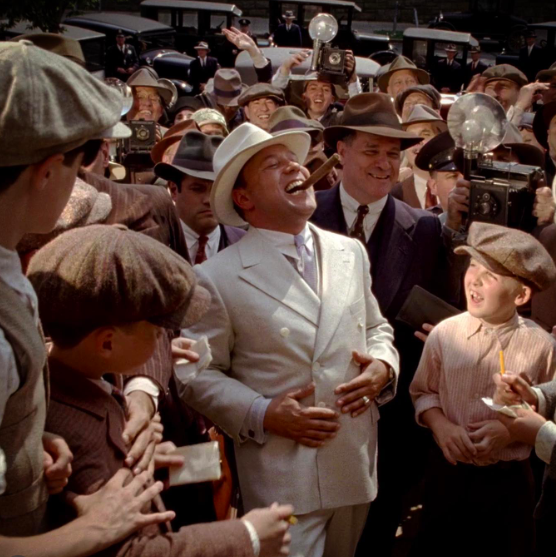
🔥 20 EMMY WINS, FIVE INCREDIBLE SEASONS — AND SOMEHOW STEPHEN GRAHAM’S BRILLIANT GANGSTER DRAMA IS STILL A HIDDEN GEM?! 😱🔥
STEPHEN GRAHAM’S TERRIFYING GANGSTER PERFORMANCE IN BOARDWALK EMPIRE: THE HBO CRIME MASTERPIECE THAT TURNED PROHIBITION-ERA AMERICA INTO A BLOODY BATTLE FOR POWER
ENTERTAINMENT | HBO CRIME DRAMA REVIEW | BOARDWALK EMPIRE (2010–2014)
A ruthless gangster. A criminal empire built on illegal alcohol. A city drowning in corruption, betrayal, and violence. And Stephen Graham delivering one of the most unforgettable performances of his career as the notoriously dangerous Al Capone.
There are gangster dramas that entertain audiences with violence, ambition, and spectacular betrayals. Then there are productions that transport viewers into an entire criminal world so convincingly that every conversation, handshake, and whispered threat feels like the beginning of something deadly.
Boardwalk Empire belongs firmly in the second category.
Created by Terence Winter and executive produced by Martin Scorsese, this lavish HBO drama transforms Prohibition-era Atlantic City into a sprawling battlefield of political corruption, organised crime, greed, and personal ambition.
At its centre stands Enoch Nucky Thompson, played by Steve Buscemi, a powerful political figure who controls Atlantic City’s criminal economy through a carefully maintained network of alliances, intimidation, and illegal business dealings.
But among the series’ extraordinary ensemble of gangsters, politicians, bootleggers, and killers, one character emerges as particularly unforgettable.

Al Capone.
And in the hands of British actor Stephen Graham, the future Chicago crime boss becomes an explosive combination of frightening unpredictability, wounded pride, dark humour, and deeply unsettling brutality.
Graham’s performance is not simply an impersonation of one of America’s most notorious criminals.
It is a disturbing portrait of a man whose hunger for recognition gradually transforms him from an ambitious enforcer into a figure capable of commanding an entire criminal organisation.
For viewers familiar with Graham’s extraordinary work in This Is England, Line of Duty, The Irishman, and Boiling Point, his portrayal of Capone offers another reminder of his remarkable ability to disappear into complicated characters.
Yet Boardwalk Empire is far more than a showcase for one actor.
Across five seasons and 56 episodes, it builds an intricate criminal saga filled with devastating betrayals, shifting loyalties, spectacular production design, and characters whose desperate pursuit of power repeatedly destroys the people closest to them.
It is ambitious, intelligent, occasionally brutal, and often emotionally devastating.
And while the series contains enough gangland confrontations to satisfy fans of traditional crime thrillers, its greatest achievement lies in exposing the fragile humanity beneath the expensive suits, extravagant parties, and ruthless business arrangements.
A CITY BUILT ON CORRUPTION — AND ONE MAN WHO CONTROLS EVERYTHING
The story begins in Atlantic City in January 1920, as the United States enters the era of Prohibition.
The nationwide ban on the manufacture, sale, and transportation of alcoholic beverages creates an extraordinary opportunity for criminal entrepreneurs.
Suddenly, a substance that millions of Americans still want has become illegal to sell.
And wherever enormous demand meets prohibition, organised crime discovers an opportunity to make extraordinary profits.
Nucky Thompson understands this better than almost anyone.
As Atlantic County’s powerful treasurer and political boss, he possesses the influence, connections, and ruthlessness necessary to turn illegal alcohol into an empire.
He can manipulate elections, negotiate with criminal organisations, influence public officials, and maintain an outward appearance of respectability while quietly profiting from an increasingly violent underground economy.
Steve Buscemi is a fascinating choice for the role.
Unlike the physically imposing gangsters who dominate many crime dramas, his Nucky relies on intelligence, political calculation, and an extraordinary ability to understand what people want.
He rarely needs to demonstrate his power through direct violence.
Instead, he surrounds himself with individuals willing to do whatever is necessary to protect his interests.
This creates a compelling contradiction.
Nucky presents himself as a generous benefactor, a charming businessman, and a sophisticated political operator.
Yet the wealth supporting his glamorous lifestyle depends upon exploitation, corruption, and increasingly dangerous criminal alliances.
Buscemi portrays these contradictions with impressive restraint.
His Nucky can be warm, amusing, calculating, and emotionally distant within the same conversation.
The result is a protagonist who is difficult to admire completely but almost impossible to ignore.
And as the criminal economy expands beyond Atlantic City, the series introduces increasingly dangerous figures from New York, Chicago, and other centres of organised crime.
Among them is a young gangster whose name will eventually become synonymous with American criminal history.
Al Capone.

STEPHEN GRAHAM’S AL CAPONE IS AN EXPLOSIVE FORCE OF NATURE
From his earliest appearances, Stephen Graham makes it clear that his version of Al Capone is not a conventional supporting character.
He is volatile, ambitious, insecure, fiercely loyal to certain people, and capable of turning a seemingly ordinary disagreement into an eruption of violence.
Graham’s Capone initially operates within Chicago’s criminal underworld, working alongside Johnny Torrio as the illegal alcohol trade creates new opportunities for profit and territorial expansion.
He is still developing his reputation.
He has not yet become the legendary figure remembered in American criminal history.
And that is precisely what makes Graham’s performance so compelling.
Rather than introducing Capone as an established criminal kingpin, the series allows audiences to witness the gradual development of his personality, influence, and appetite for power.
At first, there is something almost reckless about him.
He jokes, drinks, boasts, loses his temper, and behaves with the exaggerated confidence of a man determined to prove himself.
But beneath that swagger lies a dangerous sensitivity to disrespect.
Capone cannot tolerate humiliation.
He interprets challenges to his authority as personal attacks.
And when he feels threatened, his reactions can be terrifyingly disproportionate.
Graham captures this instability with extraordinary physical energy.
His facial expressions change rapidly.
His voice shifts between playful sarcasm and explosive anger.
His body language communicates an almost constant readiness for confrontation.
Yet the performance never feels like a simple collection of gangster stereotypes.
Graham gives Capone an emotional interior that makes his behaviour both more believable and more disturbing.
The character’s ambition is closely connected to his need for recognition.
He wants to be feared, but he also wants to be respected.
He wants wealth and influence, but he also wants the approval of the people whose opinions matter to him.
This combination of insecurity and aggression makes him exceptionally unpredictable.
And as his criminal career develops, the consequences become increasingly devastating.
THE TERRIFYING TRANSFORMATION FROM ENFORCER TO CRIME BOSS

One of the strongest elements of Graham’s performance is the gradual transformation of Capone across the series.
In the early seasons, he often appears impulsive and immature.
His decisions are influenced by pride, anger, and the desire to impress more experienced criminals.
But as the balance of power within Chicago changes, Capone begins assuming greater responsibility.
He becomes more politically aware, more strategically ambitious, and increasingly comfortable exercising authority over others.
The transition is fascinating because Graham never completely abandons the volatile personality established in the earlier episodes.
Even as Capone acquires wealth and influence, the insecurity beneath his confidence remains visible.
He still reacts strongly to perceived disrespect.
He still enjoys intimidation.
And he still possesses a dangerous tendency to confuse personal pride with professional necessity.
What changes is the scale of his power.
The man who once needed to prove himself to established gangsters gradually becomes someone whose decisions can determine the fate of entire criminal organisations.
Graham handles this development with remarkable consistency.
His performance becomes more commanding without losing the unpredictability that initially defined the character.
There is also a disturbing sense of inevitability surrounding Capone’s rise.
Viewers familiar with American history know that the real Al Capone eventually became one of the country’s most notorious organised crime figures.
But Boardwalk Empire uses that historical knowledge to generate suspense rather than eliminate it.
The audience may know the broad destination.
What remains fascinating is the journey.
How does an ambitious young gangster become a criminal leader whose name inspires fear across an entire city?
What personal compromises accompany that transformation?
And how much of his humanity survives as his power expands?
Graham makes those questions central to his portrayal.
THE HUMAN SIDE OF A MAN CAPABLE OF TERRIFYING VIOLENCE

Stephen Graham portrays Al Capone in HBO’s Prohibition-era crime drama Boardwalk Empire.
What separates Graham’s Capone from many fictional gangsters is the actor’s ability to reveal emotional vulnerability without making the character’s brutality disappear.
Some of the series’ most memorable moments involve Capone’s family, particularly his relationship with his son, Sonny, who has hearing difficulties.
These scenes reveal a different side of the gangster.
The swaggering, aggressive criminal becomes a father struggling to communicate affection and understand his child’s experiences.
Graham approaches these moments with surprising tenderness.
His expression softens. His movements become less confrontational. The explosive confidence that defines his public behaviour gives way to something more uncertain.
Yet the series never suggests that these private moments somehow excuse his actions.
Instead, they make him more complicated.
A man can genuinely love his family while committing terrible acts against others.
He can display tenderness in one setting and frightening cruelty in another.
This contradiction is central to the show’s understanding of organised crime.
Its gangsters are not supernatural monsters.
They are human beings whose ambitions, prejudices, insecurities, and loyalties become entangled with systems of violence.
That makes their behaviour more disturbing, not less.
Graham’s portrayal of Capone captures this moral complexity exceptionally well.
And it is one reason his performance remains among the most memorable elements of the series.
A REMARKABLE ENSEMBLE THAT MAKES EVERY CHARACTER FEEL DANGEROUS
Although Graham deserves considerable attention, Boardwalk Empire succeeds because its supporting cast is extraordinarily strong.
Michael Pitt plays Jimmy Darmody, a traumatised First World War veteran whose relationship with Nucky becomes increasingly complicated.
Jimmy is ambitious, damaged, and desperate to establish an identity separate from the powerful men who have shaped his life.
His storyline introduces some of the series’ most devastating emotional conflicts.
Kelly Macdonald brings intelligence and moral complexity to Margaret Schroeder, a woman whose relationship with Nucky forces her to confront difficult questions about security, ambition, and personal responsibility.
Michael Shannon is unforgettable as Nelson Van Alden, whose rigid convictions and increasingly unstable circumstances create some of the show’s strangest and most compelling dramatic developments.
Meanwhile, Michael Kenneth Williams delivers a commanding performance as Chalky White, a powerful figure whose ambitions expose the racial divisions and unequal opportunities of Prohibition-era America.
Jack Huston’s Richard Harrow is another standout.
A disfigured war veteran struggling with isolation and trauma, Richard becomes one of the show’s most emotionally affecting characters.
His storyline demonstrates the series’ ability to create profound sympathy for individuals living within a violent criminal world.
Then there is Bobby Cannavale’s Gyp Rosetti, whose arrival introduces a particularly volatile threat to Nucky’s position.
Rosetti’s insecurity, aggression, and unpredictable behaviour make him a formidable antagonist.
Together, these characters create a world in which almost nobody feels completely safe.
Alliances shift constantly.
Personal relationships become bargaining tools.
And apparently insignificant disagreements can develop into conflicts with catastrophic consequences.
MARTIN SCORSESE’S INFLUENCE IS EVERYWHERE
One of the reasons Boardwalk Empire looks and feels so cinematic is its extraordinary creative pedigree.
Martin Scorsese directed the pilot episode and served as an executive producer, while creator Terence Winter brought experience from writing for The Sopranos.
The result is a drama that shares the psychological sophistication of great gangster cinema while taking full advantage of television’s ability to develop characters over many hours.
The production design is spectacular.
Atlantic City’s boardwalks, lavish hotels, crowded nightclubs, and luxurious private residences recreate the extravagant atmosphere of the 1920s.
Period costumes, automobiles, music, and elaborate interiors help establish a world that feels both glamorous and deeply corrupt.
But the visual splendour serves a darker purpose.
Behind the expensive suits and champagne-filled parties lies an economy built upon exploitation, intimidation, and illegal commerce.
The contrast between luxury and brutality becomes one of the show’s defining visual themes.
A beautifully decorated room can become the setting for a terrifying confrontation.
An elegant dinner can conceal a dangerous negotiation.
And a friendly conversation can carry consequences that unfold several episodes later.
The series rarely allows viewers to forget that wealth and power are inseparable from violence in this world.
WHY BOARDWALK EMPIRE STILL DESERVES TO BE DISCOVERED
Despite its critical success, Boardwalk Empire is sometimes overshadowed in conversations about great television crime dramas by The Sopranos, Breaking Bad, and Peaky Blinders.
That is unfortunate, because the series offers a distinctive combination of historical atmosphere, psychological complexity, and large-scale criminal storytelling.
Its Rotten Tomatoes average critic score stands at 92%, reflecting the strong reception it received across its five-season run.
The production also received 57 Primetime Emmy Award nominations and won 20, along with a Golden Globe for Best Television Series – Drama.
Those achievements reflect its technical ambition and the quality of its performances.
However, the series is not without weaknesses.
Its extensive cast and multiple criminal storylines can occasionally make the narrative feel overcrowded.
Some subplots develop slowly, and certain characters disappear from the central action for extended periods.
The final season also makes a substantial chronological leap, moving the story into 1931 and the Great Depression. That structural choice allows the drama to explore the approaching end of Prohibition but leaves some developments less fully examined than they might have been.
Nevertheless, the series remains remarkably compelling.
Its best episodes combine historical spectacle with intimate psychological drama.
And its most powerful moments often emerge not from spectacular violence but from the consequences of decisions made long before.
FINAL VERDICT: STEPHEN GRAHAM HELPS MAKE THIS GANGSTER EPIC UNFORGETTABLE
Boardwalk Empire is a gripping, ambitious, and frequently devastating portrait of organised crime during one of America’s most turbulent periods.
Steve Buscemi anchors the series with a fascinating performance as Nucky Thompson, a man whose pursuit of wealth and influence gradually exposes the emptiness beneath his carefully constructed empire.
But Stephen Graham’s Al Capone provides some of its most electrifying moments.
His portrayal combines explosive aggression, dark humour, emotional vulnerability, and an almost unbearable hunger for respect.
Watching his transformation from ambitious enforcer to increasingly powerful criminal leader is one of the show’s great pleasures.
Graham never allows the audience to become entirely comfortable with Capone.
Even during his most amusing or sympathetic moments, there is always the possibility that his temper will erupt.
That unpredictability makes him fascinating.
And it gives the series an additional layer of tension whenever he appears.
For viewers who enjoy Peaky Blinders, The Sopranos, The Irishman, and other sophisticated gangster dramas, Boardwalk Empire offers an absorbing world of shifting alliances, dangerous ambitions, and morally compromised characters.
Its lavish historical setting provides the spectacle.
Its extraordinary ensemble provides the emotional weight.
And Graham’s unforgettable performance provides a constant reminder that the most frightening gangsters are not necessarily those who shout the loudest.
Sometimes they are the ones who can make you laugh, earn your sympathy, and then reveal just how dangerous they have become.
Because behind Al Capone’s swagger, behind Nucky Thompson’s political empire, and behind the glittering lights of Atlantic City lies one terrible truth: every criminal fortune carries a price, and the people who believe they control the game may eventually discover that the greatest threat has been waiting…
👇 WATCH BOARDWALK EMPIRE AND DISCOVER STEPHEN GRAHAM’S UNFORGETTABLE PERFORMANCE 👇