💔 The Tragic Disappearance and Death of Camila Mendoza Olmos: A Christmas Eve Heartbreak That Sparked Mental Health Conversations
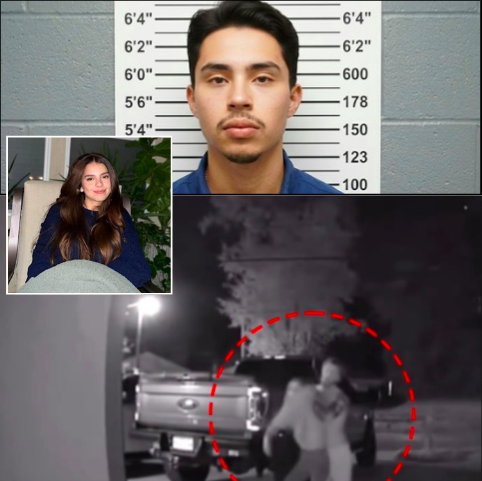
On the morning of December 24, 2025—Christmas Eve—a 19-year-old college student named Camila Mendoza Olmos left her family home in northwest Bexar County, Texas, in what appeared to be a routine early walk. Surveillance footage captured what authorities believe was her last moments at home: a young woman, matching Camila’s description, searching inside her vehicle for an unidentified item before walking out of sight. Her car, phone, and other belongings remained behind. What followed was a week-long search that captured national attention, ending in profound tragedy when her body was discovered in a nearby field. Official rulings confirmed her death as a suicide by gunshot wound to the head.
The case, initially surrounded by uncertainty and concern for her safety, has since become a poignant reminder of the silent struggles many young people face, particularly around mental health, depression, and the aftermath of personal hardships.
The Morning That Changed Everything
Camila Mendoza Olmos, often called “Cami” by those close to her, was described by friends and family as joyful, caring, and deeply connected to her loved ones. A 19-year-old student who worked as a preschool special education assistant, she had grown up with ties to Southern California but was living in the San Antonio area with her family.
According to her mother, Rosario Olmos, Camila typically went for morning walks, but this time she left without her phone—an unusual and concerning detail. Rosario woke up around 90 minutes after feeling her daughter get out of bed (they had been sharing the bed) and realized Camila was gone. She charged the phone, searched the neighborhood, and contacted Camila’s boyfriend and father, both of whom reported not having seen her. By mid-morning, the family reported her missing to the Bexar County Sheriff’s Office.
The Bexar County Sheriff’s Office, led by Sheriff Javier Salazar, quickly issued alerts and mobilized resources. A CLEAR Alert was activated, and the search involved local deputies, the FBI, and volunteer groups like Texas EquuSearch. Authorities emphasized that Camila could be in “imminent danger” and urged the public to review home surveillance footage from that morning.
Key evidence emerged through released videos:
- Home surveillance showed an individual believed to be Camila rummaging through her car before departing on foot.
- Dashcam footage from a passing motorist around 7 a.m. captured a person matching her clothing description walking alone along Wildhorse Parkway near her home on Caspian Spring Road.
These clips, described by some media as “chilling,” depicted a solitary figure in the early dawn light—moments that now represent the last confirmed sightings of Camila alive.
The Search and Growing Concern
As days passed without leads, the community rallied. Volunteers combed fields and neighborhoods, while family members, including Camila’s aunt Nancy Olmos and ex-boyfriend Nathan Gonzales (who joined search efforts), spoke publicly about their hope. Camila’s father, Alfonso Mendoza, expressed heartbreak and doubt about some footage interpretations, while friends recalled recent conversations—such as plans to go dress shopping for a family event.
Investigators explored all possibilities: voluntary disappearance, foul play, or self-harm. Sheriff Salazar noted Camila had experienced past “suicidal ideations” and struggles with depression, possibly exacerbated by a recent mutual breakup. Her father mentioned she had lost weight, seen declining grades, and felt low after the relationship ended. Despite these red flags, authorities stressed that no evidence pointed to external foul play, and everyone close to her cooperated fully.
The search intensified with colder weather approaching, focusing on tall-grass areas near the home that had been previously checked. On December 30, just six days after her disappearance, a body was found in an open field on the 10000 block of FM 1560—roughly 100-300 yards from the family residence, at a landscaping company site.
Confirmation and Official Ruling
The Bexar County Medical Examiner’s Office identified the body as Camila Mendoza Olmos on December 31, 2025. The cause of death was a gunshot wound to the head, and the manner was ruled suicide. A firearm, believed to belong to a relative and reported missing, was recovered at the scene. Authorities estimated the body had been there for several days, aligning with the timeline of her disappearance.
The family issued a heartfelt statement through Camila’s aunt Nancy Olmos on social media: “In the name of the Olmos family, we want to give a humble and heartfelt thank you to all the news reporters, police detectives, FBI, churches, friends, family and many other communities for your support and prayers. Our beloved Camila Mendoza Olmos is now with the Good Lord.”
Sheriff Salazar acknowledged the community’s grief and the broader implications, noting that Camila was “a young person going through a very tough time in her life.”
Aftermath: Mourning, Memorials, and Mental Health Awareness
The discovery prompted an outpouring of sorrow. Neighbors described feeling heartbroken, with some drawing parallels to another local suicide case earlier in the year. Calls to San Antonio’s mental health helplines reportedly tripled in the days following the news.
In the weeks since, the community has honored Camila through vigils, a candlelight gathering under a full moon, and a remembrance event with balloon releases. A new mural in San Antonio now stands as a tribute, transforming private loss into a public message of hope, urging greater awareness of mental health struggles among young adults.
Funeral services were held privately, but public commemorations continue to emphasize her joyful spirit and the importance of reaching out for help.
A Call for Compassion and Support
Camila Mendoza Olmos’ story is not one of sensational mystery or unresolved crime, as early speculation might have suggested. Instead, it is a heartbreaking reminder of how mental health challenges can remain hidden behind outward appearances of vitality and promise.
Young people like Camila—students, workers, daughters, friends—often face pressures from relationships, academics, and personal transitions. Depression and suicidal thoughts do not always announce themselves dramatically; they can manifest quietly until a breaking point is reached.
Her case has spotlighted the need for accessible mental health resources, open conversations within families, and community support systems. In Texas and beyond, organizations continue to promote helplines like the 988 Suicide & Crisis Lifeline, available 24/7 for anyone in distress.
As San Antonio and Camila’s loved ones move forward, the memory of this bright young woman endures—not just in sorrow, but as a catalyst for compassion. In the words of those who knew her best, she is now at peace, “with the Good Lord,” leaving behind a legacy that calls us all to watch over one another more closely.