
😱 WWII Movie ‘Come and See’ With ‘Sickening 25-Minute Sequence From Hell’ Becomes One of the Most Powerful Films Ever Made
WWII Movie Come and See With ‘Sickening 25-Minute Sequence From Hell’ Becomes One of the Most Powerful Films Ever Made
It’s not a blockbuster. It has no Hollywood stars, no explosions choreographed for applause. Yet, nearly forty years after its release, a haunting Soviet film has stormed back into the spotlight — and audiences worldwide are calling it the most devastating war movie ever made.
That film is Come and See — a World War II epic so graphic, so psychologically tormenting, that even its teenage star needed therapy and hypnosis to finish shooting.
And now, as social media reignites the conversation, this 1985 anti-war masterpiece is being crowned by modern audiences as the “highest-rated narrative film of all time” on Letterboxd, overtaking cinematic titans like The Godfather, Parasite, and Everything Everywhere All At Once.
A 25-Minute Descent Into Hell
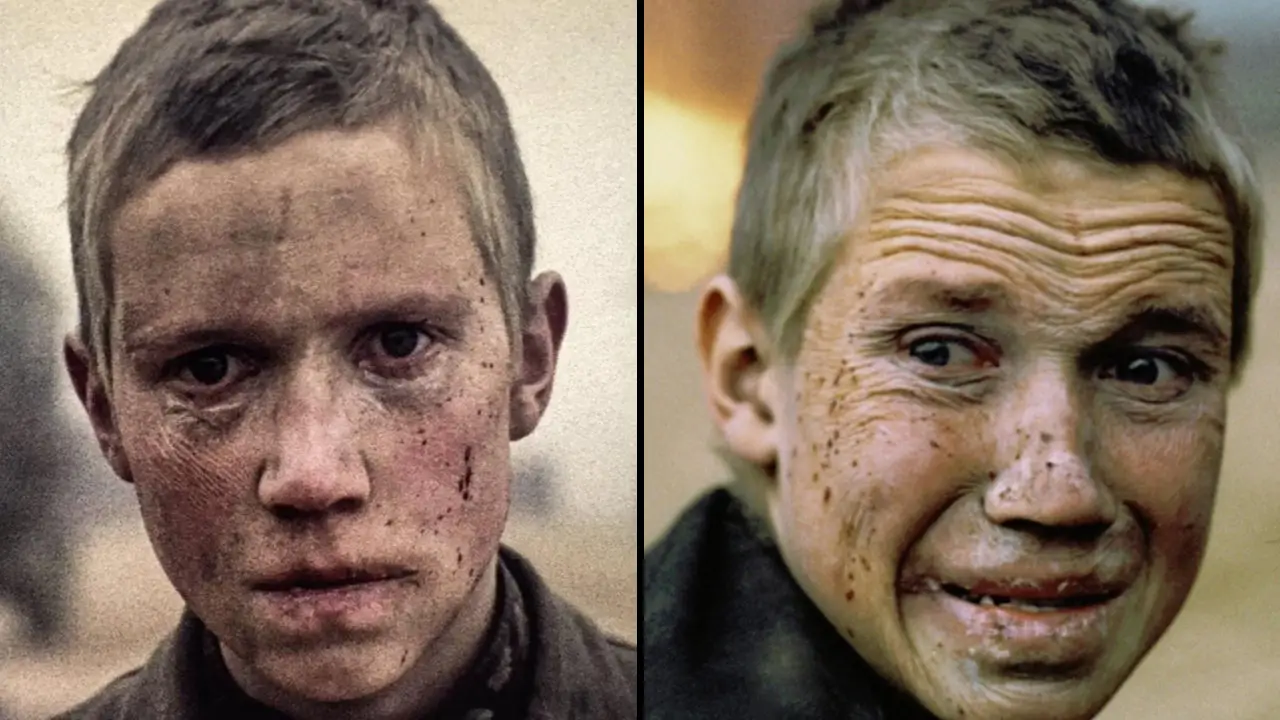
At the center of Come and See lies what critics have dubbed “the sickening 25-minute sequence from hell” — a passage so harrowing that even seasoned war movie fans admit they had to pause, look away, or cry.
The sequence unfolds as a young boy named Flyora, played by 14-year-old Aleksei Kravchenko, is captured by German soldiers. They force him to stand helplessly while an entire Belarusian village is herded into a church — and burned alive.
The camera doesn’t flinch. There is no heroic rescue, no music to soften the horror. Just the crackle of flames, the screams, and the mechanical laughter of soldiers.
Film critics have compared the scene to a fever dream — “a cinematic nightmare that refuses to end”, wrote one viewer on Letterboxd. Another called it “the most disturbing depiction of human evil ever put to screen — because it feels real.”
Collider famously described the sequence as “a slow, suffocating descent into the very anatomy of war crimes.”
Based on Real Atrocities
Unlike many war films that blur fact and fiction, Come and See is drawn directly from the real events that ravaged Belarus during the Nazi occupation.
It’s inspired by the 1971 novel Khatyn by Ales Adamovich and the 1977 survivor testimonies collected in I Am from the Fiery Village.
Over 600 Belarusian villages were destroyed during the war — their inhabitants, often entire families, executed and burned alive. Director Elem Klimov, who was just a child when the war came to his city, set out to make a film that would “burn the memory of fascism into the conscience of humanity.”
He succeeded — perhaps too well.
The Making of Madness
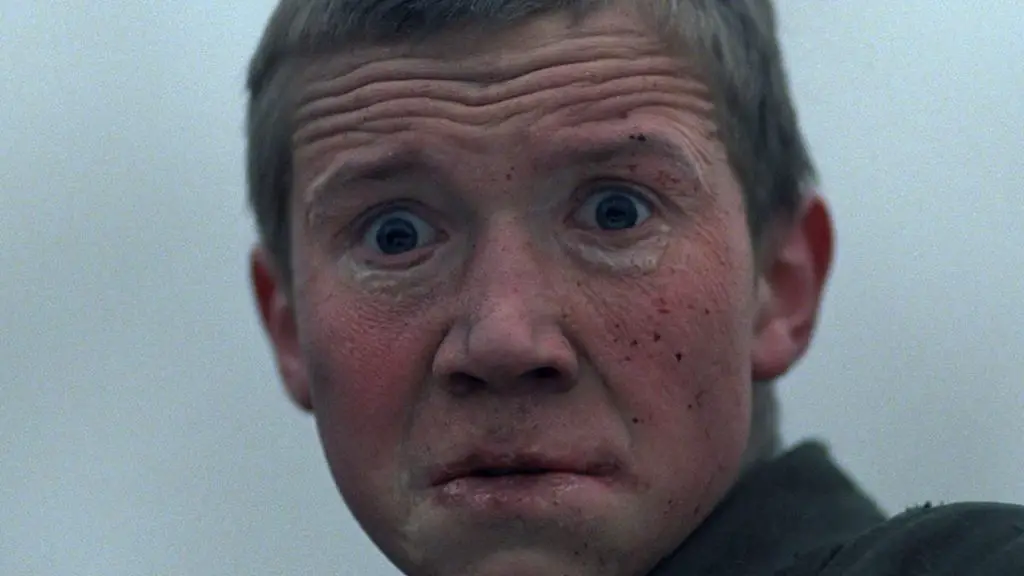
Filmed chronologically over nine months in the marshes and forests of Belarus, Come and See put its young actor through what many call an “emotional crucifixion.”
Kravchenko, then 14, wasn’t given the protection most child actors receive today. Klimov told him bluntly: “You are not a child here. You are a soldier.”
The director made the boy lose weight, run for miles, and even drink water-only diets to appear starved. The goal: absolute realism.
To help him cope, production psychologists attempted to hypnotize Kravchenko — but according to IMDb, the boy wasn’t susceptible. Instead, he was shown real footage from concentration camps to “understand what humanity was capable of.”
By the end of filming, the once wide-eyed teenager appeared decades older — his face, gaunt and haunted, reflecting the transformation of Flyora from innocence to trauma.
“I Was Treated Like an Adult — and Expected to Suffer”
In a rare interview years later, Kravchenko recalled:
“I was treated as a grown-up person. I had to work to the sweat of my brow. I had to live through what my character lived through — fear, starvation, shock.”
He disappeared from acting for nearly ten years after the film’s release. Many say he needed time to process the psychological toll of embodying such relentless horror.
Even today, some fans who meet him at film festivals are stunned. “He still carries that look,” one viewer wrote online. “The same haunted eyes from the final scene — as if he’s never left that war.”
A Director Haunted by His Own Past
Elem Klimov was no stranger to grief. His wife, the celebrated filmmaker Larisa Shepitko, died in a car crash in 1979. She had been developing her own anti-war film at the time — one that Klimov vowed to finish in her spirit.
After Come and See premiered in 1985 to international acclaim, Klimov never made another film. When asked why, he said quietly:
“Everything that could be said about war, I have said.”
A Masterpiece Hidden Behind the Iron Curtain
Upon release, Come and See shocked Soviet audiences. Many fainted in cinemas; others wept openly. Some screenings ended in silence — no applause, no music, just stunned faces staring at the credits.
It wasn’t just a film — it was a wound reopened.
Western critics discovered the film years later, calling it “a cinematic revelation.” British film historian Mark Cousins described it as “the most truthful war movie ever made — not about battles, but about the murder of innocence.”
The movie now holds a 96% score on Rotten Tomatoes, with both critics and audiences united in their awe. It also ranks prominently in Sight & Sound’s Greatest Films of All Time directors’ poll.
Social Media Rediscovers a Forgotten Classic
Nearly four decades after its release, Come and See has gone viral again — this time on TikTok and Letterboxd.
Short clips of Flyora’s face, shaking uncontrollably as he stares at Hitler’s portrait, have been viewed millions of times. One viral caption reads: “No jump scares. No CGI. Just pure human horror.”
Film enthusiasts have called it “the most realistic war movie ever made.”
“It’s horrifying, accurate, devastating in every sense,” one user wrote.
“Not enjoyable — but necessary,” added another.
The renewed attention has led to a surge in viewership on Apple TV and Criterion Channel, where Come and See is now trending alongside modern war epics like 1917 and Saving Private Ryan.
The Final Scene: “A Reverse Prayer for Humanity”
The film’s ending remains one of cinema’s most haunting. Flyora, now broken and hollow-eyed, finds a discarded photograph of Adolf Hitler. In a fit of rage, he fires his rifle into it repeatedly — but as the film rewinds through archival footage of Hitler’s life, Flyora hesitates.
The final shot freezes on an image of Hitler as a baby.
No music plays. Just silence — and the unbearable question: “Was he born evil, or made so?”
Critics have described the scene as a “reverse prayer for humanity” — a moment of impossible forgiveness, where rage gives way to pity.
Influence on Modern Filmmakers
Though often hidden in the shadows of Western war epics, Come and See has influenced a generation of filmmakers.
Directors like Steven Spielberg, Christopher Nolan, and Terrence Malick have cited Klimov’s visual storytelling as an inspiration. Spielberg once noted that the realism of Schindler’s List owed a debt to the raw, handheld intensity of Come and See.
You can see its fingerprints in Nolan’s Dunkirk, Sam Mendes’s 1917, and even in the bleached, trembling realism of Chernobyl (HBO).
The use of natural sound, long takes, and immersive chaos — techniques that modern filmmakers now celebrate — were pioneered by Klimov under near-impossible conditions with 1980s Soviet equipment.
Why It Still Matters in 2025
In an age of spectacle and CGI warfare, Come and See stands as a stark reminder of what war truly means. There are no heroes, no winners — only survivors and silence.
As the world faces new conflicts and resurgent propaganda, the film’s warning feels more urgent than ever: memory fades fast, and history repeats itself when art stops confronting it.
“The war is not over,” wrote one TikTok commenter. “It just changes names.”
Perhaps that’s why a 40-year-old Soviet film has suddenly become one of the most-watched and most-discussed movies of the year.
Critics Call It “The Ultimate Anti-War Statement”
Roger Ebert once described Come and See as “one of the most harrowing films ever made.”
Empire Magazine ranked it #6 on its list of the “100 Greatest World Cinema Films.”
But it’s the emotional reactions from ordinary viewers that define its legacy:
“I couldn’t breathe during the last half hour,” wrote one viewer.
“My hands were shaking.”
“No other film has ever made me feel this way — not Schindler’s List, not Saving Private Ryan.”
It’s not about who fights, or who wins. It’s about the obliteration of innocence — something that resonates far beyond the battlefield.
“Once You’ve Seen It, You Can Never Unsee It”
In the decades since its release, countless filmmakers have tried to capture the same raw terror — and failed. Come and See endures because it never flinches, never flatters, and never lets the audience off the hook.
When the final credits roll, there’s no catharsis. Only silence — and the eerie knowledge that what you’ve witnessed wasn’t fiction, but history relived.
As Letterboxd summed it up in a viral post:
“Elem Klimov’s Come and See is now officially the highest-rated narrative feature film of all time.
It is the fourth film ever to hold that title, following The Godfather, Parasite, and Everything Everywhere All at Once.”
That’s not just praise — it’s a cultural reckoning.
Available Now
Come and See is currently available to stream on Apple TV, Criterion Channel, and Amazon Prime Video.
For anyone brave enough to watch, one warning echoes through every review:
“You don’t watch Come and See — you survive it.”