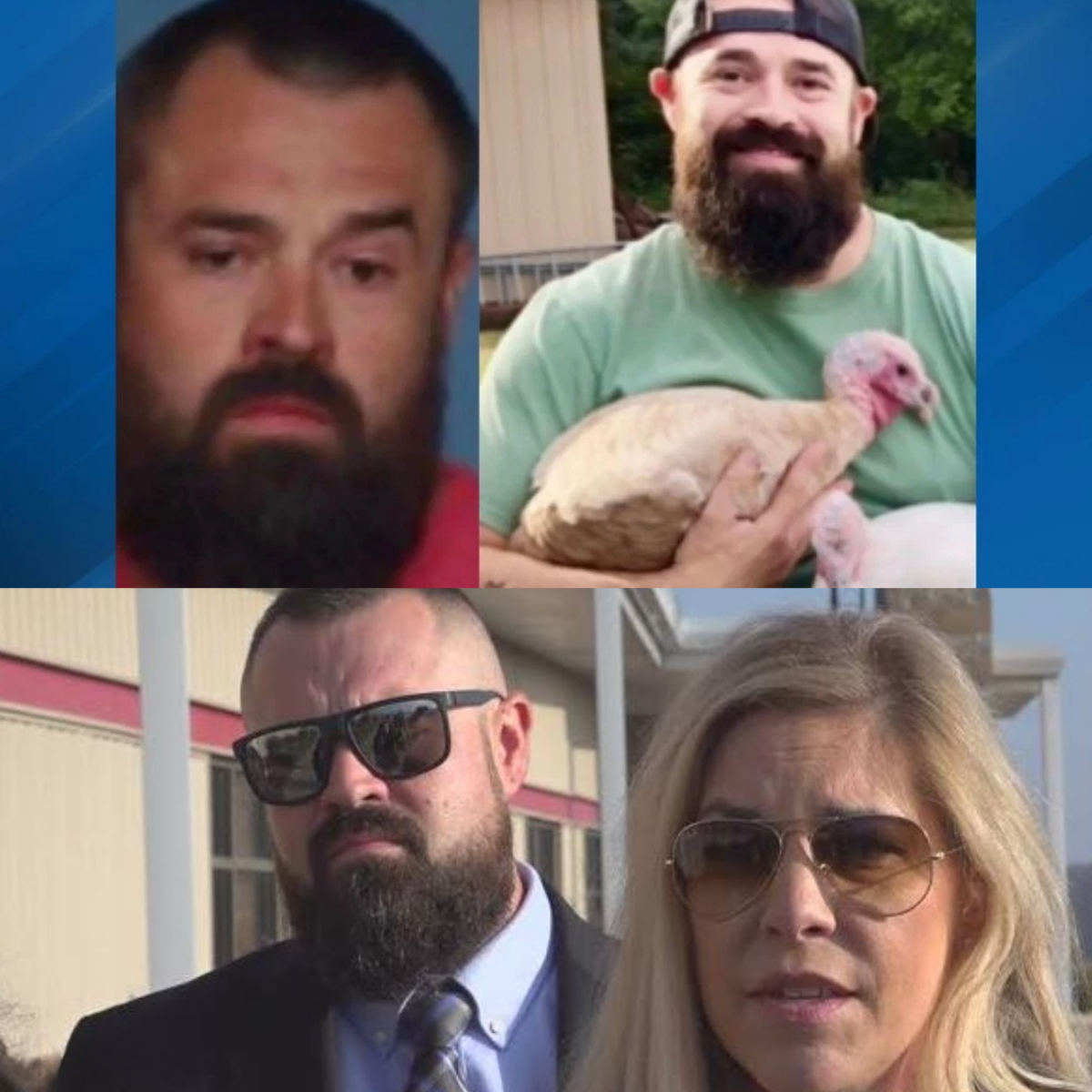
From the center of a controversial killing case to an unexpected political victory: The Arkansas father has now beaten his opponents in the race for Lonoke County Sheriff — leaving many questioning how it happened.
In a stunning turn of events that has captured national attention and sparked intense debate about justice, vigilantism, parental protection, and the failures of the legal system, Aaron Spencer, a 37-year-old Army veteran and farmer from Lonoke County, Arkansas, has won the Republican primary for Sheriff of Lonoke County. This victory came on March 3, 2026, despite Spencer currently being out on bond and awaiting trial on second-degree murder charges for fatally shooting a 67-year-old man accused of sexually abusing his then-13-year-old daughter.
The incident that thrust Spencer into the spotlight occurred on the night of October 8, 2024. Spencer awoke to discover his teenage daughter missing from her bedroom in their home near Carlisle, Arkansas. Alarmed, he used a location-tracking app on her phone to search for her. He located her in the passenger seat of a vehicle driven by Michael Fosler, a man already facing serious criminal allegations. Fosler had been charged with over 40 felony counts related to sexual offenses against Spencer’s daughter, including sexual assault, sexual indecency with a child, and online predation of a minor. Remarkably, Fosler had been released on a relatively low $5,000 bond despite the gravity of the charges, with a no-contact order in place that proved ineffective.
According to court documents and Spencer’s own account, he pursued the vehicle, forced it off the highway, and confronted Fosler. An altercation ensued, during which Spencer shot and killed Fosler. Spencer immediately called 911 to report the incident, admitting to the shooting but insisting it was necessary to protect his child from an imminent threat. He has pleaded not guilty to the second-degree murder charge (with a firearm enhancement that could increase sentencing), maintaining that his actions fell under Arkansas self-defense or defense-of-others laws. His legal team argues that the system had already failed by allowing Fosler—previously known to law enforcement and with a history involving similar offenses—to remain free and continue contact with the victim.
The Lonoke County Sheriff’s Office, led at the time by incumbent Sheriff John Staley, arrested Spencer shortly after the shooting. The case drew immediate scrutiny, with critics questioning why a man facing dozens of child sex crime charges was out on such minimal bond. Supporters of Spencer viewed the killing as a tragic but understandable act of a desperate father stepping in where authorities had faltered. Prosecutors, however, pursued the murder charge aggressively, originally scheduling a trial for early 2025, though delays occurred—including the removal of the presiding judge and the appointment of a new one by the Arkansas Supreme Court. As of March 2026, no firm trial date has been set, and Spencer remains free on bond.
Amid the pending legal battle, Spencer announced his candidacy for Lonoke County Sheriff in October 2025—exactly one year after the shooting. In a Facebook video announcement, he framed his run as a direct response to the “failures” he witnessed in law enforcement and the judicial system. “Many of you know my story. I’m the father who acted to protect his daughter when the system failed,” he said. “I refuse to stand by while others face these same failures.” His platform emphasized creating a dedicated team to combat sex crimes against children, restoring trust in local law enforcement, holding predators accountable, and ensuring better protections for vulnerable residents. As an Army combat veteran and lifelong resident of the rural, conservative county, Spencer positioned himself as someone who understood both service and the real-world consequences of bureaucratic shortcomings.
The Republican primary on March 3, 2026, pitted Spencer against incumbent Sheriff John Staley—who had overseen the department that arrested him—and another challenger, David A. Bufford, a veteran in law enforcement. In a heavily Republican area where Donald Trump received nearly 76% of the vote in 2024, the race became a referendum on Spencer’s actions and the broader issues of parental rights, child protection, and perceived leniency toward offenders. Campaign rhetoric was heated: Spencer highlighted “failures” under Staley’s watch, while opponents questioned whether a murder defendant could credibly lead the sheriff’s office.
Unofficial results from the Arkansas Secretary of State showed Spencer securing more than 53% of the vote (around 5,400 votes out of over 10,000 cast), with all precincts reporting. Staley received about 26.5%, and Bufford the remainder. Staley conceded graciously on social media: “Congratulations to Mr. Spencer. Tonight the voters made their decision in the Republican Primary, and I respect the decision.” The victory made Spencer the GOP nominee, positioning him as the heavy favorite in the November general election against Democrat Brian Mitchell Sr. in deeply conservative Lonoke County.
However, significant legal hurdles remain. Arkansas law prohibits convicted felons from holding elected office. If Spencer is convicted of murder—a Class B or higher felony—he would be ineligible to serve as sheriff, even if elected in November. His attorneys express confidence in an acquittal, citing self-defense claims and the context of Fosler’s alleged crimes. Public opinion remains deeply divided: Supporters hail Spencer as a hero who did what any parent might do, praising voters for sending a message that child predators will face swift consequences. Critics argue the outcome undermines the rule of law, potentially encouraging vigilantism and questioning whether personal tragedy should override due process.
The case has sparked wider discussions on bond practices for sex offenders, the adequacy of no-contact orders, and how rural communities balance justice with protection of the vulnerable. Media coverage—from outlets like the Associated Press, CNN, Fox News, The New York Times, and local Arkansas stations—has framed it as a real-life drama blending tragedy, politics, and morality. Social media exploded with reactions, from fundraisers for Spencer’s defense to debates over whether his victory represents “true justice” or a dangerous precedent.
For now, Aaron Spencer stands as the Republican nominee for Lonoke County Sheriff—a father who lost faith in the system after it seemingly failed his daughter, yet won the trust of voters in the very county where he faces judgment. Whether he ultimately serves depends on the outcome of his trial, but his primary win has already etched this story into the annals of American true crime and electoral oddities. In a rural Arkansas county, where family, faith, and frontier justice often intersect, Spencer’s journey from accused killer to political frontrunner underscores deep-seated frustrations with how society handles the worst crimes against children.