MAJOR BREAKTHROUGH: Investigators reveal five newly uncovered pieces of evidence that could finally crack the Nancy Guthrie case wide open. Officials say they may be closer than ever to finding her — and delivering the answers everyone has been waiting for. Full story below
The Disappearance of Nancy Guthrie: Five Critical Clues in a Case Without Answers


An undated photo shows Nancy Guthrie standing beside her daughter, Savannah Guthrie, smiling for the camera.
Today, that image carries a different weight.
Nancy, 84, vanished from her Tucson home in the early hours of February 1. Nearly three weeks later, the case remains unsolved. No arrests. No named suspects. But five critical pieces of evidence — forensic, digital, and visual — are shaping one of Arizona’s most closely watched investigations.
Authorities say the trail is growing not colder, but more complex.
The Crime Scene in Catalina Foothills


Nancy disappeared from her residence in Catalina Foothills, an upscale desert community north of Tucson known for quiet streets and sweeping mountain views.
From the outset, authorities treated the home as a crime scene.
The investigation is being led by the Pima County Sheriff’s Department, with significant involvement from the Federal Bureau of Investigation. The FBI has since announced a $100,000 reward for information leading to answers.
Investigators believe Nancy was removed from her home against her will.
What follows are the five most critical pieces of evidence shaping the case so far.
1. The Timeline That Changed Everything
According to Sheriff Chris Nanos, Nancy shared dinner with relatives on January 31. She was dropped off at home at exactly 9:48 p.m.
At 9:50 p.m., her garage door closed.
For several hours, nothing unusual appeared to happen.
Then, the digital silence began.
-
1:47 a.m. — Her Nest doorbell camera went offline.
-
2:28 a.m. — Her pacemaker disconnected from her smartphone.
-
By midday February 1 — She was reported missing.
That 41-minute window between the camera shutdown and pacemaker disconnect has become central to the investigation.
Authorities believe this is when something catastrophic occurred.
The pacemaker timestamp is especially significant. Medical implant devices often maintain Bluetooth connection to paired phones. A sudden disconnect can indicate distance, interference, or device disruption.
Investigators have not revealed whether the pacemaker stopped functioning — only that communication ceased.
That digital gap is now a cornerstone of the case.
2. The Masked Figure on Surveillance Video
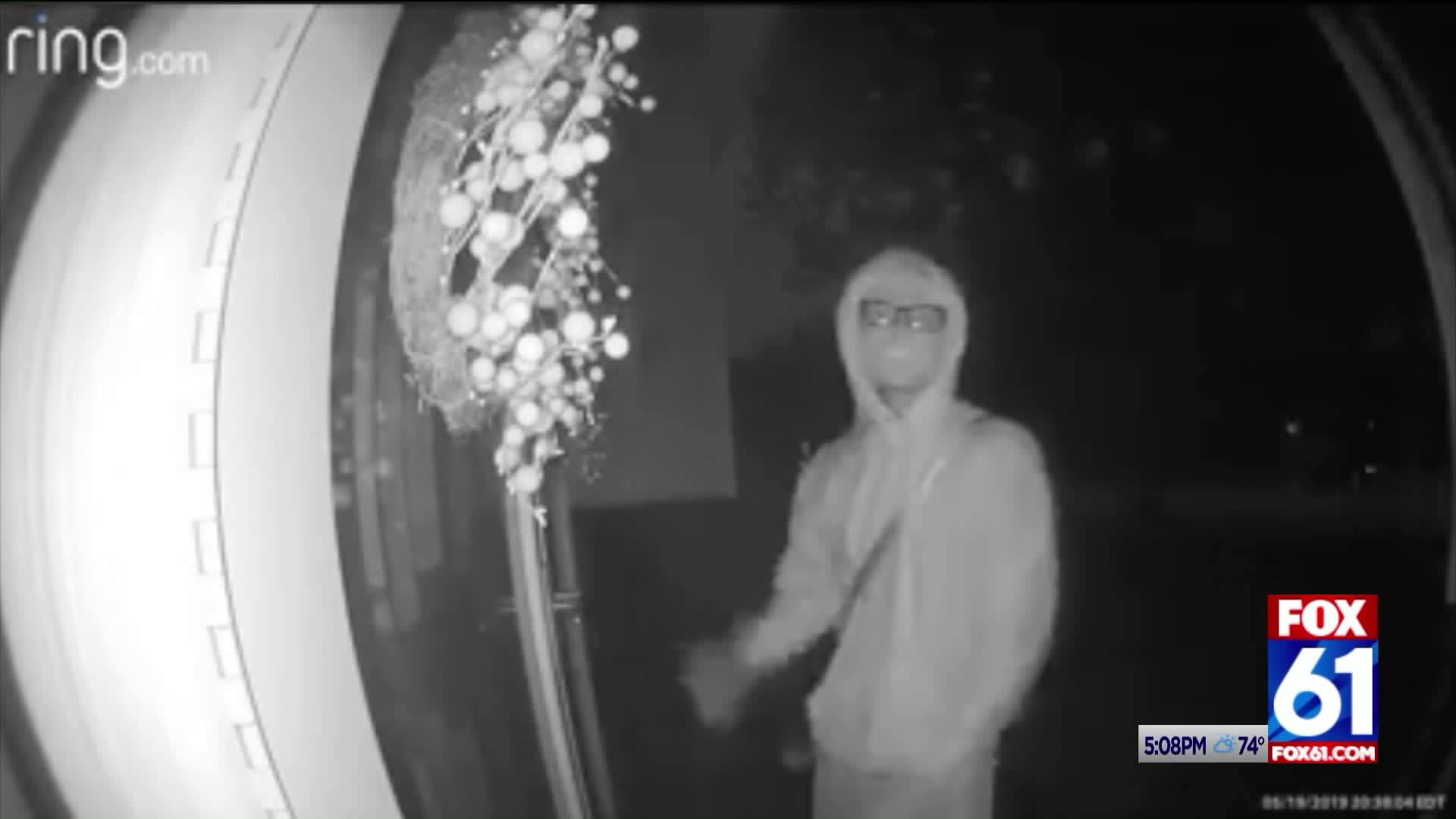
Before the camera went dark, it captured something chilling.
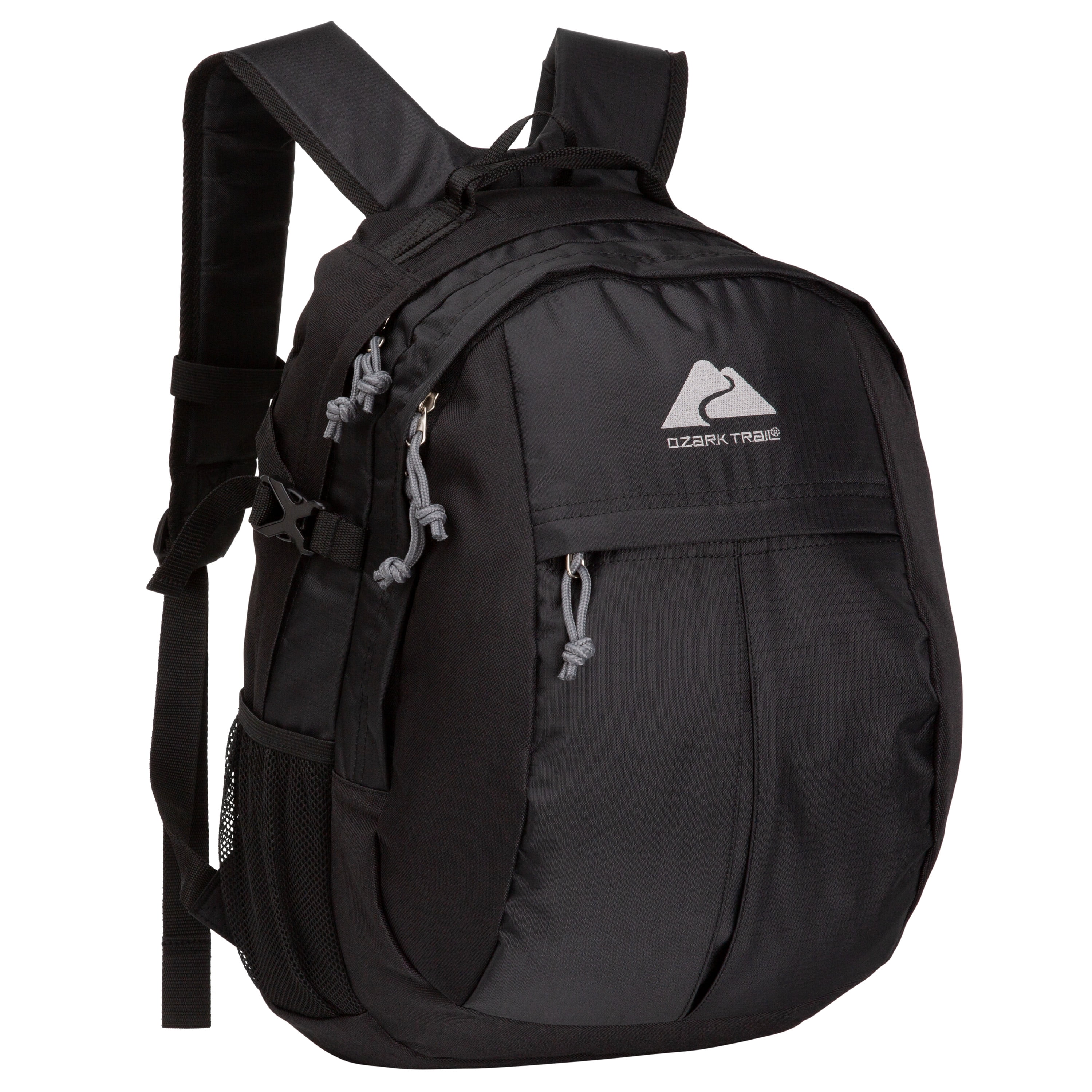
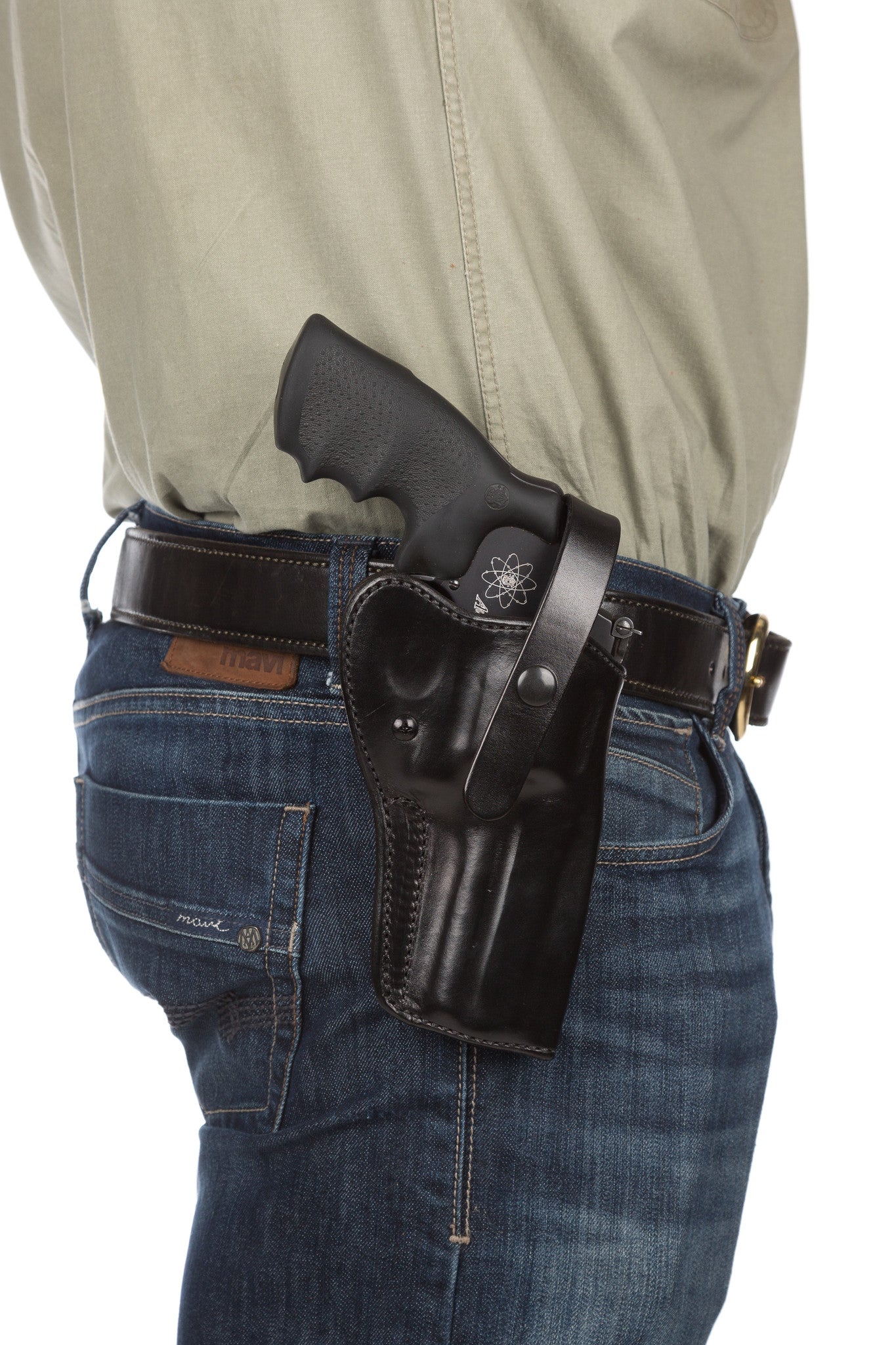
Recovered footage from Nancy’s Nest system shows a masked man standing at her door. He is carrying what appears to be a stuffed backpack and wearing what investigators believe is a holstered firearm.
FBI analysts estimate the individual’s height between 5 feet 9 inches and 5 feet 10 inches, with a medium build.
Two items have drawn particular attention:
-
A black Ozark Trail backpack, sold at Walmart for approximately $11.
-
A Strategy brand hip holster, also commonly sold at Walmart.
While neither item is rare or uniquely identifiable, retail records and store surveillance are being combed for purchase patterns that might narrow the field.
Former federal agents have explained that retail forensics can be powerful when combined with timestamps. If investigators can align purchase records with digital movement data, they may be able to reconstruct a suspect’s path.
But for now, the masked figure remains unidentified.
3. The DNA Discovery
Inside Nancy’s home, investigators recovered DNA from an unknown individual.
Authorities confirm the profile does not match Nancy, her family members, or known household workers.
That alone suggests an outsider may have been present.
The mystery deepened when sixteen gloves were discovered within a two-mile radius of the property.
One glove, believed to resemble the one seen in surveillance footage, contained an unknown male DNA profile. Officials have said the sample would be compared against federal databases, though no public confirmation of a match has been released.
Sixteen gloves.
Some may be unrelated litter.
But investigators cannot afford to dismiss any of them.
Each glove is being tested for:
-
Biological material
-
Fiber transfer
-
Soil and environmental trace
-
Manufacturing lot codes
If even one links conclusively to the masked figure, it could become the strongest forensic lead in the case.
4. Blood at the Front Door
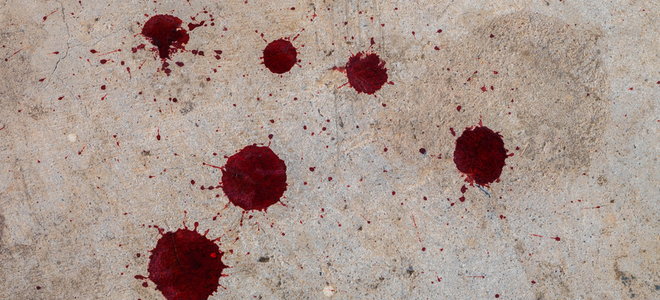
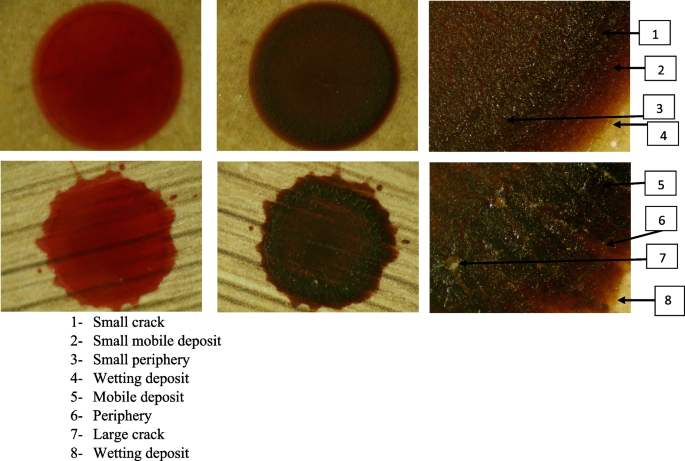

A trail of blood droplets was discovered on the front steps of Nancy’s home.
Authorities have confirmed the blood belongs to Nancy.
Sheriff Nanos has declined to state whether the blood was shed before or after she was removed from the residence. He has also refused to disclose the quantity found or whether additional blood evidence exists inside the home.
Blood evidence can reveal:
-
Directional movement
-
Height of source
-
Whether the victim was walking, dragged, or carried
-
Whether the wound was minor or severe
But such findings are tightly guarded during active investigations.
The presence of Nancy’s blood outside her home strongly supports the theory that she did not leave voluntarily.
5. The Pacemaker Search and Digital Forensics
The pacemaker’s disconnection at 2:28 a.m. created a narrow but critical investigative window.
Hoping to track the device, authorities deployed advanced Bluetooth scanning equipment by air, searching for residual signal traces.
The search yielded no results.
If the device remains operational but distant, its signal may be too weak for recovery. If damaged or shielded, it may no longer broadcast.
Behind the scenes, digital investigators are examining:
-
Roadside traffic cameras
-
Home security systems within a two-mile radius
-
Cell tower ping data
-
License plate reader logs
-
Financial transaction histories
Residents have been asked to submit any video recorded between January 1 and February 2.
Thousands of tips have poured in.
One undisclosed tip recently led to a late-night search of a nearby residence and vehicle. Three individuals were temporarily detained.
No charges were filed.
No suspects have been named.
The Reward and the National Spotlight
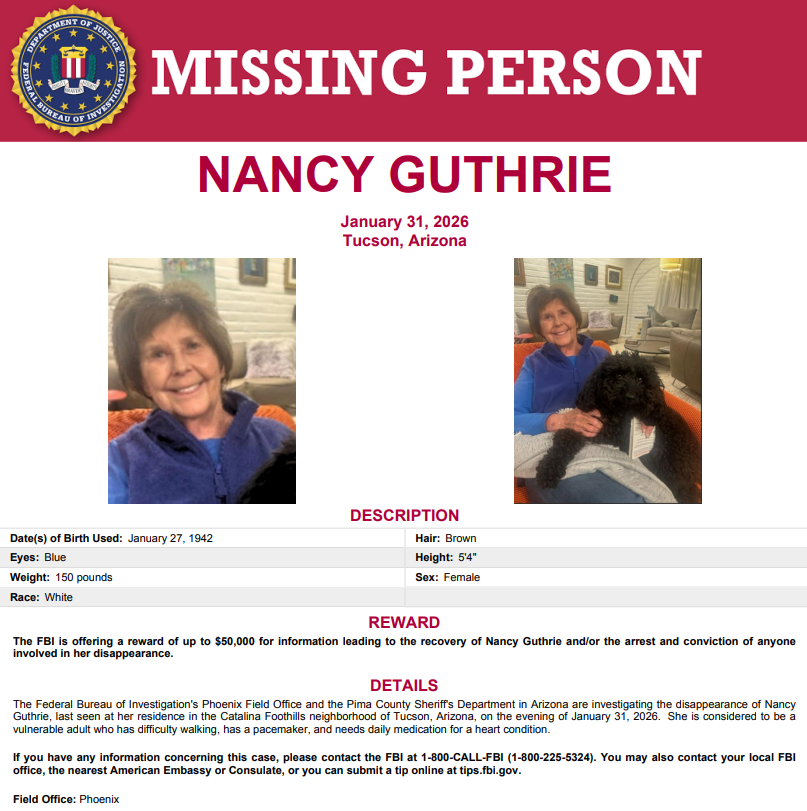

The FBI’s $100,000 reward has expanded the case’s visibility nationwide.
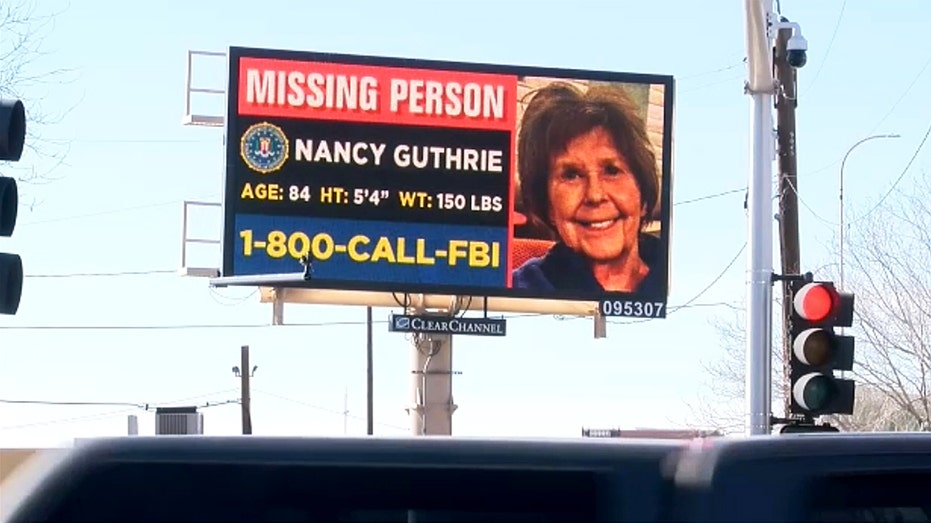
An electronic billboard in Albuquerque, New Mexico, now displays Nancy’s image, urging anyone with information to come forward.
The reward underscores federal belief that someone, somewhere, knows something crucial.
High-profile disappearances often hinge on a single overlooked detail:
A vehicle seen idling.
A purchase remembered weeks later.
A conversation that felt insignificant at the time.
Investigators insist this case is no exception.
The Questions That Remain
Nearly three weeks in, the case presents unsettling contradictions:
-
If the masked figure is responsible, why leave behind DNA?
-
If Nancy was injured at the door, where did she go next?
-
Why disable the doorbell camera?
-
Was the pacemaker disconnect deliberate or incidental?
-
Are the sixteen gloves coincidence — or staging?
Each question branches into more.
Each clue deepens the mystery.
A Family Waiting
For Savannah Guthrie and her relatives, the public scrutiny is secondary to a private ache.
The image of mother and daughter smiling together now circulates nationally — not as a celebration, but as a plea.
Time complicates investigations.
But authorities say the case is not cold.
It is active.
Open.
Relentless.
How the Public Can Help
Anyone with information is urged to contact the FBI at 1-800-CALL-FBI.
Investigators emphasize:
-
No tip is too small.
-
Even indirect knowledge matters.
-
Digital footage, however minor, could shift the case.
In modern investigations, breakthroughs often come not from dramatic revelations — but from the careful alignment of dozens of minor details.
Five pieces of evidence.
No arrests.
No named suspects.
But somewhere within the silence between 1:47 a.m. and 2:28 a.m., investigators believe the truth exists.
Until that gap is filled, the disappearance of Nancy Guthrie remains one of Arizona’s most haunting unanswered questions.