STREAMING NOW ON NETFLIX: THE SHOCKING TRUE-STORY DRAMA THAT CHANGED AMERICAN HISTORY FOREVER!
STREAMING NOW ON NETFLIX: THE SHOCKING TRUE-STORY DRAMA THAT CHANGED AMERICAN HISTORY FOREVER!
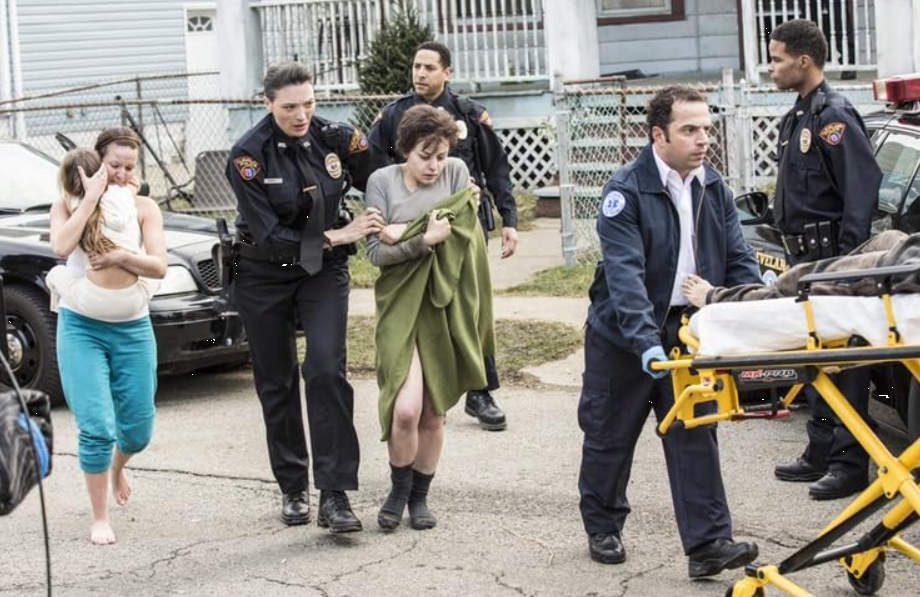
Wrapped in blankets, clutching to hope, and walking out alive against all odds. On NETFLIX, the haunting drama based on Michelle Knight’s ordeal brings the Cleveland house of horrors back into living rooms. Look closely at the paramedics rushing to the scene—this miracle almost never happened. Captured with haunting realism that refuses to look away.
On a quiet residential street in Cleveland’s Tremont neighborhood, a house that looked ordinary from the outside became the site of one of the most prolonged and sadistic captivity cases in modern American history. For more than a decade, three young women disappeared into that house and nearly vanished from public memory. In May 2013, they walked out—thin, traumatized, and alive—into the arms of stunned neighbors and emergency responders. The images of that day, women wrapped in blankets and clinging to one another, remain seared into the national consciousness.
The Lifetime film Cleveland Abduction, which has circulated on Netflix in various territories and continues to find new audiences, dramatizes those years with unflinching focus. Based primarily on Michelle Knight’s memoir Finding Me: A Decade of Darkness, a Life Reclaimed, the movie centers the first victim, the woman who endured the longest ordeal and some of the most sustained violence. Taryn Manning portrays Knight with a raw intensity that captures both the physical deterioration and the stubborn will to survive. Katie Sarife appears as Gina DeJesus, and Samantha Droke as Amanda Berry. Raymond Cruz delivers a chilling performance as Ariel Castro, the school-bus driver and neighborhood figure who turned his Seymour Avenue home into a prison.
The real story began on August 22–23, 2002. Twenty-one-year-old Michelle Knight, a slight young woman who had already lost custody of her young son and was struggling to navigate the system, accepted a ride from a man she recognized as the father of a neighborhood girl. Castro offered to help her find the address she needed. Instead he drove her to his house, locked the door, and began more than ten years of captivity. He beat her, raped her repeatedly, and when she became pregnant—multiple times—he subjected her to extreme physical abuse and starvation that ended those pregnancies. Knight later described periods of being chained in the basement in near-total darkness, fed sporadically, and told that no one was looking for her.
In April 2003 Castro abducted 16-year-old Amanda Berry after she finished a shift at a local Burger King. In April 2004 he took 14-year-old Gina DeJesus as she walked home from school. The three women were held in different rooms of the same house, often isolated from one another for long stretches, yet they managed to form a fragile bond of mutual support. When Amanda became pregnant and gave birth in captivity, it was Michelle who delivered the baby and performed CPR on the infant under threat of death if the child did not survive. That child, Jocelyn, would later become living proof of the years the women had spent locked away.
Castro maintained an elaborate system of control. He padlocked doors, covered windows, played loud music or television to mask sounds, and used the women’s fear of one another’s punishment as leverage. Neighbors later recalled seeing him coming and going, sometimes with young women who appeared to be family or friends. The house itself—cluttered, boarded in places, and unusually secure—did not raise enough sustained suspicion to trigger a thorough search until the final day.
That day arrived on May 6, 2013. Amanda Berry managed to force her way partially through a front door that Castro had reinforced. She screamed for help. A neighbor responded, helped her break free, and called 911. Within minutes police arrived, entered the house, and found Michelle Knight and Gina DeJesus still inside. The three women and the little girl walked out into daylight. News helicopters hovered. Paramedics moved quickly. The nation watched, stunned that three missing persons cases long treated as cold or hopeless had suddenly resolved in the most unexpected way.
Castro was arrested the same day. He later pleaded guilty to 937 counts, including kidnapping, rape, and aggravated murder related to the forced miscarriages. He received a sentence of life plus 1,000 years. Within a month of entering prison he took his own life.
The survivors faced a different kind of battle. Michelle Knight, who had been the first taken and the one subjected to the longest continuous abuse, struggled with the aftermath of years of trauma, the loss of her son during the captivity, and the sudden glare of public attention. She later changed her name, married, and continued speaking about resilience and recovery. Amanda Berry and Gina DeJesus also rebuilt their lives, each in her own way, while the community and the wider public wrestled with questions that still linger: How does a predator operate for so long in plain sight? How many small signs were missed? What does it take for three young women to survive more than a decade of calculated cruelty?
Cleveland Abduction does not flinch from the darkness, yet it refuses to turn the suffering into pure spectacle. The film spends significant time on the psychological bonds the women formed and on the quiet acts of resistance—singing in their heads, talking to absent children, refusing to let the other two lose hope. Manning’s performance as Michelle carries much of that weight. The escape sequence, with its frantic energy and the sight of the women emerging into the street, lands with particular force because viewers know it is not invented. Real paramedics once rushed to that same block. Real neighbors once stood in shock as three women who had been given up for lost walked free.
More than a decade after the rescue, the case continues to surface in true-crime conversations and streaming recommendations because it sits at an uncomfortable intersection of ordinary American life and extreme evil. Castro was a school-bus driver, a father, a man who lived among the people he preyed upon. The house was not a remote cabin; it was on a city street. The victims were not strangers snatched from distant places; they were local girls and a young mother who accepted a ride from someone they thought they knew.
The Netflix availability of the film has introduced the story to new generations of viewers who were children—or not yet born—when the news broke in 2013. Some come for the sensationalism. Others stay for the harder questions about survival, community blindness, and the thin line between a neighborhood and a prison. The images of the women wrapped in blankets, stepping into the light, still carry the same power they did on the day they happened. A miracle, the caption suggests, almost never happened. The fact that it did remains one of the most improbable and moving endings in recent American criminal history.