Viewers thought the outrageous story belonged to fiction — but the poison-pen letters, bitter accusations and extraordinary police investigation were inspired by events that really shook an English seaside town
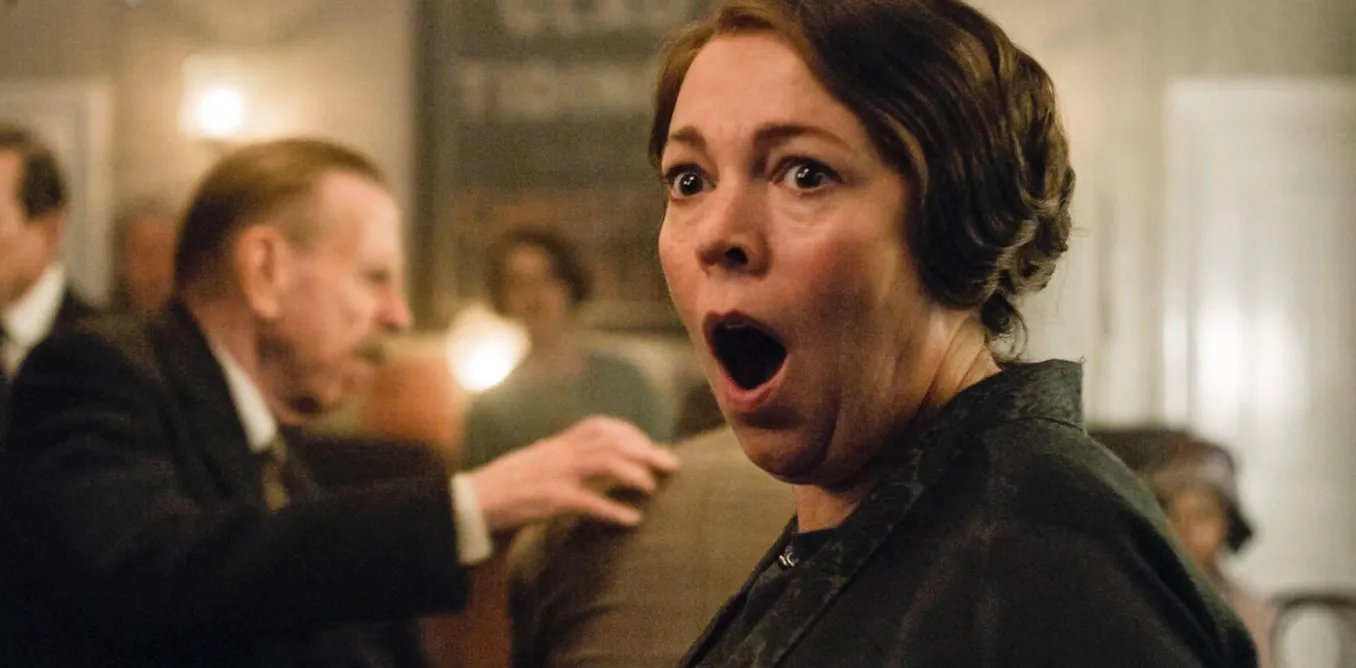
Olivia Colman has built a career playing characters capable of switching from warmth to menace in the space of a single glance. But in Wicked Little Letters, the Oscar-winning actress takes that talent into particularly uncomfortable territory — portraying a respectable woman at the centre of a scandal so bizarre that many viewers could be forgiven for assuming it was invented.
It wasn’t.
Behind the film’s barrage of obscenities, bitter neighbourly feuds and dark comedy lies the extraordinary story of the Littlehampton poison-pen scandal, a case that unfolded in Sussex in the years after the First World War and eventually became a national sensation.
At its centre were two very different women: Rose Gooding, an Irish-born resident whose behaviour challenged the conservative expectations of the period, and Edith Swan, her outwardly respectable neighbour.
In the film, Jessie Buckley plays the outspoken Rose while Colman portrays Edith — apparently restrained, religious and obedient, yet increasingly surrounded by suspicion as vicious anonymous letters begin circulating through the community.
What initially looks like an eccentric comedy gradually becomes something considerably darker.
Because a real woman was accused.
A real woman went to prison.
And the authorities eventually resorted to an ingenious operation involving secretly marked postage stamps to discover who was actually responsible.
A QUIET SEASIDE TOWN — AND LETTERS FILLED WITH OBSCENITIES
Littlehampton hardly seemed the obvious setting for a scandal that would attract attention far beyond the Sussex coast.
Rose Gooding arrived in the town in 1918. She had already given birth to her daughter Dorothy before marrying her husband, Bill — something that carried far greater social stigma in early 20th-century Britain than it would today.
Rose eventually became friendly with neighbour Edith Swan.
Their relationship was, at first, remarkably ordinary.
The women exchanged the mundane favours of neighbours. Edith reportedly shared household recipes and knitting instructions, while Rose lent items of her own.
Nothing about their friendship suggested that the two women would eventually become connected to one of Britain’s strangest poison-pen cases.
But the relationship deteriorated.
Following disagreements between the households, obscene correspondence began appearing.
The letters and postcards contained insults, accusations and language considered extraordinarily shocking by the standards of the era.
And suspicion quickly fell on Rose.
That suspicion was not difficult to understand within the prejudices of the time.
Rose was outspoken. She did not fit comfortably into the image of restrained female respectability expected by some members of the community.
Edith, by contrast, appeared to embody it.
She was considered quiet and respectable.
That contrast would prove devastating.
ROSE BECOMES THE PERFECT SUSPECT
The letters grew increasingly offensive.
They were written in a way that appeared designed to convince recipients that Rose was responsible.
Soon the dispute had moved far beyond neighbourhood gossip.
Authorities became involved, and Rose found herself accused of criminal libel.
In September 1920, she appeared before magistrates.
She would spend months behind bars.
Yet the poison-pen campaign did not simply disappear.
The strange sequence of events surrounding the letters continued, raising an increasingly uncomfortable possibility.
What if the woman being blamed for them wasn’t actually writing them?
Rose’s legal representatives attempted to challenge the case against her. Among the evidence reportedly examined were examples of Edith Swan’s handwriting, including ordinary domestic material such as knitting instructions and a recipe.
Similarities were noticed.
But the suspicions were not enough to save Rose from another devastating outcome.
She was sentenced to 12 months’ imprisonment with hard labour.
For a woman maintaining that she was innocent, it was an extraordinary punishment.
And then something happened that would begin changing the entire case.
THE CLUE THAT STARTED TO UNRAVEL EVERYTHING
After Rose’s second conviction, another piece of obscene writing emerged.
Edith reportedly produced a notebook containing offensive material and told police it had been discovered near the Gooding home.
On the surface, it appeared to be further evidence pointing toward Rose.
Instead, it helped turn attention in another direction.
Investigators noticed similarities between the handwriting in the notebook and writing associated with Edith herself.
The supposedly incriminating evidence was beginning to look very different.
Rose was eventually released after serving only part of her sentence.
The case had become serious enough for Scotland Yard involvement, and Inspector George Nicholls was sent to investigate.
For Edith, the scrutiny was about to become much more intense.
Policewoman Gladys Moss became involved in surveillance connected with the case.
According to accounts of the scandal, Moss watched the Swan household from a concealed position nearby.
Then came a crucial moment.
She reportedly witnessed Edith depositing a piece of paper close to another neighbour’s property.
Suspicion was no longer resting solely on handwriting analysis or assumptions about personality.
Police believed they were closing in.
Yet obtaining a conviction proved remarkably difficult.
THE WOMAN AUTHORITIES STRUGGLED TO BELIEVE
Edith was prosecuted in 1921.
But the case exposed something deeper about the society in which the scandal unfolded.
The very image that had protected Edith socially — that of a respectable, restrained woman — also made the accusations against her difficult for some people to accept.
Could a woman who appeared so proper really have written language so vulgar?
For some authorities, the idea seemed almost impossible.
The attitudes surrounding gender, class and respectability became inseparable from the investigation.
Rose’s reputation had made accusations against her easier to believe.
Edith’s reputation made accusations against her harder to believe.
It was an extraordinary double standard — and one of the reasons the story remains so fascinating more than a century later.
The police needed evidence that could overcome assumptions about what a “respectable” woman was supposedly capable of doing.
Eventually, detectives came up with a remarkably clever solution.
THE INVISIBLE-INK TRAP
By 1923, investigators were preparing a trap.
The weapon they chose was not a fingerprint kit, hidden camera or sophisticated surveillance device.
It was a postage stamp.
Detectives arranged for stamps to be secretly marked with invisible ink.
The post office was instructed to ensure the marked stamps were sold to Edith.
Investigators then waited.
If another poison-pen letter appeared bearing one of those stamps, police would have evidence connecting its purchase directly to the suspect they had been watching.
Eventually, another letter was sent.
And the trap worked.
The marked stamp could be traced.
After years of accusations, prosecutions, imprisonment and disbelief, investigators finally possessed the evidence they needed.
Edith Swan was brought before the courts again.
This time, the result was different.
In July 1923, a jury at Lewes Crown Court found her guilty.
She was sentenced to 12 months in prison.
The extraordinary poison-pen mystery that had consumed Littlehampton had finally reached its dramatic conclusion.
But even at sentencing, contemporary attitudes about women and respectability remained strikingly visible.
The judge reportedly expressed astonishment that a woman regarded as respectable could have produced such obscene material.
It was precisely the assumption that had complicated the case from the beginning.
THE REAL STORY WAS EVEN STRANGER THAN THE MOVIE
That history explains why Wicked Little Letters can feel almost too outrageous to be true.
Director Thea Sharrock’s film does not operate as a documentary. Characters, dialogue, chronology and individual incidents are shaped for dramatic purposes, and viewers should not assume that every scene happened exactly as depicted.
But its central inspiration is genuine.
The Littlehampton letters existed.
Rose Gooding and Edith Swan were real women.
Rose really became the focus of criminal proceedings.
And investigators really did pursue the person behind the obscene correspondence.
Even members of the cast have spoken about their surprise upon discovering how much of the extraordinary premise came from history.
Timothy Spall, who plays Edith’s domineering father Edward Swan, said he initially assumed the story was an elaborate fictional invention before discovering its real-life origins.
That disbelief is easy to understand.
The case contains almost everything a screenwriter could want: friendship, betrayal, public humiliation, wrongful accusation, class prejudice, surveillance and a final police trap involving invisible ink.
Yet underneath the eccentricity lies a much more serious story.
A woman’s reputation helped determine whether authorities believed she was capable of a crime.
Another woman’s reputation helped convince people that she was.
WHY OLIVIA COLMAN’S EDITH IS SO UNSETTLING
That contradiction gives Colman some of the film’s richest material.
Her Edith exists within an intensely restrictive world.
She presents herself as obedient and morally upright while living under the authority of her deeply conservative father.
Colman plays her with a combination of repression, vulnerability, comic timing and flashes of something far darker.
The performance works because Edith is not presented simply as a theatrical villain twirling an imaginary moustache.
Her behaviour becomes more disturbing precisely because it emerges from behind an appearance of respectability.
One moment can be painfully funny.
The next can feel deeply uncomfortable.
That balance has long been one of Colman’s strengths.
She won the Academy Award for Best Actress for her performance as Queen Anne in The Favourite and later became known worldwide for portraying Queen Elizabeth II in The Crown. Her career has repeatedly demonstrated an ability to make characters simultaneously sympathetic, unpredictable and unsettling.
Wicked Little Letters gives her another character built around contradictions.
Jessie Buckley’s Rose provides the perfect counterweight.
Where Edith is constrained, Rose is explosive.
Where Edith is expected to remain silent, Rose refuses to disappear quietly.
Their relationship drives the film, turning what could have been a straightforward historical crime story into a confrontation over reputation, morality and the limited roles available to women at the time.
THE SCANDAL BECAME ABOUT MORE THAN DIRTY WORDS
The obscene language may provide the film with many of its biggest laughs, but the historical case raises questions that are anything but trivial.
Why was Rose so easy to blame?
Why was Edith so difficult for authorities to suspect?
The answers lie partly in the rigid social expectations of the era.
Respectability functioned almost like evidence.
A woman who behaved according to society’s expectations could receive the benefit of the doubt.
A woman who did not could find herself vulnerable to suspicion.
Rose’s personality and personal history made her an easy target.
Edith’s outward image offered protection.
That imbalance gave the poison-pen campaign its power.
It also makes the story unexpectedly modern.
Anonymous abuse did not begin with social media.
Long before smartphones allowed people to attack strangers from behind anonymous accounts, letters offered another form of distance between the writer and victim.
A person could create chaos without standing face-to-face with those being targeted.
Reputations could be destroyed.
Relationships could collapse.
Communities could turn against individuals.
The technology has changed.
The psychology is remarkably familiar.
WHAT HAPPENED TO EDITH SWAN?
After her eventual conviction, Edith served a prison sentence.
The sensational scandal that had made her notorious gradually faded from national attention.
She lived for decades after the events that inspired the film.
Edith died in March 1959 at North View Home in East Preston, Sussex.
By then, the world around her had transformed.
Britain had endured another world war, society’s attitudes toward women had changed dramatically, and the poison-pen affair belonged to another era.
But the story did not disappear completely.
More than a century after the letters began circulating through Littlehampton, filmmakers returned to the case.
The result was a movie in which some of Britain’s most acclaimed actors resurrected a scandal that once divided neighbours, confused investigators and sent an innocent woman into the criminal justice system.
And perhaps the most extraordinary aspect of the story is that its central mystery now seems obvious.
Looking back with modern eyes, audiences may wonder how suspicion remained focused on Rose for so long.
But that is precisely what makes the case significant.
Investigators were not operating only against a mysterious letter writer.
They were operating inside a society with deeply ingrained assumptions about who looked guilty — and who looked incapable of guilt.
A CENTURY LATER, THE LETTERS STILL HAVE SOMETHING TO SAY
It would be easy to remember the Littlehampton scandal simply for its spectacular profanity.
That is certainly part of its appeal on screen.
But the comedy conceals something more troubling.
Rose Gooding suffered because people were willing to believe the worst about her.
Edith Swan benefited, at least temporarily, because people struggled to reconcile her public appearance with the behaviour described by investigators.
The eventual police operation cut through those assumptions.
Invisible ink on postage stamps achieved what reputation and appearances could not: tangible evidence.
That final twist sounds almost tailor-made for cinema.
Yet it emerged from a real investigation.
And that is ultimately why Wicked Little Letters remains more fascinating than its deliberately outrageous title might suggest.
Olivia Colman’s performance may provide the film with some of its funniest and most uncomfortable moments, while Jessie Buckley gives Rose a ferocious presence of her own.
But behind their performances are two women who actually lived in Littlehampton more than 100 years ago.
One became the obvious suspect.
The other seemed almost impossible to suspect.
Between them was a stream of obscene correspondence that turned a neighbourhood dispute into a courtroom drama and eventually attracted the attention of Scotland Yard.
For viewers encountering the story for the first time, the temptation is understandable: surely somebody invented this.
The marked stamps.
The surveillance.
The courtroom disbelief.
The bitter neighbours.
The increasingly outrageous letters.
It sounds like an exceptionally dark British comedy.
Instead, history had already written the basic plot.
And more than a century later, Olivia Colman and Jessie Buckley brought its extraordinary contradictions back to life.