Uncategorized

My name is Arthur. I’m 73. I deliver firewood. I spend my days splitting the logs, loading the flatbed, and hauling them to folks prepping for the winter bite. It’s heavy work for an old man’s spine, but it keeps my heart beating and my muscles moving. Most people just point to the woodpile, write me a check, and close the door. Except for Mrs. Gable. The first time I pulled into her gravel drive—a small cottage with faded shutters—I saw something that made me go still. She had exactly four logs left in her woodbox. It was mid-January, and the radio was forecasting ten days of sub-zero temperatures. “Is that the end of your stash?” I asked. She looked away, a bit of color hitting her cheeks. “I only ordered a small bundle. It’s what I could manage this month. My pension check has been stretched thin by the pharmacy bills.” The small bundle she ordered wouldn’t have seen her through Thursday. I unloaded her order. Then, I went back to the truck and pulled off the full cord I had reserved for a wealthy client across town. I stacked every bit of it in her shed. “Sir, I can’t take this. I didn’t pay for this much,” she protested. “Transmission’s acting up,” I lied, wiping grease onto a rag. “I can’t make the next hill with a full load, and I can’t leave it sitting in the rain overnight. You’d be doing me a massive favor by letting it sit here so I can get home light.” She knew I was spinning a yarn. But she was also shivering. “I’ll pay you when I can,” she whispered. “No rush on that,” I said. I drove to the next customer and told them I’d be back tomorrow. They weren’t thrilled, but they had a central heating system as a backup. They weren’t going to freeze. That night, I sat by my own stove and wondered: how many other people were counting their logs like they were gold coins? How many were choosing between a warm room and a full plate? I started paying closer attention on my routes. I began “accidentally” dropping off extra wood. “Oh, miscounted the load, my mistake—keep it.” Or, “Customer cancelled at the last minute, easier to leave it here than haul it back to the yard.” People saw through it. But they also needed to stay warm. Finally, one customer—a retired veteran named Cal—stopped me in my tracks. “Arthur, you just stacked twice what I paid for. What are you playing at?” I sat down on his porch steps and told him the truth. I told him about Mrs. Gable and the others. I told him I couldn’t sleep knowing there were cold houses in my own zip code. Cal didn’t say anything for a long time. Then he stood up. “I’ve got fifteen acres of standing deadfall that needs to come down before it hits the fence lines. What if we clear it together? We split the wood, and we give it to whoever’s struggling.” So that’s what we did. Every Saturday morning. Cal and I, then Cal’s nephew, then a few more. We were just a bunch of guys clearing timber that needed to go anyway, turning it into heat for the neighborhood. We called it “Project Ember.” It wasn’t fancy, just a few old trucks and some sharp chainsaws. But then, the momentum shifted. A mother I had given free wood to earlier that winter showed up at the lot with her teenage sons. “You kept my kids warm when the power went out,” she said. “We’re here to help stack.” Today, we have thirty volunteers. We’ve cleared five properties of dead trees and delivered over 150 cords of wood to families in need. It isn’t about the money anymore; it’s about the exchange. A local mechanic fixes my truck’s brakes in exchange for wood. A retired bookkeeper handles our delivery logs. A local diner brings out coffee and stew for the splitting crew. It’s about turning what’s dead and forgotten into life-saving warmth. It’s about neighbors deciding that “not my problem” isn’t an option. Mrs. Gable is 83 now. Her shed is always overflowing. She can’t swing an ax, but she’s there every Saturday with a tray of sandwiches for the crew. “I’m paying my tab in ham and cheese,” she jokes. Last winter, for the first time in history, our county reported zero cold-related emergencies. Not one. Because we decided that dead wood had a purpose, and we weren’t too old to do something about it. I’m 73. I drive a truck that’s seen better decades. But I’ve learned that true warmth isn’t something you find on a thermostat. It’s the feeling of knowing your community has your back. Look around your own life. What do you have in excess? Maybe it’s dead trees. Maybe it’s a skill you haven’t used in years, or an hour of time you’re wasting. Share the surplus. Don’t wait until someone freezes before you decide to be the heat. Facebook Facebook Facebook Facebook Facebook Facebook Facebook Facebook Facebook Facebook Facebook Facebook Facebook Facebook Facebook Facebook Facebook Facebook Facebook Facebook Facebook Facebook Facebook Facebook Facebook Facebook Facebook Facebook Facebook Facebook Facebook Facebook Facebook Facebook Facebook Facebook Facebook Facebook Facebook Facebook Facebook Facebook Facebook Facebook AmoMama Nostalgia · Theo dõi Sosteprodn28g8 g 0h1 i ờ 3l70561756m9llufggfh9g 3 517m71ihch746 fgt · I’m 70 years old. Twenty years ago, my son, his wife, and their two kids were driving back from my place after an early Christmas visit. … Xem thêm Facebook Facebook Facebook Facebook Facebook Facebook Facebook Facebook Facebook Facebook Facebook Facebook Facebook Facebook Facebook Facebook Facebook Facebook Facebook Facebook Facebook Facebook Reels Facebook Facebook Facebook Facebook Facebook Facebook Facebook Facebook Facebook Facebook Facebook

My name is Arthur. I’m 73. I deliver firewood. I spend my days splitting the logs, loading the flatbed, and

READ MORE


Uncategorized

My son’s wife dropped off my grandson, her hands shaking as she said, “He’s just fussy.” But his screams weren’t normal. I lifted his onesie and saw his tiny back covered in black bruises. The ER doctor’s voice was cold, “This was not an accident. We found a healing rib fracture.” Then he told me the police had just found their abandoned car at the airport… I wasn’t expecting to babysit that afternoon, but when my son, Jared, called, his voice held a frantic edge that I mistook for exhaustion. When his wife, Amanda, dropped off baby Liam, she didn’t look like a tired mother—she looked like a fugitive. She thrust the diaper bag at me with trembling hands, refused to make eye contact, and practically sprinted back to the car without even a goodbye kiss for her son. “He’s fed, just fussy,” she called out, her voice tight, before the tires screeched out of the driveway. The moment the door clicked shut, Liam unleashed a sound that froze my blood. It wasn’t a whimper. It wasn’t a cry for milk. It was a high-pitched, rhythmic shriek of pure, unadulterated agony. I rocked him, hummed to him, walked the floor, but his tiny body remained rigid, his face scrunched into a mask of torture. A grandmother’s instinct is a powerful thing, and mine was screaming that something was terribly wrong. I laid him on the changing table and with shaking fingers, I lifted the hem of his onesie. My heart stopped. Beneath the edge of the diaper, hidden in the soft crease of his thigh, was a bruise so deep it looked black. It wasn’t a rash. It was the unmistakable imprint of force. Terrified, I gently turned him. There were more—a sickening kaleidoscope of purple, blue, and yellow marks scattered across his lower back. “No,” I choked out, the room spinning. “Oh God, no.” I didn’t call Jared. I wrapped Liam in a blanket, grabbed my keys, and drove to the emergency room like a madwoman. At the hospital, I couldn’t stop shaking. The triage nurse took one look at the baby and hit a wall alarm. A pediatric trauma team swarmed us, wheeling Liam away behind double doors, leaving me isolated with a stern-faced social worker. “Ma’am,” she asked, her pen poised over a clipboard. “What happened to this infant?” I looked her dead in the eye, my voice trembling with rage and fear. “I don’t know. They dropped him off like this. Please… just help him.” Hours later, the doctor returned. He didn’t look kind; he looked furious. “We found multiple injuries in various stages of healing,” he stated flatly. “Including a hairline fracture on the fourth rib that has already begun to calcify. This was not an accident.” He paused, studying my reaction. “Do you know the current location of the parents?” A cold chill settled in my bones. “Why? What’s going on?” The doctor placed a heavy hand on my shoulder. “Because we just tried to contact them to authorize treatment. Both numbers have been disconnected. And police just located their vehicle abandoned in the long-term parking lot at the airport…” As Facebook doesn’t allow us to write more, you can read more under the comment section. If you don’t see the link, you can adjust the Most Relevant Comments Option to All Comments

My son’s wife dropped off my grandson, her hands shaking as she said, “He’s just fussy.” But his screams weren’t

READ MORE
Uncategorized

The Aspen family trip was supposed to be a masterclass in “aesthetic” perfection—a curated display of cashmere, faux fur, and social status. But for Ethan Caldwell, the family’s “unremarkable” outlier, it became the moment the mask finally slipped. When his cousin Rebecca sent the group text explaining that his first-class seat had been reassigned to Margot the dog because he “ruined the aesthetic,” Ethan didn’t argue. He simply replied “Enjoy” and boarded a private jet to the $15-million fortress he owned at the top of the mountain. While his mother Lydia and the rest of the clan squeezed into a commercial flight, Ethan was preparing a different kind of reunion. He opened his doors to the “black sheep” of the family—the relatives Lydia had spent years erasing for being too loud, too poor, or too honest. As the fire roared in his obsidian-stone hall, Ethan authorized a private live stream. When Lydia saw her “failed” son hosting a high-level gala in the most exclusive estate in the county, her greed turned into a weaponized panic. She called 911, reporting a “security breach” and claiming her son was a dangerous criminal trespassing in a billionaire’s home. The police did arrive, but not at the gates of the Blackwood Estate. Instead, flashing lights swarmed the family’s mid-tier rental chalet. Lydia ran out, screaming for them to arrest the “trespasser” up the mountain, only to be met by a federal-level security detail. The truth hit her like an avalanche: Ethan didn’t just work in “consulting”; he was a defense contractor with the clearance to own the very mountain they were standing on. He wasn’t the glitch in her perfect image—he was the owner of the entire gallery. Ethan answered his mother’s frantic FaceTime call from his balcony, looking down at the tiny pulsing lights of the police cruisers below. As Lydia begged for an invitation up the hill, promising to leave the dog behind, Ethan remained unmoved. He had spent a lifetime being an afterthought in her curated world, and he was finally finished playing the part. He had built a new aesthetic—one rooted in loyalty rather than filters—and there was no room in it for the people who had traded his seat for a dog’s comfort. As it turns out, the “hidden evidence” that flips the entire case upside down is actually a set of pre-signed “Quitclaim Deeds” Ethan’s security team handed to Lydia, revealing that he had quietly purchased her primary home months ago when she fell behind on taxes—meaning that while she was trying to get him arrested for trespassing on his mountain, she had officially become a guest in his house back home.

My family never knew I was a multimillionaire defense contractor. So when they decided to cut me from the Aspen

READ MORE
Uncategorized

That pink slip clutched in my six-year-old’s hand felt like a prison sentence. To Leo, it was a mark of shame; to me, it was the first crack in his spirit. My son hadn’t been written up for fighting or bullying—he had been penalized for being right. It started with a math lesson. Mrs. Gable told the class that you can’t take a big number from a small one—that below zero, there is “nothing.” But Leo, using the logic of elevators and winter temperatures I’d taught him, stood his ground. He knew about the “basement” floors. He knew about minus-five degrees. When he refused to accept her oversimplified lie, she didn’t praise his critical thinking; she handed him a disciplinary notice for “disrupting the flow” and “undermining authority.” I didn’t storm the school to be a “helicopter parent.” I went there to protect a spark. When I met with Mrs. Gable, she didn’t budge, hiding behind state standards and curriculum boxes. She wasn’t teaching math; she was teaching compliance. She wanted my son to stop asking “why” and start nodding his head. I realized then that it takes very little—just a rigid rule and a tired adult—to snuff out a child’s curiosity forever. I kept that pink slip. It sits in my office drawer as a reminder that we live in a world obsessed with boxes and standardized thoughts. We tell kids to dream big, then punish them the moment they color outside the lines. My job isn’t to make Leo fit into her box; it’s to remind him that the world is full of basements and deep oceans waiting for anyone brave enough to keep looking below zero. As it turns out, the “hidden evidence” that flips the entire case upside down is actually a forgotten note in the back of Leo’s backpack, which revealed that the “curriculum” Mrs. Gable was so strictly defending was actually an outdated 1980s manual she’d been using to avoid learning the new district-mandated STEM standards—standards that specifically required teachers to introduce negative numbers to advanced students.

That pink slip clutched in my six-year-old’s hand felt like much more than a piece of paper. To him, it

READ MORE
Uncategorized

The living room was a shark tank in tuxedos, and I was the designated bait. My sister Melissa held court in a crimson dress, drunk on her new CEO title and a $300,000 salary—a figure my family treated like the pinnacle of human achievement. “Evelyn!” she called out, her voice dripping with mock pity. “Are you still… freelancing? If you ever need a real job, I could hire you as my assistant. We have to look out for the ‘struggling’ ones, right?” The room erupted in sharp, easy laughter. I simply nodded, smoothing my plain wool dress. They didn’t know that my “freelancing” was managing the Carter Group, a $3 billion empire. I wasn’t there to celebrate; I was there for a final emotional audit to see if any shred of family loyalty remained. The front door swung open, and the mockery died instantly. Standing in the foyer was Jonathan Reed—a global titan and my company’s largest strategic partner. My father stumbled forward, stammering a greeting to a man who usually only appeared on the cover of Forbes. But Jonathan didn’t see him. He moved through the crowd like a king, ignoring my mother’s outstretched hand and Melissa’s desperate smile. He walked straight to the dark corner where I stood, the “failure” of the family. The room went stone-cold silent as he stopped two feet in front of me, his eyes gleaming with a deference he hadn’t shown anyone else. “Evelyn,” his voice boomed, shattering the silence. “I didn’t expect the Owner of the Carter Group to be at such a small gathering. We closed the Rotterdam port deal this morning; are you still unsatisfied with the terms?” The sound of Melissa’s champagne flute shattering against the hardwood was the only response. My mother’s smile cracked like a porcelain vase. They had spent years trying to keep me in my place, never realizing that my “place” was at the very top of the food chain.

I never told my family that I owned a three-billion-dollar empire. In their eyes, I was still a failure. So

READ MORE
Uncategorized

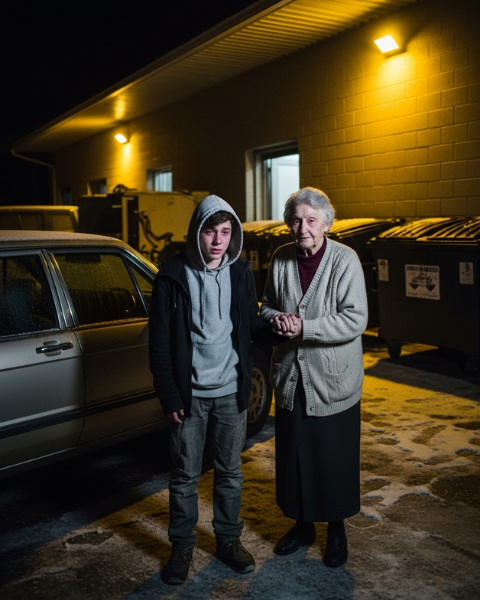
I’m 78 years old, and they call me “Miss Marjorie” down here at the Cedar Pines Senior Living Center. I should be retired, but with the world getting more expensive by the day, I spend my evenings in the laundry room, letting the hum of the industrial dryers drown out the silence of growing old. It was a predictable life—until I met Eli. Eli was a 17-year-old high school junior who hauled linen baskets after class. At first, he was just a ghost in a hoodie, but old eyes see what the rest of the world misses. I noticed his “distressed” jeans were actually just falling apart. I saw him scavenging half-eaten sandwiches from the trash. When a rainy Tuesday left him shaking so hard he couldn’t hold a basket, I didn’t ask questions. I just started bringing extra meatloaf, claiming I “accidentally” made too much. That meatloaf was the first crack in his armor. Soon, the entire “village” of Cedar Pines caught on. Mr. Henderson, the grumpy vet in 4B, started “forgetting” Snickers bars on the carts. Mrs. Gable, the retired librarian, left SAT prep books on the break table. We weren’t just a retirement home anymore; we were a tactical unit. When a blizzard hit and Eli vanished, I didn’t listen to the manager’s grumbling about “lazy kids.” I went to the loading dock and found him living in a frozen sedan. “We got evicted,” he sobbed, the weight of his mother’s medical bills finally crushing him. He was trying to be the man of the house at seventeen, sleeping in 20-degree weather just to stay in school. That was the moment the grandmas of Cedar Pines went to war. We didn’t just give him a meal; we gave him a foundation. We mobilized every retired doctor, lawyer, and veteran in the building to find his mother housing and medical care. Last Friday, Eli didn’t come in to fold sheets. He came in holding a letter—a full-ride apprenticeship to trade school. He thanked me for “doing this,” but I just hugged him back. We didn’t change his life; we just gave him the ground to stand on. In a world that tells you to pull yourself up by your bootstraps, we reminded him that sometimes, you just need a neighbor who refuses to let you walk alone.

I found him sleeping behind the loading dock in 20-degree weather. He wasn’t a delinquent. He was just a boy

READ MORE
Uncategorized

I never told my in-laws that I earn three million dollars a year. They believed their luxury came from my husband, while I was just a “lucky burden”. At Thanksgiving dinner, my mother-in-law shoved me out of my seat and screamed, “Move! This isn’t a place for freeloaders!” I fell, hitting my head, bl00d spilling. When I said I’d call the police, my husband slapped me hard and hissed, “If you do, I’ll lock you up and starve you.” I met his eyes without fear, picked up my phone, and made one call. “It’s time to take out the trash. Come now.” I paid for the twenty-two-pound turkey, the expensive Viking range, and the sprawling five-thousand-square-foot mansion itself. Yet, in the eyes of my in-laws, I was just Elena, “the freeloader.” “Elena!” Beatrice, my mother-in-law, screeched. “The champagne is tepid! Can’t you do anything right? Richard works himself to the bone to afford this expensive refrigerator, and you’re just a useless waste of space!” Richard, my husband, stood there swirling the scotch I bought him, sighing. “Fix it, Elena. Don’t embarrass me in front of the partners.” The truth was: I wasn’t unemployed. I was a silent partner in a private equity firm making three million dollars a year. I had secretly subsidized Richard’s fragile ego for five years. But today, it ends. When I walked into the dining room with a fresh bottle, I saw my seat occupied by my mother-in-law’s Hermès Birkin bag. “Beatrice, that’s my seat,” I said. “You don’t need to sit,” she sneered. “You’ve been picking at food in the kitchen all day. My bag is worth more than your life; don’t touch it.” When I reached to move the bag, Beatrice shoved me with both hands. I slipped on the polished marble floor and fell backward. CRACK. My head slammed against the edge of the mahogany buffet. Blood began to pool, soaking into the expensive Persian rug. “Jesus, Mom,” Richard groaned, looking not at me, but at the rug. “That was a bit much. Elena, get up! You’re bleeding on the ten-thousand-dollar rug! Go to the kitchen and clean yourself up; you’re ruining everyone’s appetite.” The pain in my head brought a strange clarity. I touched the sticky blood on my neck. I looked at the husband I had protected, the mother-in-law who despised me. “The rug?” I whispered. I pulled out my phone. Not 911. I pressed the red button on my home screen—the direct line to Aegis Security Solutions, whom I paid $50,000 a month. “Code Black at primary residence,” I said, locking eyes with Richard. “I need a cleanup crew. Immediately.” Three minutes later, the front door was kicked in. Six men in black tactical gear swarmed the room. Richard screamed, “Who are you? Get out of my house!” The team leader stepped forward, bowed to me, and tossed a file onto the dining table, right next to the turkey. “Mr. Sterling,” he said coldly. “You are trespassing. This property is solely owned by Ms. Elena Vance. You are not on the deed. You are a guest.” I stood up, wiping the blood from my face, and smiled at Richard, who stood frozen in shock. “You’re right, Richard. It’s time to take out the trash.”

I never told my in-laws that I earn three million dollars a year. They believed their luxury came from my

READ MORE